USAID
Gender Mainstreaming Strategy
Agricultural development initiatives in Lebanon began in 2018 with funding from the United States Agency for International Development (USAID).
2021 · 2 pages
Sign in to readA free account is required to download.
Abstract
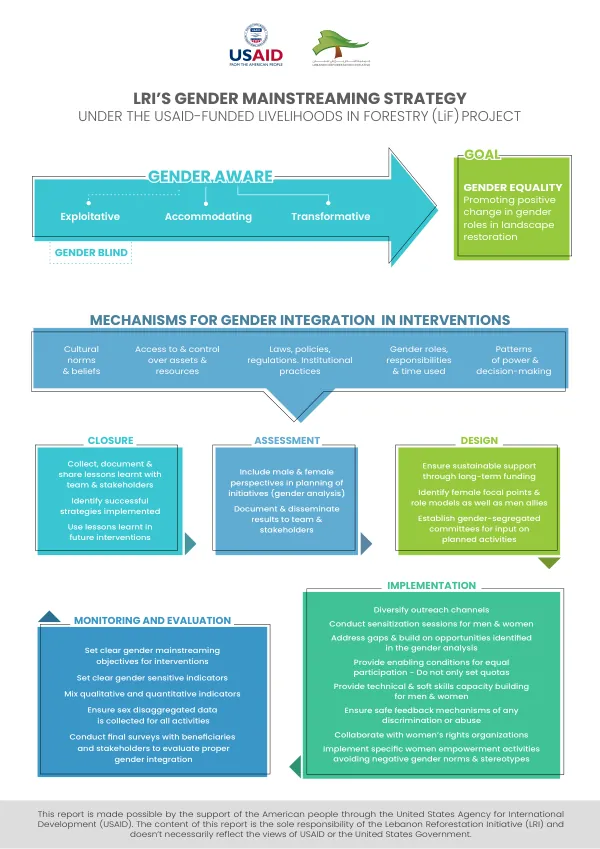
The initiative also emphasized the importance of gender equality, promoting positive change in gender roles in the landscape. Clear gender mainstreaming objectives were set for interventions, and sex-disaggregated data was collected for all activities. Final evaluations with beneficiaries and stakeholders were conducted to assess the effectiveness of gender integration. The report highlights the need for a more nuanced understanding of gender dynamics in the context of agricultural development. It emphasizes the importance of addressing power imbalances and promoting equal participation of men and women in decision-making processes. The initiative also recognized the need for a more inclusive approach to gender mainstreaming, incorporating the perspectives of both men and women. This included the establishment of gender-segregated committees for input on planned activities and the identification of female focal points and role models, as well as male allies. The report concludes by emphasizing the importance of long-term funding to ensure sustainable support for the initiative. It also highlights the need for continued collaboration with women's organizations and the implementation of specific women empowerment activities to address negative gender norms and stereotypes. The report is made possible by the support of the American people through the United States Agency for International Development (USAID). The content of the report is the sole responsibility of the Lebanon Reforestation Initiative (LRI) and does not necessarily reflect the views of USAID or the United States Government. The initiative's success was attributed to the establishment of a robust monitoring and evaluation framework, which allowed for the collection of sex-disaggregated data and the assessment of the effectiveness of gender integration. The report highlights the importance of continued support for the initiative to ensure the long-term sustainability of its impact. The initiative's focus on gender mainstreaming and women's empowerment was seen as a critical component of its success. The report emphasizes the need for continued investment in this area to promote positive change in gender roles in the landscape. The initiative's approach to gender mainstreaming was seen as a key factor in its success. The report highlights the importance of addressing power imbalances and promoting equal participation of men and women in decision-making processes.
Related documents