ENCOMPASS, LLC
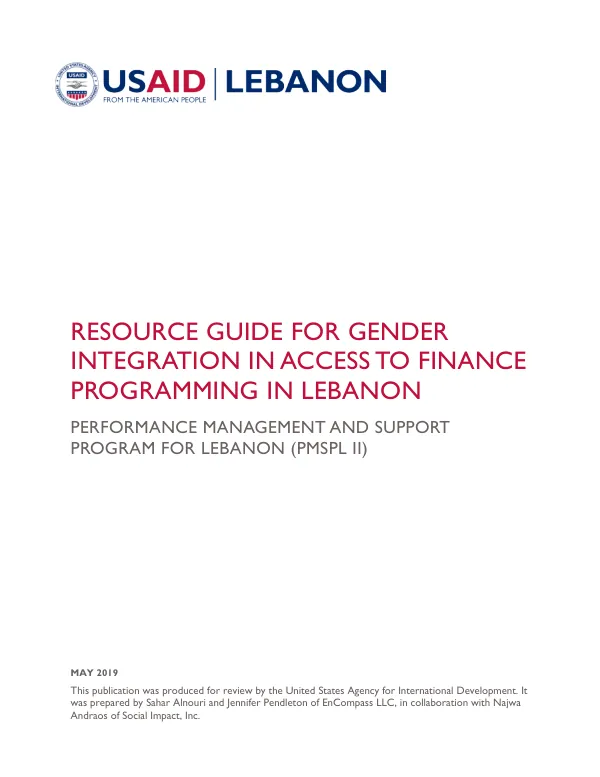
Resource Guide for Gender Integration in Access to Finance Programming in Lebanon
The agricultural development initiative in Lebanon began with funding from USAID's Performance Management and Support Program for Lebanon (PMSPL II).
2019 · 42 pages
Sign in to readA free account is required to download.
Abstract
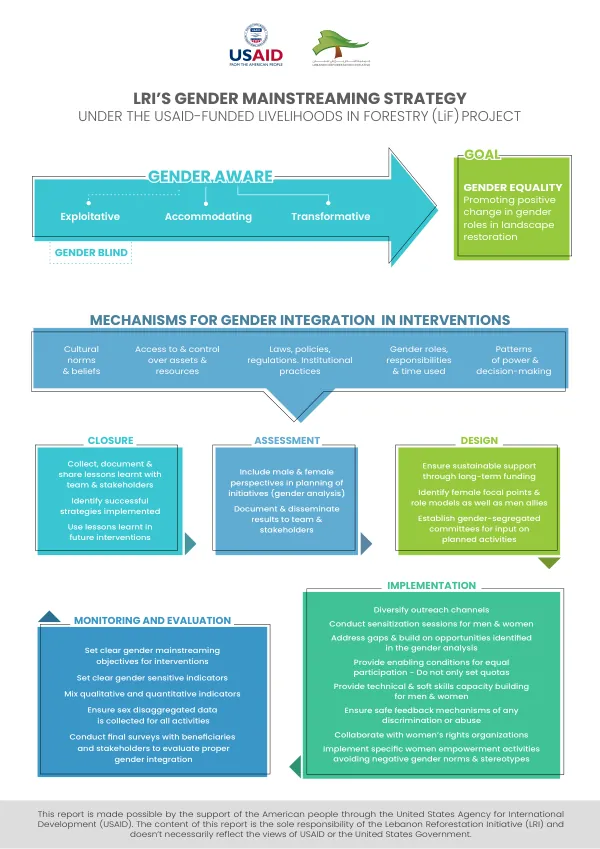
The initiative aimed to promote inclusive access to finance for micro, small, and medium enterprises (MSMEs) and entrepreneurship in Lebanon. The guide is designed to help USAID implementing mechanisms anticipate, respond to, and address barriers that prevent women and men from equally engaging in access to finance activities in Lebanon. Inclusive access to finance benefits individuals, households, and communities. When more people are able to access financial services, they can contribute to economic growth and reduction. However, the ability of Lebanese women to access financial services remains unequal. The guide is designed to ensure that women and men are able to equally engage in access to finance activities in Lebanon. The guide includes a description of barriers to access to finance from a gender perspective, examples of how to address them, and resources and guidance for integrating gender at all stages of the project cycle. It focuses on access to non-financial services for MSMEs and entrepreneurship, excluding household finance, microinsurance, cashless banking, and branchless banking. The guide was developed by conducting a thorough desk review of existing financial inclusion resources, including the USAID/Lebanon Gender Assessment Report (2019) and the USAID/Lebanon Economic Growth Assessment Report (2019). Key informant interviews were conducted with USAID staff, implementing mechanisms, academics, and other donors and Lebanese organizations. A technical advisory group (TAG) was facilitated by the Performance Management and Support Program for Lebanon (PMSPL II) to provide practitioners an opportunity to shape the content and design of the guide. The guide is intended to be a resource at any phase of the program cycle. It is designed to help USAID implementing mechanisms comply with USAID's Gender Equality and Female Empowerment Policy (USAID Gender Policy). The guide will be useful to USAID staff and non-USAID project implementers based in Lebanon. In Lebanon, women own more than 30 percent of micro and small businesses, but only 3 percent of bank loans go to women entrepreneurs. The guide aims to address this disparity by providing resources and guidance for integrating gender at all stages of the project cycle. It includes a description of barriers to access to finance from a gender perspective, examples of how to address them, and resources and guidance for integrating gender. The guide is designed to ensure that women and men are able to equally engage in access to finance activities in Lebanon. It includes a description of barriers to access to finance from a gender perspective, examples of how to address them, and resources and guidance for integrating gender at all stages of the project cycle. The guide is intended to be a resource at any phase of the program cycle and is designed to help USAID implementing mechanisms comply with USAID's Gender Equality and Female Empowerment Policy (USAID Gender Policy).