ACDI/VOCA
Gender, Youth, and Social Inclusion Analysis Report
The Market Driven Rural Development Activity (MDRD) in Tajikistan aims to increase investment in the agriculture sector, improve value chain productivity, and facilitate greater access to domestic and export markets.
2023 · 50 pages
Sign in to readA free account is required to download.
Abstract
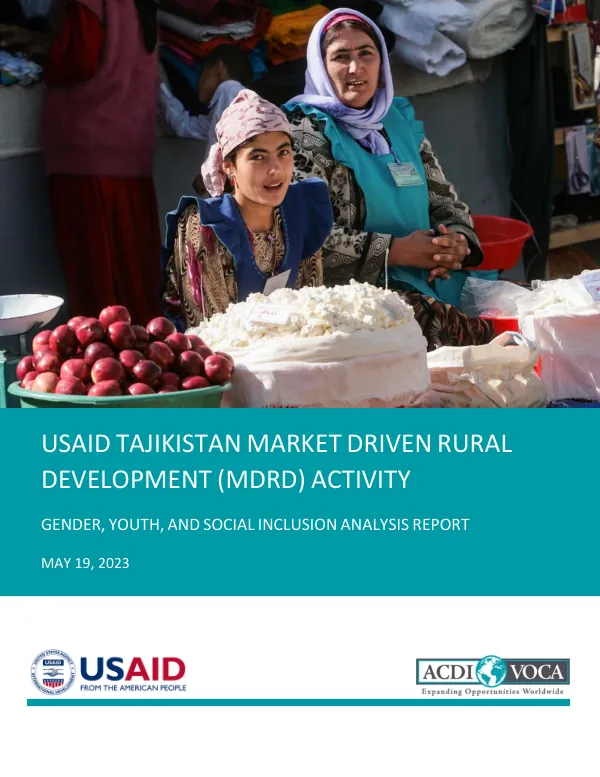
This will accelerate Tajikistan's agriculture sector growth to enable inclusive access to economic opportunities in rural communities, with a focus on women- and youth-owned, managed, and operated businesses and climate-smart practices, technology, and investment. The MDRD activity conducted a Gender, Youth, and Social Inclusion (GYSI) analysis, which consisted of an initial desk review (Phase I) and primary data collection using qualitative research methods (Phase II). The GYSI analysis aligned with MDRD's Sector Screening and Inclusive Market Systems Analysis as well as the Climate Risks and Opportunities Assessment. Phase I assessed the level of existing GYSI data and used available information to inform what sectors MDRD would prioritize from a GYSI lens. Phase II filled in research gaps from the desk review, including both a deep dive into GYSI issues within MDRD's prioritized sectors and further analysis of cross-sectoral GYSI issues that constrain agricultural market systems from performing more inclusively and delivering more equitable benefits. The GYSI analysis identified substantial opportunities and desires among women, especially young women, to develop and improve small-scale processing, especially in the berries, dairy, tomato, and apricot sectors. This requires access to and training on technical processing protocols required by end markets, improved market linkages for female processors, and finance to invest in improved technology. Women face disproportionate challenges in access to markets across sectors, given mobility and transport constraints, and tend to sell at farmgate or in local markets which fetch lower prices, and experience high levels of dissatisfaction with their roles as local retailers. Women and youth are the majority of the agricultural labor force, often engaging in low-skilled and low-pay wage work. Highly organized groups of mardikors (day laborers) and harvesting brigades composed primarily of women are especially active in the fruits and vegetables sector – roles which have some degree of desirability given the flexibility it affords women and decent pay. Post-harvest handling and storage as well as transport issues are more acute in female-dominated sectors like dairy, berries, and other fruits, which can cause major post-harvest losses for female producers and processors. The private sector largely reinforces predominant gender and social norms through hiring practices and occupational segregation. Business norms and practices are influenced by and somewhat constrained by household-level gender norms, especially related to recruitment and retention of young women. Private sector partners interviewed as part of the GYSI analysis perceived their business as being "inclusive" or "women-friendly" if either the sector they operate in is largely female-dominated (e.g., dairy), and/or if women participate as a large share of their employees or suppliers. However, there was little articulation of business practices that facilitate more inclusive workplaces, with the exception of formalized programs for on-the-job training, internship, and professional development.
Related documents