USAID
Generating Entrepreneurs and Sustainable Synergies (GENESIS) Project Report
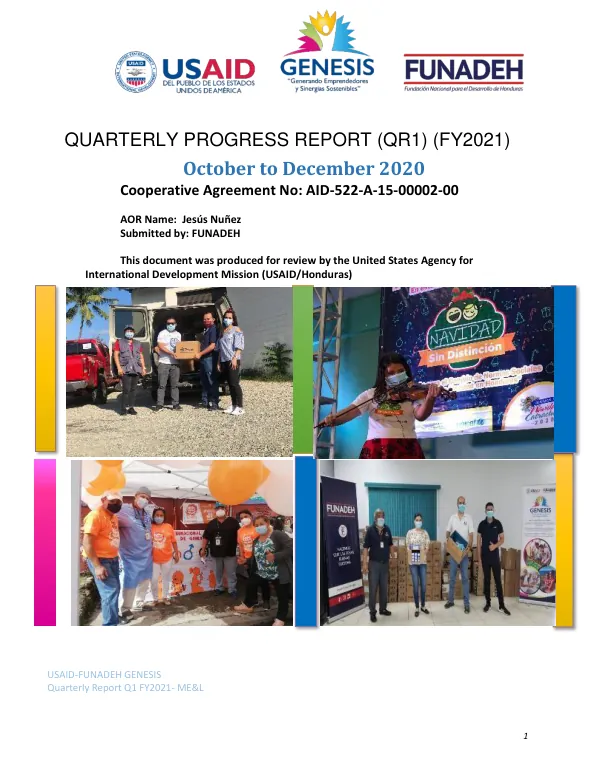
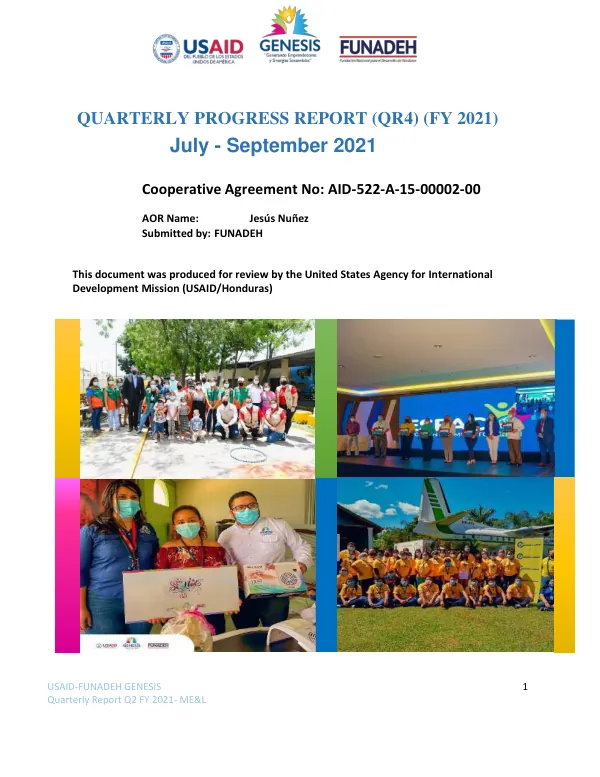
The Generating Entrepreneurs and Sustainable Synergies project, GENESIS, is a project conducted by FUNADEH in partnership with the United States Agency for International Development (USAID).
2016 · 37 pages
Sign in to readA free account is required to download.
Abstract
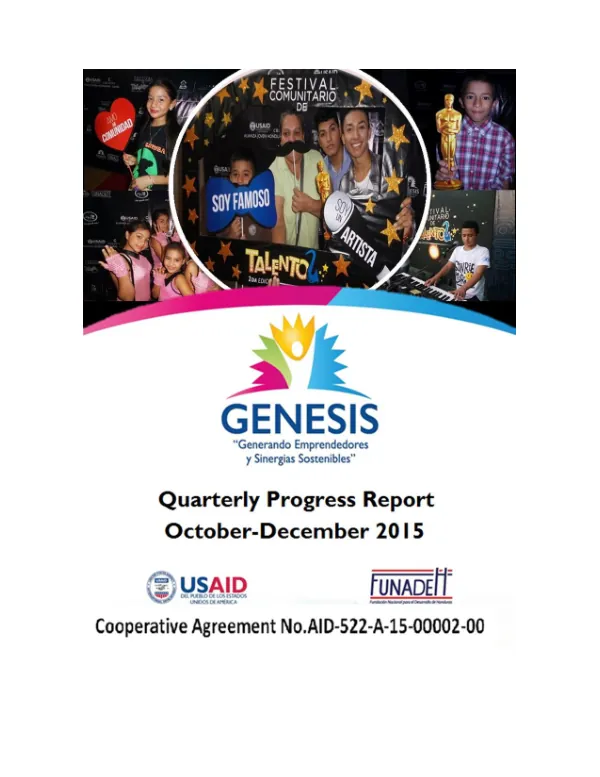
The project's general objective is to increase protective factors for at-risk youth and former gang members in selected municipalities of Honduras. The project was signed on July 31st, 2015, and launched to the general public on September 10th, 2015. GENESIS aims to achieve its objective through two strategic objectives: consolidating the Outreach Centers (OCs) network through multi-sectorial alliances to increase protective factors and promote a culture of peace, and increasing income generation opportunities for at-risk youth and former gang members through capacity building and mentorship. The project focuses on 20 OCs, which were transferred from AJH to GENESIS on November 26th, 2015. During the October-December period, GENESIS conducted various activities to promote virtues through sports, trained youth for employability and entrepreneurship strategies, and developed community-oriented campaigns for violence prevention. The project also promoted GENESIS through social networks, newspapers, digital media, and TV news. Additionally, GENESIS elaborated different manuals, including a Monitoring and Evaluation plan, Branding and Marking manual, Grants manual, Leverage manual, and other internal regulations for the team. The project reported significant progress in its activities, including the training of 32 youth for employability and 24 youth for entrepreneurship strategies. A total of 281 active volunteers were involved in 14 OCs during the quarter, and 672 beneficiaries participated in OC activities. The project also reported the development of one community-oriented campaign for violence prevention, which benefited 600 people, including 100 youth as direct beneficiaries and around 500 people as spectators. GENESIS also participated in various trainings, including the transfer of the Dream my life challenge methodology and IT Volunteer training. The project's team adequacy office in San Pedro Sula was completed in December. Overall, GENESIS reported significant progress in its activities and achievements during the October-December period, aligning with its general objective of increasing protective factors for at-risk youth and former gang members in Honduras. The project's results and activities during the quarter are summarized as follows: Outcome indicator: Protective factors for at-risk youth and former gang members increased. Outcome indicators include the number of at-risk youth from OCs with protective factors increased, the number of micro and small business and self-employment opportunities created by at-risk youth and former gang members, and the number of at-risk youth employed. Strategic Objective 1: Consolidate the Outreach Centers network through multi-sectorial alliances to increase protective factors and promote a culture of peace. Result 1.1: OC's sustainability increased. Indicators include the percentage of Outreach Center partners that meet the empowerment criteria, community links coordination report, number of volunteers that support OCs' programmatic activities, number of OCs that are classified as sustainable financial and programmatically, and number of youth beneficiaries served through OCs programmatic activities. Strategic Objective 2: Increase income generation opportunities for at-risk youth and former gang members through capacity building and mentorship. Result 2.1: Income generation and employability opportunities increased for at-risk youth. Indicators include the number of at-risk youth benefited from income generation and employability opportunities. Result 2.2: Income generation opportunities increased for former gang members. Indicators include the number of former gang members benefited from tertiary prevention services. The project's monitoring and evaluation report, project management, collaborations with other USAID and USG implementing partners, challenges and mitigation plan, planning for January-March 2016, and annexes are also included in the report.