USAID DEC
Global Health Supply Chain Program – Technical Assistance: Quarterly Report, Year 6, Quarter 2
Sign inUSAID
Global Health Supply Chain Program – Technical Assistance: Quarterly Report, Year 6, Quarter 2
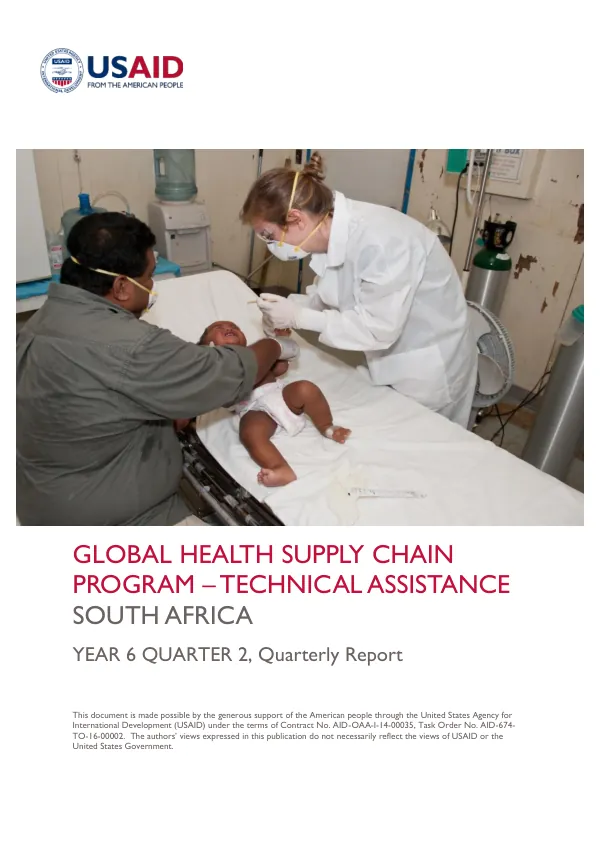
The Global Health Supply Chain Program – Technical Assistance in South Africa is a critical initiative aimed at improving medicine availability and strengthening the health supply chain.
2023 · 72 pages
Sign in to readA free account is required to download.
Abstract
The program is supported by the United States Agency for International Development (USAID) under the terms of Contract No. AID-OAA-I-14-00035, Task Order No. AID-674-TO-16-00002. The program's objectives are multifaceted, focusing on improving the selection and use of medicines, supporting the optimization of the supply chain, strengthening governance, improving workforce management, and enhancing information systems and financial management. The program's scope encompasses the entire health supply chain, from procurement and distribution to patient access and utilization. In Year 6, Quarter 2, the program achieved significant milestones in improving medicine availability. The overall percentage of medicine availability increased, with notable improvements in provinces such as Gauteng and KwaZulu-Natal. The program also made strides in strengthening the supply chain, with suppliers delivering antiretroviral units within contractual lead-time, and master health product list items on transversal contracts being delivered on time. The program's governance and legislation activities focused on strengthening the Pharmaceutical and Therapeutics Committee (PTC) and the Essential Medicines List (EML). The PTC's operational capacity improved, with more decisions being made using health technology assessment processes. The EML was updated, and the program worked with the National Department of Health to ensure its implementation. In terms of workforce management, the program provided training and capacity-building activities for healthcare workers, focusing on rational medicine use and improved medicine availability. The program also supported the development of standard operating procedures for stock management and reporting. The program's information systems and financial management activities focused on strengthening the National Surveillance Center (NSC) and the Medicine Master Data System (MMDS). The NSC was used by more users to review medicine availability trends and reports, and the MMDS was implemented in more health establishments and warehouses. The program also supported the Government of South Africa in its response to COVID-19, providing personal protective equipment and rolling out COVID-19 vaccines. The program's lessons learned highlighted the importance of collaboration, communication, and adaptability in responding to public health emergencies. In terms of financial management, the program's total expenditures to date were reported, with a breakdown of obligation vs. accruals and expenditures. The program's budget vs. actual line of effort was also reported, highlighting areas of variance and opportunities for improvement. Overall, the Global Health Supply Chain Program – Technical Assistance in South Africa has made significant progress in improving medicine availability and strengthening the health supply chain. The program's achievements demonstrate its commitment to improving health outcomes and reducing the burden of disease in South Africa.