USAID DEC
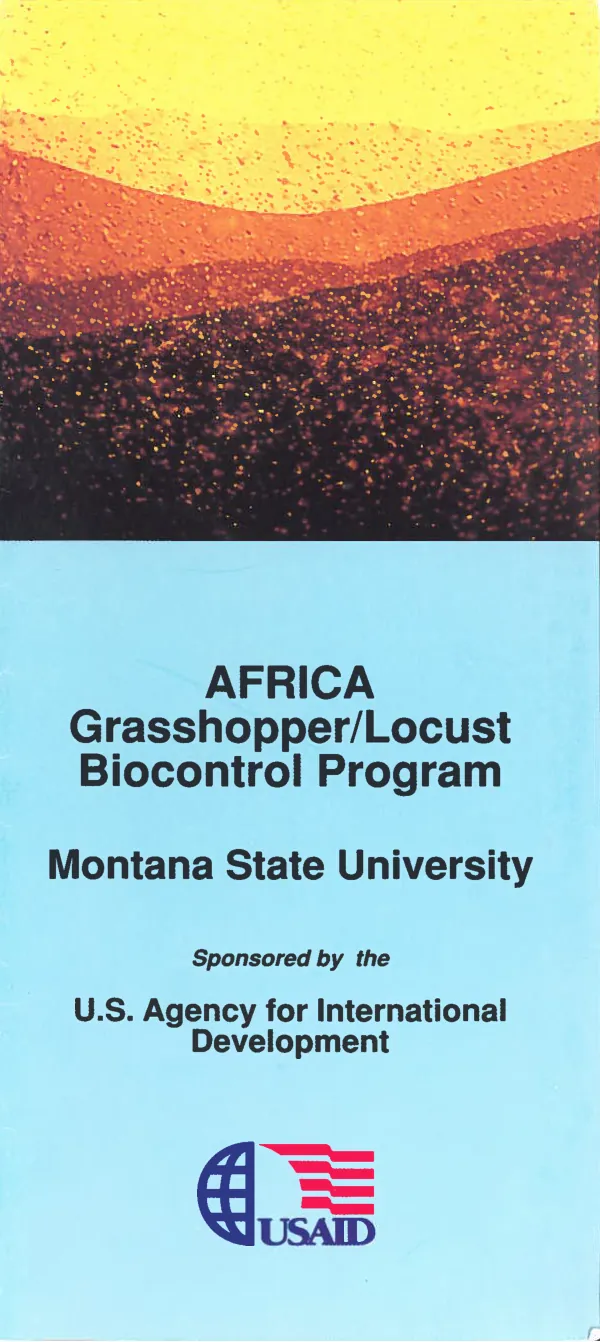
Grasshopper/Locust Biocontrol Program
The Grasshopper/Locust Biocontrol Program in Africa began in 1989 at Montana State University, with the goal of increasing food security and reducing risks to public health and the environment associated with the use of chemical pesticides.
2012 · 6 pages
Sign in to readA free account is required to download.
Abstract
Researchers have been developing improved methods of grasshopper and locust control, focusing on natural enemies of these insects that can be developed into safe, effective, and environmentally friendly biocontrol agents. Projects are currently underway in Madagascar, Cape Verde, and Mali, with expansion to other African countries anticipated. Funding is provided by the U.S. Agency for International Development, and close collaboration is maintained with the IIBCIIITAlDFPV Locust and Grasshopper Biological Control Programme and related research efforts funded by the German development agency, GTZ. The program is being conducted in conjunction with Mycotech, a research-and-development firm in Butte, Montana, and various African research institutes and government agencies. Biological control of insect pests involves the use of natural enemies to suppress populations of these pests. The MSU program is focusing on pathogens, particularly fungi, viruses, and protozoa, which are relatively harmless to other living organisms and can continue to kill insect pests through secondary infections long after field application. This reduces the need for follow-up treatments and makes biocontrol more cost-effective than chemical-pesticide use. Major breakthroughs have been achieved in biocontrol of grasshoppers and locusts, with two different species of fungi, Beauveria bassiana and Metarhizium flavoviride, consistently killing over 90 percent of treated grasshoppers and locusts within a week to 10 days. Other promising research involves protozoa and viruses isolated from African grasshoppers and locusts. Cost-effective biopesticides and biocontrol agents resulting from the MSU-led research program are expected to be in operational use in Africa within the next few years, ultimately leading to increased food security and reduced risks to public health and the environment. Montana State University is an international leader in biocontrol of insects and weeds, with scientists working closely with colleagues at affiliated U.S. Department of Agriculture research centers on campus. The $11 million Bioscience Research Center will unite these researchers in a national center of excellence for biological control research. The program's ultimate goal is to provide safe, effective, and environmentally friendly control of grasshoppers and locusts, reducing the need for chemical pesticides and promoting sustainable agriculture practices in Africa.
Related documents