USAID/NEPAL
Group Fund Mobilization Manual
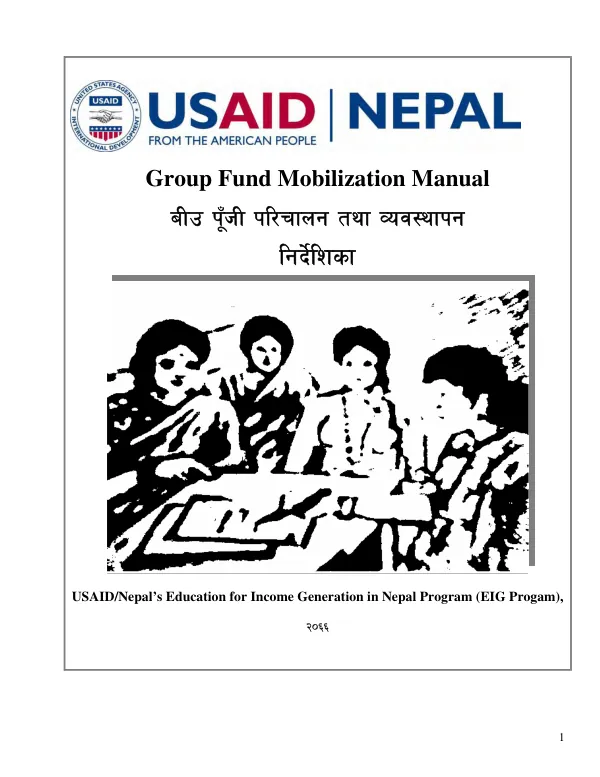
The Group Fund Mobilization Manual is a comprehensive guide for the Education for Income Generation in Nepal Program (EIG Program), implemented by USAID/Nepal.
14 pages
Sign in to readA free account is required to download.
Abstract
The manual outlines strategies for mobilizing group funds, which are essential for the program's success. The EIG Program aims to improve the livelihoods of rural communities in Nepal by promoting income-generating activities, such as agriculture, animal husbandry, and handicrafts. The program focuses on empowering women and marginalized groups to take control of their economic development. The manual emphasizes the importance of group fund mobilization as a key component of the program. Group funds are used to finance community development projects, provide credit to members, and support income-generating activities. The manual provides guidelines for establishing and managing group funds, including setting up financial systems, collecting contributions, and making loans. The EIG Program operates in several districts of Nepal, including the Eastern, Central, and Western regions. The program targets rural communities, with a focus on women and marginalized groups. The manual highlights the importance of community participation and ownership in the program's success. The manual outlines the program's methodology, which includes training and capacity-building activities for community members, group leaders, and program staff. The program also provides technical assistance and support to community members to help them develop their income-generating activities. The EIG Program has made significant progress in improving the livelihoods of rural communities in Nepal. The manual highlights the program's achievements, including the establishment of over 100 group funds, the provision of credit to over 5,000 members, and the support of over 10,000 income-generating activities. The manual concludes by emphasizing the importance of continued support and funding for the EIG Program. The program's success depends on the sustained commitment of donors, government agencies, and community members. The manual provides recommendations for future program development, including the expansion of the program to new districts and the strengthening of community participation and ownership. The EIG Program has made a significant impact on the lives of rural communities in Nepal. The manual provides a comprehensive guide for program staff, community members, and donors, highlighting the program's achievements and outlining strategies for future success.
Related documents