DAI GLOBAL, LLC
Wildlife Sample Collection and Handling Manual
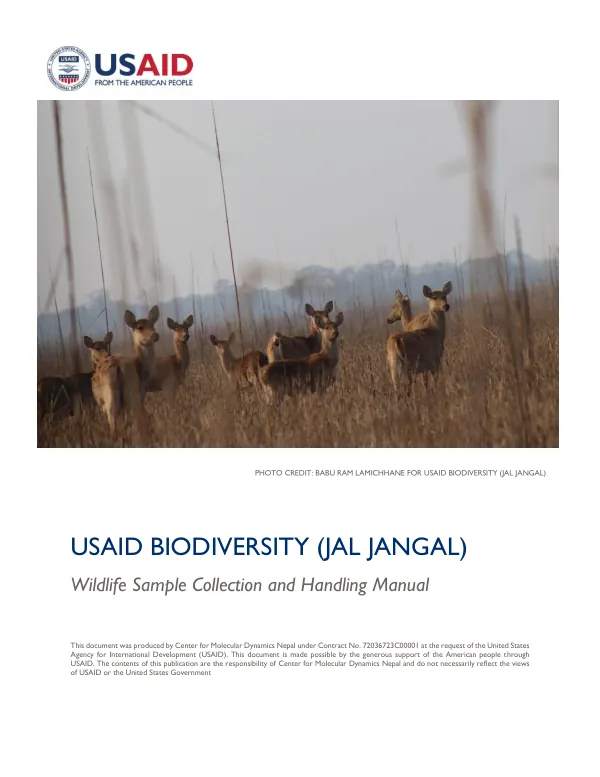
The USAID Biodiversity (Jal Jangal) Wildlife Sample Collection and Handling Manual is a comprehensive guide for collecting and handling wildlife samples for DNA-based analysis.
2024 · 11 pages
Sign in to readA free account is required to download.
Abstract
The manual was produced by the Center for Molecular Dynamics Nepal under Contract No. 72036723C00001 at the request of the United States Agency for International Development (USAID). The manual emphasizes the importance of proper sample collection and handling to ensure the integrity and quality of DNA samples. It outlines the necessary steps and precautions to be taken before, during, and after sample collection, including the use of personal protective equipment (PPE), sterilized gloves, and proper storage and transportation of samples. The manual provides detailed guidelines for collecting and preserving different types of samples, including tissue, blood, saliva, buccal swabs, hair, fur, feathers, scales, and meat samples. For each sample type, the manual outlines the necessary steps for collection, preservation, and transportation, including the use of specific materials and equipment. The manual also highlights the importance of preventing cross-contamination, decomposition, leakage of fluids, and loss of individual specimen identity during sample transportation. It provides a table outlining the DNA sample collection and preservation methods for different sample types, including tissue, blood, saliva, buccal swabs, hair, fur, feathers, scales, and meat samples. The manual emphasizes the need for trained professionals to collect and handle DNA samples, and provides guidelines for proper sample submission, including the use of a sample submission form and a request letter template. The manual also highlights the importance of proper storage and transportation of samples, including the use of ice-packed, sealed Styrofoam containers and proper labeling of packages. Overall, the USAID Biodiversity (Jal Jangal) Wildlife Sample Collection and Handling Manual provides a comprehensive guide for collecting and handling wildlife samples for DNA-based analysis, and emphasizes the importance of proper sample collection and handling to ensure the integrity and quality of DNA samples. The manual is designed to facilitate the processing of specimens when they reach the laboratory, and to ensure that the quality of specimens is not compromised during transportation. The guidelines outlined in the manual are intended to be followed by trained professionals who have received training in the relevant guidelines for the identification, collection, and preservation of DNA samples. The manual is a valuable resource for researchers, conservationists, and law enforcement agencies working with wildlife samples, and provides a comprehensive guide for collecting and handling DNA samples in a way that ensures their integrity and quality.
Related documents