CATHOLIC RELIEF SERVICES ORGANIZATION
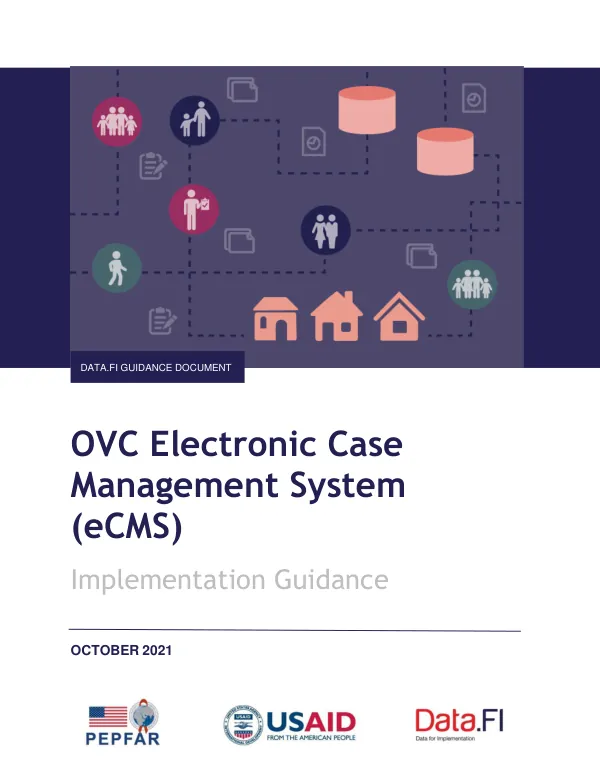
OVC Electronic Case Management System (eCMS): Implementation Guidance
The OVC Electronic Case Management System (eCMS) Implementation Guidance document outlines the framework for implementing an electronic case management system for orphans and vulnerable children (OVC).
2021 · 45 pages
Sign in to readA free account is required to download.
Abstract
The system aims to improve the efficiency and effectiveness of case management, reporting, and performance monitoring for PEPFAR-funded programs. The document emphasizes the importance of conducting background research and landscape analysis to identify the goal and objectives of the eCMS. This includes reviewing laws and policies, M&E frameworks, indicators, and reporting requirements, as well as stakeholders, services, existing MIS systems, infrastructure, and ICT skills. A gap analysis is also conducted to identify areas for improvement. Planning for the eCMS involves reviewing the functions of an effective system, planning for privacy, confidentiality, and security needs, and conducting a stakeholder analysis and mapping. A business process information and workflow diagram is constructed with stakeholders in a participatory exercise, and costs associated with developing and sustaining the eCMS are defined. Requirements for the system, including functional and nonfunctional requirements, are also developed. The system design involves defining the system architecture, designing for reporting indicators, and developing a data management plan. Interoperability design is also a critical component, including the use of unique identifiers and existing standards. A change management plan is also developed to ensure a smooth transition to the new system. The development and testing phase involves agile development of the eCMS, quality assurance and testing, and user acceptance testing and sign off. A cascaded team training approach is used to build capacity and ensure that users are equipped to use the system effectively. Release and deployment management involves planning, versioning, and monitoring the release of the system. Support, maintenance, and monitoring are also critical components, including role-based access, data visualization, review, and use, and transitioning the eCMS to ensure a smooth handover. The document concludes by emphasizing the importance of a well-planned and implemented eCMS in improving the efficiency and effectiveness of case management, reporting, and performance monitoring for PEPFAR-funded programs.