USAID DEC
Hariyo Ban Number: Briefing paper 009
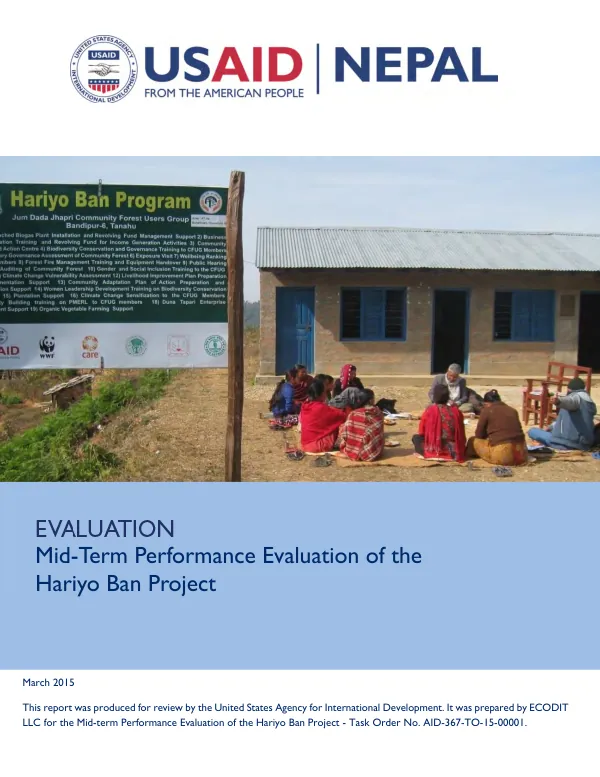
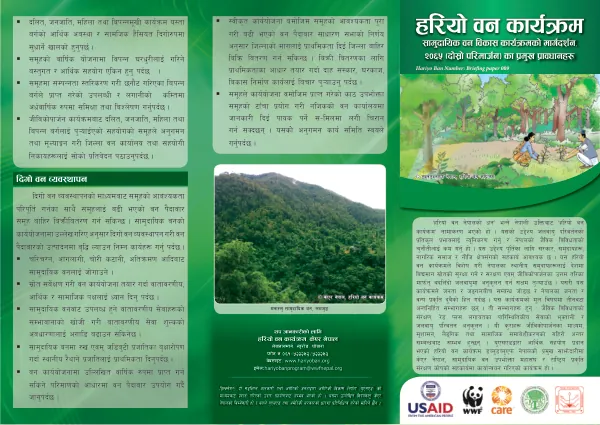
The Hariyo Ban Program is a community-led initiative aimed at promoting sustainable forest management and biodiversity conservation in Nepal.
2 pages
Sign in to readA free account is required to download.
Abstract
The program is implemented by the Hariyo Ban Program, a partnership between the Government of Nepal, the United Nations Development Programme (UNDP), and the Global Environment Facility (GEF). The program's primary objective is to reduce deforestation and promote sustainable forest management practices in Nepal's forest ecosystems. The program focuses on three key areas: forest conservation, sustainable forest management, and community development. Forest conservation efforts include the establishment of protected areas, such as national parks and wildlife reserves, and the promotion of sustainable forest management practices among local communities. Sustainable forest management practices include the use of selective logging, reforestation, and agroforestry. Community development is a critical component of the program, with a focus on empowering local communities to take ownership of forest management and conservation efforts. The program provides training and capacity-building programs for local communities, including women and marginalized groups, to enhance their skills and knowledge in sustainable forest management and conservation. The program also focuses on promoting sustainable livelihoods for local communities, including the development of eco-tourism and forest-based enterprises. The program aims to reduce poverty and improve the livelihoods of local communities by promoting sustainable forest management and conservation practices. The Hariyo Ban Program has made significant progress in reducing deforestation and promoting sustainable forest management practices in Nepal. According to the program's midterm evaluation, deforestation rates have decreased by 27% in program areas compared to non-program areas. The program has also promoted sustainable forest management practices among local communities, with over 2,500 hectares of forest area being managed sustainably. The program has also made significant progress in promoting community development and sustainable livelihoods. The program has established over 100 community-managed forest areas, providing employment and income opportunities for local communities. The program has also promoted eco-tourism and forest-based enterprises, generating income and employment opportunities for local communities. The Hariyo Ban Program has received international recognition for its efforts in promoting sustainable forest management and biodiversity conservation in Nepal. The program has been recognized as a model for community-led forest management and conservation efforts in the region. The program's success can be attributed to its community-led approach, which has empowered local communities to take ownership of forest management and conservation efforts. The program's focus on sustainable forest management practices, community development, and sustainable livelihoods has also contributed to its success. The Hariyo Ban Program has also made significant contributions to Nepal's national development goals, including the reduction of poverty and improvement of livelihoods for local communities. The program has also contributed to the conservation of Nepal's biodiversity and promotion of sustainable forest management practices. The program's future plans include expanding its reach to more areas in Nepal and promoting sustainable forest management practices among local communities. The program also plans to promote sustainable livelihoods and community development, including the development of eco-tourism and forest-based enterprises. The Hariyo Ban Program has made significant contributions to Nepal's forest conservation and sustainable development efforts. The program's community-led approach, focus on sustainable forest management practices, and promotion of sustainable livelihoods have contributed to its success. The program's future plans include expanding its reach and promoting sustainable forest management practices among local communities.