USAID DEC
Hate Speech in Pre-Election Discourse
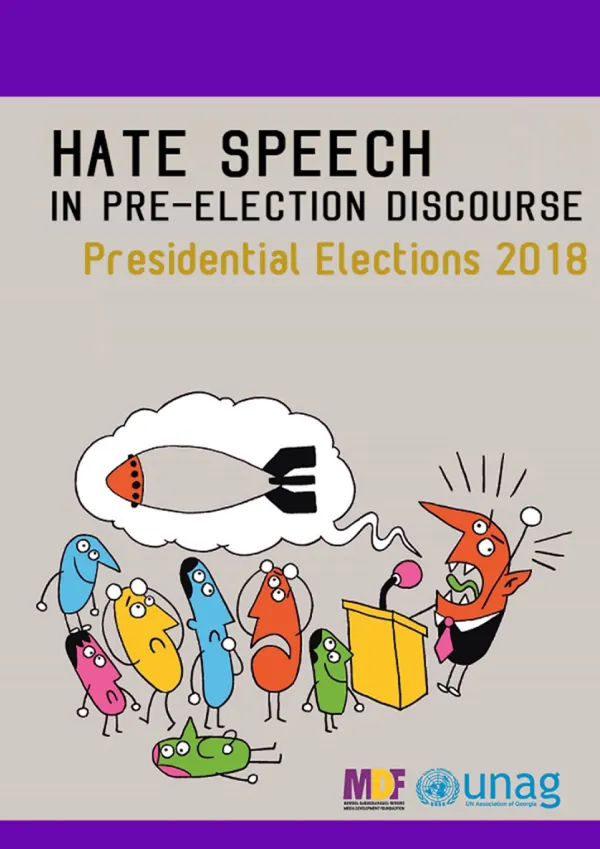
The 2018 presidential elections in Georgia were marked by a significant number of discriminatory comments made by electoral subjects and political parties.
2018 · 17 pages
Sign in to readA free account is required to download.
Abstract
The Media Development Foundation (MDF) conducted a monitoring of hate speech and discrimination on various grounds, including ethnic, religious, racial, and gender grounds, as well as encouraging violence. The monitoring covered a period from August 1 to October 15, 2018, and involved mainstream and tabloid media outlets. A total of 117 discriminatory comments were recorded during the pre-election period. Xenophobic and anti-migrant remarks comprised the largest share of these comments, accounting for 47.9% (56 comments). Turkophobia was the second most common type of hate speech, with 16.2% (19 comments) of the total. Homophobia accounted for 14.5% (17 comments), while discrimination on religious grounds and encouraging violence accounted for 10.3% (12 comments) and 6.8% (8 comments), respectively. The majority of discriminatory remarks (59) were voiced by political party representatives, followed by presidential candidates (49). The presidential candidates who made the most discriminatory comments were Kakha Kukava of the Free Georgia party, with 19 comments, and Shalva Natelashvili of the Labor Party, with 9 comments. The monitoring revealed that the presidential candidates made a range of xenophobic and anti-migrant messages, including claims that migrants would turn ethnic Georgians into a minority, pose a terrorist threat, and grab Georgian lands. Some candidates also made Turkophobic messages, including claims that Turkey had occupied Georgia and was carrying out religious expansion in the country. The monitoring also recorded two comments inciting strife made by the ruling party-endorsed presidential candidate, Salome Zourabichvili. During her campaign meeting with ethnic Armenian population, she compared the human rights situation in nations with a historical conflict, including Georgia, and emphasized that Georgian ethnic minorities had no opportunity to acquire Georgian citizenship. The findings of the monitoring suggest that hate speech and discrimination were significant issues during the 2018 presidential elections in Georgia. The presidential candidates made a range of discriminatory comments, including xenophobic and anti-migrant messages, Turkophobic messages, and comments inciting strife. The monitoring highlights the need for greater awareness and action to prevent hate speech and promote tolerance and inclusivity in Georgian society. The monitoring covered a range of media outlets, including TV channels, online media outlets, and newspapers. The monitored media outlets included the Georgian Public Broadcaster, Rustavi 2, Imedi, Maestro, Obieqtivi, Sakinformi, Netgazeti, Interpressnews, Georgia and World, PIA, Kviris Palitra, Marshalpress, Rezonansi, Prime-Time, Asaval-Dasavali, and Alia. The monitoring was conducted by the Media Development Foundation (MDF) within the USAID-funded Promoting Integration, Tolerance and Awareness Program in Georgia (PITA), implemented by the UN Association of Georgia (UNAG). The contents of the report are the responsibility of the authors and do not necessarily reflect the views of USAID or UNAG.