USAID DEC
Healthy Fertility Study: Integrating Family Planning within a Community-Based Maternal and Neonatal Health Program in Rural Bangladesh
Sign inUSAID
Healthy Fertility Study: Integrating Family Planning within a Community-Based Maternal and Neonatal Health Program in Rural Bangladesh
The Healthy Fertility Study in Rural Bangladesh aimed to integrate family planning within a community-based maternal and neonatal health program.
2011 · 53 pages
Sign in to readA free account is required to download.
Abstract
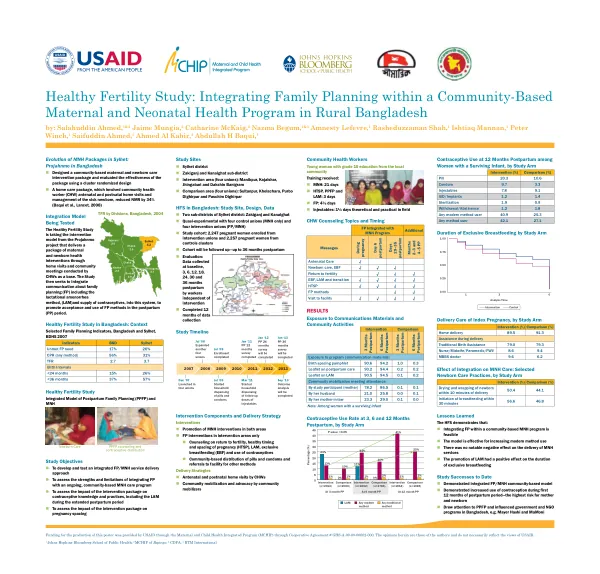
The study was conducted in Sylhet District, where the total fertility rate (TFR) was 3.7, significantly higher than the national average of 3.0. Unmet family planning needs were reported at 26%, with a contraceptive prevalence rate of 31%. Formative research conducted in 2006 revealed that birth intervals were short, with 15% of births occurring within 24 months and 37% within 36 months. The study objectives were to understand the context of current fertility-related practices, identify opportunities for delaying first birth past age 19 and increasing birth intervals to a minimum of 36 months, and determine effective communication approaches to promote healthy timing and spacing of pregnancy. The study built on the success of Projahnmo, a community-based maternal and newborn care intervention package that was evaluated in a cluster randomized design from 2002 to 2006. The Projahnmo package included home care visits by community health workers (CHWs) and management of sick newborns using parenteral antibiotics at home. The package was associated with a 34% reduction in neonatal mortality and a 2/3rd lower risk of neonatal mortality with a postnatal home visit on day 1 or 2 of birth. The Healthy Fertility Study was designed to integrate postpartum family planning services within the existing MNCH program. The study aimed to understand the context of current fertility-related practices, identify opportunities for promoting healthy timing and spacing of pregnancy, and determine effective communication approaches to promote family planning services. The study was conducted in collaboration with USAID and other partners, and its findings are expected to inform the development of effective family planning programs in rural Bangladesh.
Related documents