ENGENDERHEALTH
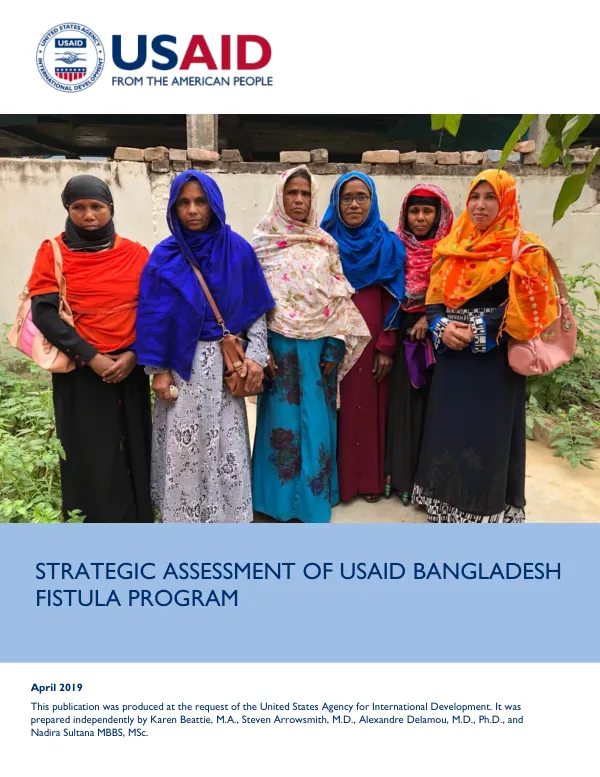
Strategic Assessment of USAID Bangladesh Fistula Program
The Fistula Care Plus (FC+) project is a five-year global project supported by the USAID Offices of Population and Reproductive Health and Maternal and Child Health and Nutrition.
2019 · 91 pages
Sign in to readA free account is required to download.
Abstract
The project began in 2013 and was recently extended to March 2021. The project is designed to prevent, detect, and treat obstetric fistula (OF), an abnormal connection between the genital tract and bladder, resulting in a continuous flow of urine and/or feces after prolonged obstructed labor during childbirth, normally occurring where women do not have access to emergency obstetric care. The assessment aimed to identify and prioritize the most relevant interventions to address fistula prevention, treatment, and reintegration within USAID/Bangladesh's future portfolio. The assessment questions focused on current and socio-demographic characteristics of women suffering from fistula, and the main drivers of the condition in Bangladesh; equity issues associated with access to fistula treatment; implementation approaches that have yielded good results under the project; approaches used to address other maternal morbidities, especially pelvic organ prolapse; and pending or programmatic gaps toward ending fistula in Bangladesh that USAID should prioritize for program intervention. The assessment found that the current social and demographic characteristics of Bangladeshi women suffering from fistula include a high prevalence of poverty, low education levels, and limited access to healthcare services. The main drivers of fistula in Bangladesh include lack of access to emergency obstetric care, poor maternal health services, and limited awareness about fistula prevention and treatment. The impact of fistula on affected women and their families is significant, with many women experiencing social isolation, economic hardship, and physical suffering. Equity issues associated with access to fistula treatment services in Bangladesh include limited availability of services in rural areas, high costs of treatment, and limited access to care for marginalized groups such as women with disabilities. The continuum of fistula care includes prevention, detection, treatment, and reintegration, with a focus on addressing the social and economic determinants of health. Implementation approaches that have yielded the best results under the USAID-funded Fistula Care Plus program include community-based interventions, such as peer education and support groups, and facility-based interventions, such as surgical repair and post-operative care. USAID implementing partners are also using approaches to treat other maternal morbidities, such as pelvic organ prolapse, with varying degrees of success. Pending issues and programmatic gaps exist toward ending fistula in Bangladesh, including leadership and accountability gaps, limited availability of evidence-based services, and the need for more effective interventions to address iatrogenic fistula. The assessment recommends prioritizing program interventions to address these gaps, including strengthening leadership and accountability, increasing access to evidence-based services, and developing more effective interventions to address iatrogenic fistula.