USAID
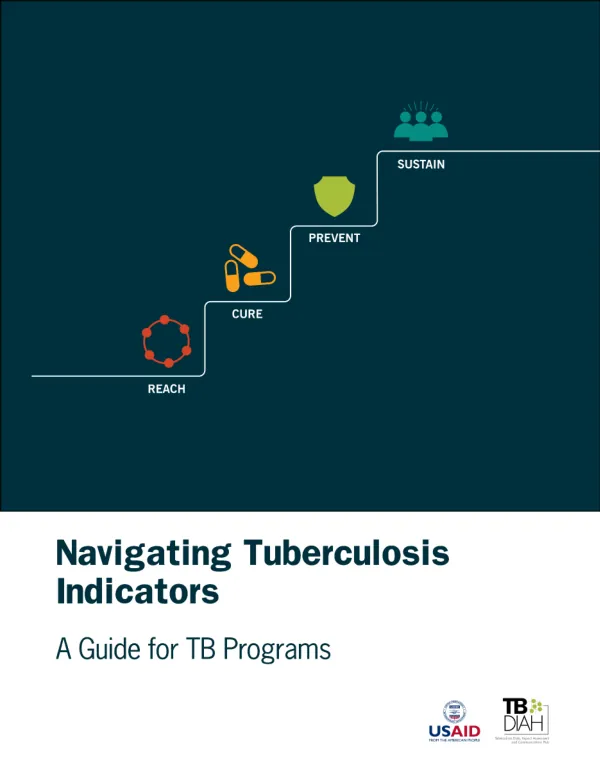
Navigating TB Indicators: A Guide for TB Programs
The Performance-Based Monitoring and Evaluation Framework (PBMEF) is a key component of USAID's efforts to ensure effective accountability of investments in tuberculosis (TB) at global, regional, and country levels.
2021 · 162 pages
Sign in to readA free account is required to download.
Abstract
The framework streamlines and prioritizes indicators for monitoring progress toward reaching global TB milestones and targets in USAID TB priority countries. It is fully aligned with existing strategies, such as the U.S. Government's Global TB Strategy, the National Action Plan for Combating Multidrug-Resistant Tuberculosis, the Stop TB Partnership's Global Plan to End TB, the World Health Organization's (WHO) End TB Strategy, and the United Nations General Assembly High-Level Meeting (UNGA HLM) on TB's Political Declaration on TB. The PBMEF is designed to standardize, analyze, and use information to inform existing or new TB strategies and interventions, strengthen national monitoring and evaluation (M&E) systems and capacity, ensure efficient use of resources, and promote investments-for-results approaches. The framework also serves as a tool to advocate for resources, strengthen policies, and expand the scope of collaboration and coordination among partners. Complementing the framework is an online TB Data Hub and communication repository (www.tbdiah.org) that harnesses TB data and expands sharing of TB information at global and national levels. The guide provides an overview of USAID's strategic M&E framework to achieve global targets, describes standard core and extended indicators to monitor progress toward reaching TB targets in USAID-supported countries, and encourages consistent use of indicators to monitor and evaluate TB programs. The framework is intended for use by country programs, ministries of health (MOHs), donors, and other partners to ensure effective accountability of investments in TB. The framework prioritizes indicators for monitoring progress toward reaching global TB milestones and targets in USAID TB priority countries. It includes core indicators, such as TB case detection rates, treatment success rates, and mortality rates, as well as extended indicators, such as TB infection rates, drug-resistant TB rates, and TB-related mortality rates. The framework also includes data sources, such as TB reporting and recording forms, the WHO TB Database and Reporting Portal, and the TB Data Hub. Implementation of the framework by country programs, MOHs, donors, and other partners will help to standardize, analyze, and use information to inform existing or new TB strategies and interventions, strengthen national M&E systems and capacity, ensure efficient use of resources, and promote investments-for-results approaches. The framework is intended to be a living document, with regular updates and revisions to reflect changing TB priorities and strategies. The framework is aligned with existing strategies and frameworks, including the U.S. Government's Global TB Strategy, the National Action Plan for Combating Multidrug-Resistant Tuberculosis, the Stop TB Partnership's Global Plan to End TB, the WHO's End TB Strategy, and the UNGA HLM on TB's Political Declaration on TB. It is also supported by an online TB Data Hub and communication repository (www.tbdiah.org) that harnesses TB data and expands sharing of TB information at global and national levels.
Related documents