USAID
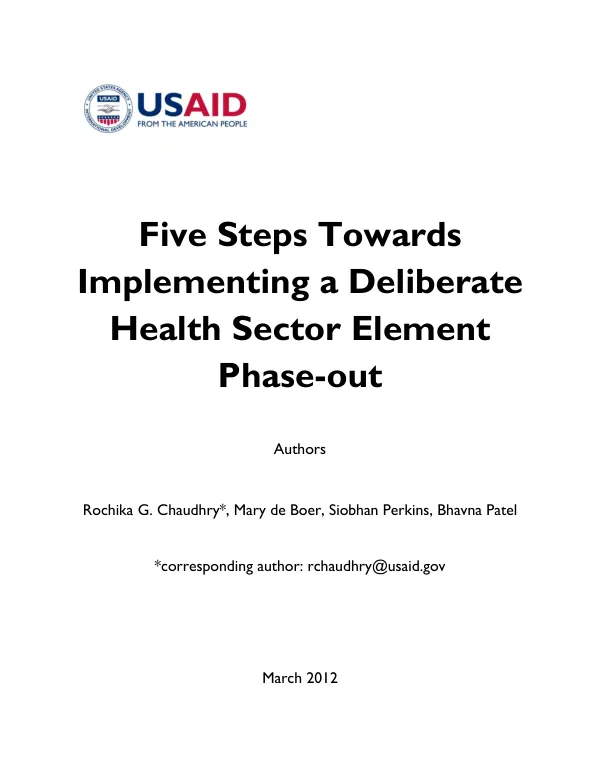
Five Steps Towards Implementing a Deliberate Health Sector Element Phase-out
Careful coordination and communication with all stakeholders is a crucial first step in a successful health sector element phase-out.
2012 · 20 pages
Sign in to readA free account is required to download.
Abstract
This involves ensuring that all parties, including internal and external partners, are aware of the close-out dates and the planned transition process. Effective communication helps to build trust and understanding among stakeholders, reducing the risk of misunderstandings and conflicts. The next step in the phase-out process is the development of a written phase-out strategy with the host country government and partners. This document outlines the planned transition process, including the transfer of responsibilities, resources, and activities to local organizations. The phase-out strategy should be tailored to the specific needs and context of the country, taking into account the country's development goals, priorities, and capacity. Strengthening existing or new collaborations for leaving a USAID legacy in country is another key step in the phase-out process. This involves identifying opportunities to transfer program activities to local organizations, building their capacity, and ensuring that they have the necessary resources and support to sustain the program benefits. By strengthening local collaborations, USAID can leave a lasting legacy in the country, ensuring that the program goals and achievements are continued beyond the close-out date. Effective communication and documentation of program successes are also critical components of a successful phase-out. This involves documenting the program's achievements, lessons learned, and best practices, and sharing this information with stakeholders, including the host country government, partners, and local organizations. By documenting program successes, USAID can demonstrate its commitment to sustainability and ensure that the program's benefits are continued beyond the close-out date. Finally, evaluation of the program or health sector element at the end of the assistance is a critical step in the phase-out process. This involves assessing the program's achievements, identifying areas for improvement, and documenting lessons learned. The evaluation should be conducted in a transparent and participatory manner, involving all stakeholders, including the host country government, partners, and local organizations. By evaluating the program, USAID can identify areas for improvement and ensure that the program's goals and achievements are continued beyond the close-out date. The transition period, which occurs between the decision to phase-out and the completion of phase-out, is a critical period in the phase-out process. During this period, gains made under past programs should be consolidated, ongoing activities that do not contribute to successful graduations/phase-out are removed, and new activities are introduced only if they are necessary for successful graduation or phase-out of the health sector element. The transition period is also an opportunity to build the capacity of local organizations and ensure that they have the necessary resources and support to sustain the program benefits. A phase-out strategy is a description of a process to withdraw resources while ensuring, to the extent possible, achievement of the program goals is continued. It is a sustainability plan in effect, developed and implemented in consideration of the country context and situation. The main aim of any phase-out strategy or graduation plan is to ensure that the program goals and achievements are continued in the country, in effect a sustainability plan.
Related documents