USAID DEC
HOJA DE ENTREVISTAS CON JEFES DE SERVICIO Y DIRECTORES DE HOSPITALES PARA VIGILANCIA DE CASOS DE SEPSIS Y USO RACIONAL DE ANTIBIOTICOS
Sign inUSAID DEC
HOJA DE ENTREVISTAS CON JEFES DE SERVICIO Y DIRECTORES DE HOSPITALES PARA VIGILANCIA DE CASOS DE SEPSIS Y USO RACIONAL DE ANTIBIOTICOS
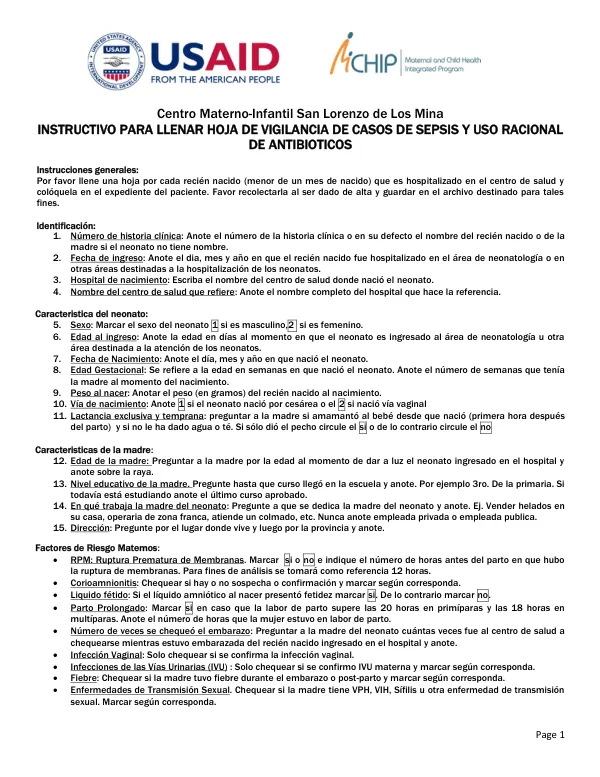
The Centro Materno-Infantil San Lorenzo de Los Mina hospital has implemented a surveillance system for cases of sepsis and rational use of antibiotics in newborns.
3 pages
Sign in to readA free account is required to download.
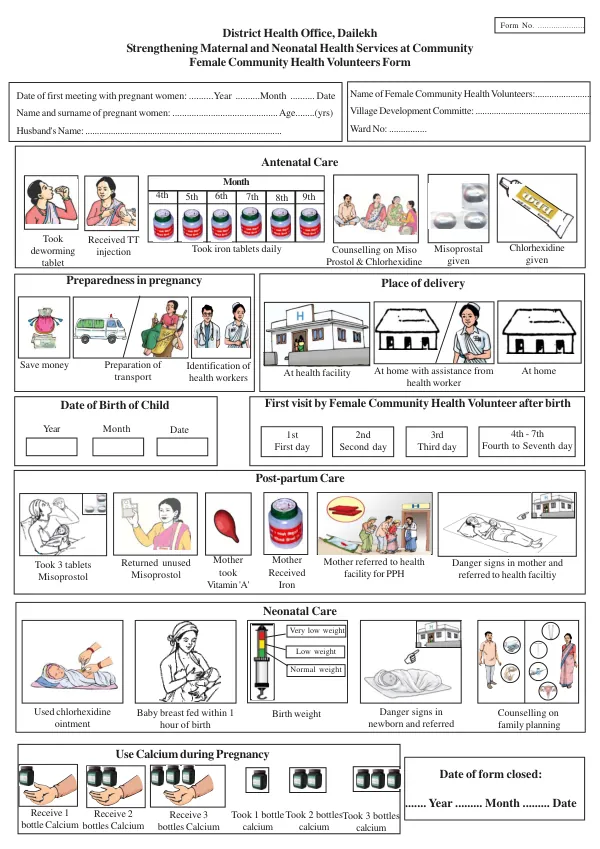
Abstract
The system involves filling out a monitoring sheet for each newborn hospitalized in the center, which is then placed in the patient's file and collected upon discharge. The monitoring sheet includes various sections to collect information on the newborn's characteristics, such as sex, age at admission, birth date, gestational age, birth weight, and mode of delivery. The sheet also collects information on the mother's characteristics, including age, level of education, occupation, and address. The sheet includes a section on risk factors for maternal infection, which includes questions about rupture of membranes, chorioamnionitis, foul-smelling amniotic fluid, prolonged labor, and maternal infections such as vaginal infections, urinary tract infections, and sexually transmitted infections. The sheet also includes a section on risk factors for neonatal sepsis, which includes questions about prematurity, low birth weight, umbilical cord abnormalities, multiple catheterization, multiple punctures, surgical interventions, resuscitation, asphyxia, assisted ventilation, and other factors. The monitoring sheet includes a section on the primary diagnosis of admission, which requires the healthcare provider to write the primary diagnosis of the newborn's admission. The sheet also includes a section on signs and symptoms of sepsis, which requires the healthcare provider to check off the presence of fever or hypothermia, respiratory difficulty, lethargy, abdominal distension, vomiting, fontanelle bulging or tension, and other symptoms. The sheet includes a section on indirect tests for sepsis, which includes questions about leukocytosis, leukopenia, positive protein C reactivity, thrombocytosis, thrombocytopenia, neutrophilia, and other tests. The monitoring sheet includes a section on cultures, which requires the healthcare provider to record the type of culture taken, the date of sample collection, and the date of result delivery. The sheet also includes a section on the results of radiography, which requires the healthcare provider to record any abnormal findings. The sheet includes a section on treatment initiation, which requires the healthcare provider to record the date of treatment initiation, the type of antibiotics used, the dose per kilogram of body weight per day, and the number of days of treatment. The monitoring sheet includes a section on changes in antibiotics, which requires the healthcare provider to record the date of change, the new antibiotic regimen, and the dose per kilogram of body weight per day. The sheet includes a section on the diagnosis of discharge, which requires the healthcare provider to select one of the following diagnoses: early sepsis, late sepsis, nosocomial sepsis, or clinical sepsis suspicion. The monitoring sheet includes a section on the condition at discharge, which requires the healthcare provider to record whether the newborn was discharged alive, deceased, or referred to another hospital. The sheet also includes a section on the length of hospital stay, which requires the healthcare provider to record the number of days the newborn was hospitalized.