USAID
How-To Guide I: Developing Situation Models in USAID Biodiversity Programming
Developing Situation Models in USAID Biodiversity Programming is a key component of effective conservation efforts.
2016 · 2 pages
Sign in to readA free account is required to download.
Abstract
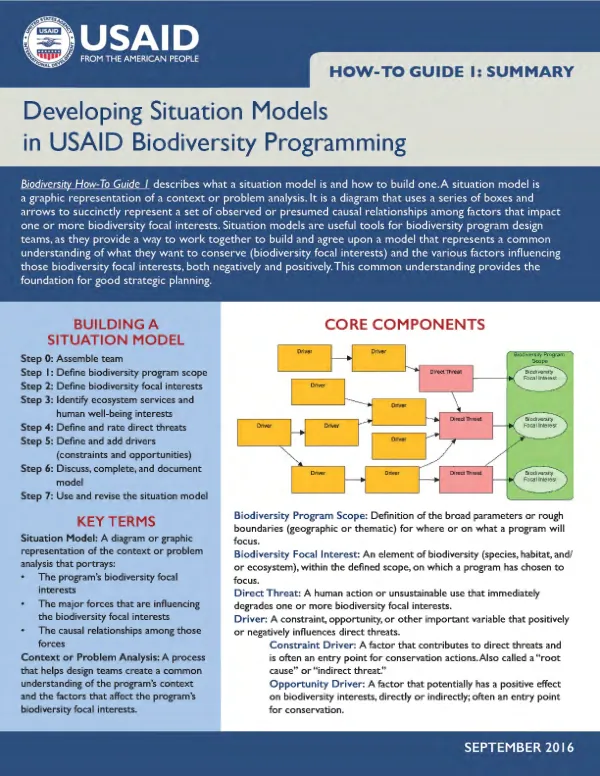
A situation model is a graphic representation of a context or problem analysis, used to succinctly represent a set of observed or presumed causal relationships among factors that impact biodiversity focal interests. This tool is particularly useful for biodiversity program design teams, as it provides a common understanding of what they want to conserve and the various factors influencing those interests. The process of building a situation model involves several key steps. First, a team must assemble to work together on the model. Next, the team defines the biodiversity program scope, which includes the broad parameters or rough boundaries for where or on what the program will focus. The team then defines biodiversity focal interests, which are elements of biodiversity within the defined scope that the program has chosen to focus on. Direct threats, such as human actions or unsustainable use, are also identified and defined as factors that immediately degrade one or more biodiversity focal interests. Drivers, which are constraints, opportunities, or other important variables that positively or negatively influence direct threats, are also defined. These drivers can be categorized as either constraint drivers, which contribute to direct threats and are often an entry point for conservation actions, or opportunity drivers, which potentially have a positive effect on biodiversity interests. A situation model typically includes several key components, including biodiversity program scope, biodiversity focal interests, direct threats, drivers, and ecosystem services and human well-being interests. The model also includes stresses, which are altered key ecological attributes of biodiversity focal interests, and human well-being interests, which are components of human well-being affected by the status of biodiversity focal interests. Design teams should follow several key tips when building a situation model. These include proactively identifying and developing a plan to fill information gaps, ensuring that the scope is informed by the Biodiversity Policy and uses CDCS Results Framework language, and focusing on priority threats. The model should also be kept simple, with a manageable balance of relevant factors and key causal relationships. Situation models have several uses, including organizing and documenting the thinking of the design team, identifying additional assessments needed to complete the context or problem analysis, and serving as a communication tool with stakeholders. They can also inform the design of projects and activities, the procurement of mechanisms, and adaptive management, and assist in developing theories of change and strategic approaches needed to address the problem. The USAID Biodiversity Policy (2014) and USAID DADS Chapter 20: Program Cycle Operational Policy (2016) provide guidance on the use of situation models in biodiversity programming. Additional resources, such as the Conservation Measures Partnership and Miradi, are also available to support the development and use of situation models.