USAID DEC
Identifying Maternal Deaths by Using the RAPID Method in Three Districts in Banten Province, Indonesia
Sign inMART PROJECT
Identifying Maternal Deaths by Using the RAPID Method in Three Districts in Banten Province, Indonesia
Maternal deaths in hospitals in Indonesia are often underreported due to misclassification of indirect maternal deaths as non-maternal deaths and the lack of standardized routine data recording and reporting systems.
2019 · 1 pages
Sign in to readA free account is required to download.
Abstract
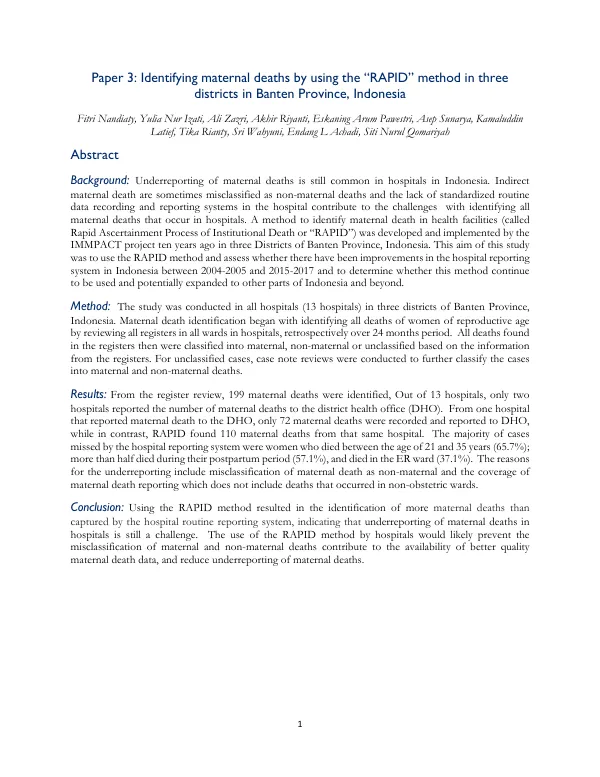
The Rapid Ascertainment Process of Institutional Death, or RAPID method, was developed and implemented by the IMMPACT project in three districts of Banten Province, Indonesia, ten years ago. This method aims to identify maternal deaths in health facilities. The study was conducted in all 13 hospitals in the three districts of Banten Province, Indonesia. Maternal death identification began with reviewing all registers in all wards in hospitals, retrospectively over a 24-month period. All deaths found in the registers were classified into maternal, non-maternal, or unclassified based on the information from the registers. For unclassified cases, case note reviews were conducted to further classify the cases into maternal and non-maternal deaths. The RAPID method identified 199 maternal deaths, while the hospital routine reporting system reported only 72 maternal deaths from one hospital that reported to the district health office. The majority of cases missed by the hospital reporting system were women who died between the ages of 21 and 35 years, with more than half dying during their postpartum period and in the ER ward. The reasons for underreporting include misclassification of maternal death as non-maternal and the coverage of maternal death reporting, which does not include deaths that occurred in non-obstetric wards. The use of the RAPID method resulted in the identification of more maternal deaths than captured by the hospital routine reporting system, indicating that underreporting of maternal deaths in hospitals is still a challenge. The RAPID method has the potential to prevent the misclassification of maternal and non-maternal deaths, contribute to the availability of better quality maternal death data, and reduce underreporting of maternal deaths. The method's effectiveness in identifying maternal deaths in hospitals suggests its potential for use and expansion to other parts of Indonesia and beyond. The study's findings highlight the need for improved data recording and reporting systems in hospitals to accurately capture maternal deaths and provide better quality data for maternal health programs.