AVENIR HEALTH
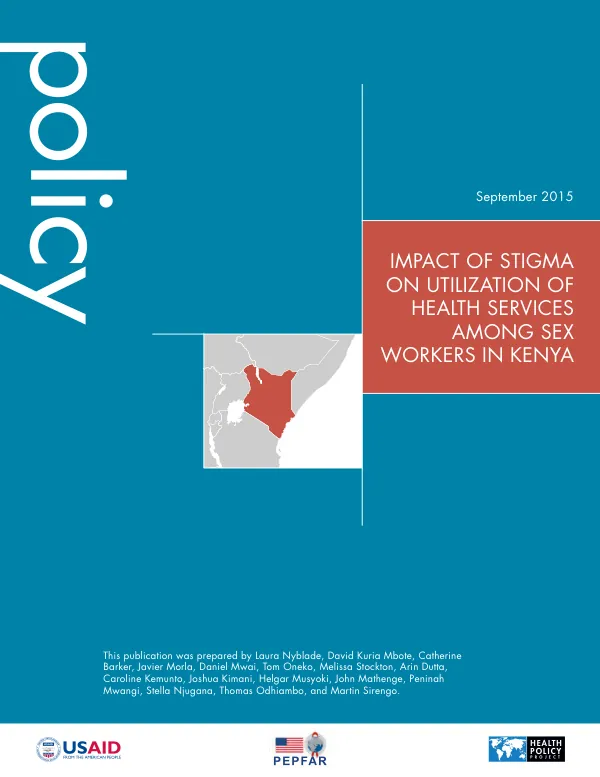
Impact of Stigma on Utilization of Health Services among Sex Workers in Kenya
The study on the impact of stigma on utilization of health services among sex workers in Kenya was conducted in September 2015.
2015 · 86 pages
Sign in to readA free account is required to download.
Abstract
The research aimed to investigate the relationship between stigma and health service utilization among female sex workers (FSWs) and male sex workers (MSWs) in Kenya. The study was designed to explore the various forms of stigma experienced by sex workers, including anticipated, witnessed/heard, and experienced stigma, as well as internalized stigma. The study population consisted of FSWs and MSWs from various sites in Kenya, including Nairobi, Mombasa, and Kisumu. The research team used a mixed-methods approach, combining both qualitative and quantitative data collection and analysis methods. The study procedures involved in-depth interviews with sex workers, as well as a survey to collect quantitative data. The study found that sex workers experienced significant levels of stigma, which was associated with avoidance and delay of health services. The research revealed that anticipated stigma, witnessed/heard stigma, and experienced stigma were all significant predictors of health service utilization among sex workers. Internalized stigma was also found to be a significant predictor of health service utilization, with sex workers who experienced internalized stigma being less likely to access health services. The study also found that disclosure of HIV status was a significant predictor of health service utilization, with sex workers who disclosed their HIV status being more likely to access health services. Social capital and resistance to stigma were also found to be significant predictors of health service utilization, with sex workers who had strong social connections and were resistant to stigma being more likely to access health services. The study's findings suggest that stigma is a significant barrier to health service utilization among sex workers in Kenya. The research highlights the need for interventions that address stigma and promote health service utilization among sex workers. The study's recommendations include the development of stigma-reduction programs, as well as the provision of health services that are sensitive to the needs of sex workers. The study's methodology involved a mixed-methods approach, combining both qualitative and quantitative data collection and analysis methods. The research team used in-depth interviews with sex workers, as well as a survey to collect quantitative data. The study's data were analyzed using logistic regression, which allowed the researchers to examine the relationship between stigma and health service utilization. The study's findings have important implications for the development of interventions to address stigma and promote health service utilization among sex workers in Kenya. The research highlights the need for a comprehensive approach that addresses the social, economic, and cultural factors that contribute to stigma and limit access to health services.
Related documents