AVENIR HEALTH
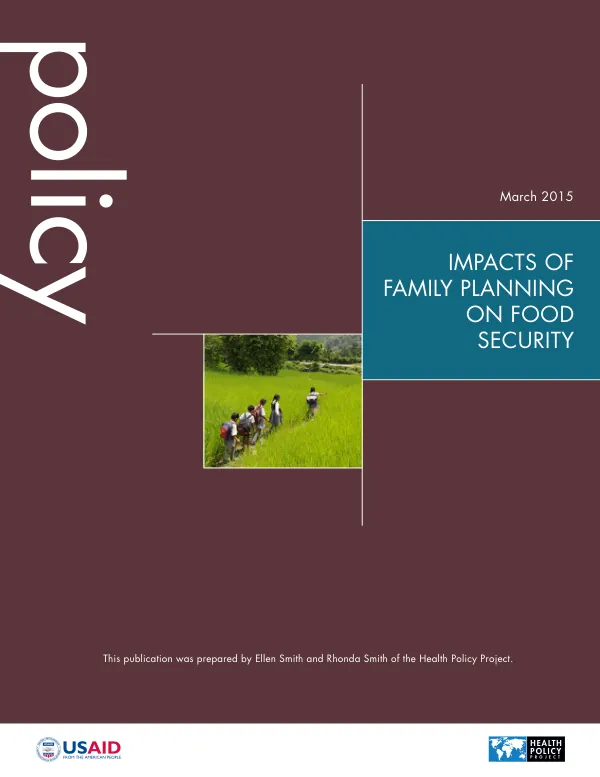
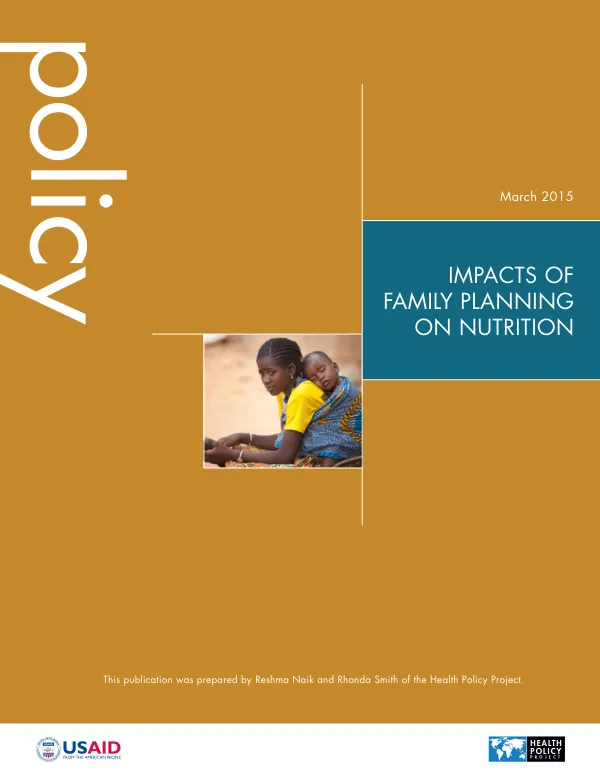
Impacts of Family Planning on Nutrition
Family planning has a significant influence on achieving key nutrition outcomes.
2015 · 36 pages
Sign in to readA free account is required to download.
Abstract
National and local programs aiming to improve nutrition may benefit from strengthening family planning services and integrating family planning strategies into multisectoral development policies and implementation plans. Family planning affects nutrition in direct and indirect ways, including the benefits of well-spaced births, which allow women's bodies to recuperate and replenish essential nutrients, leading to better nutritional outcomes, such as healthy birth weight for their infants. The benefits of optimal birth spacing also have far-reaching effects into childhood, reducing the prevalence of one key measure of malnutrition—stunting—among children under five. Family planning can help women avoid high-risk pregnancies and have children at the healthiest times in life, for example, when they are 18–34 years old and both physically and psychologically mature enough for motherhood. For adolescents, delaying pregnancy until a healthy age (>18 years) can improve their own growth and development and also reduces the risk of poor nutritional outcomes for their infants. A growing body of evidence shows that pregnancy intention can also influence nutritional outcomes. Children from unintended pregnancies may be at risk of poor nutrition, underscoring the important role of family planning. Family planning indirectly affects nutrition via its impact on infant and young child feeding practices. When births are well spaced, mothers have more time, energy, and resources to adequately breastfeed and feed their young infants and children. Research shows that when pregnancies are planned and occur when women are older than 18 years, breastfeeding practices improve, leading to improved nutrition. The 2013 Lancet Nutrition Series on Maternal and Child Nutrition highlighted the scope, gravity, and consequences of worldwide undernutrition, particularly among women, infants, and children. Undernutrition contributes to nearly half of all childhood deaths, with about 3.1 million children under age five dying each year from malnutrition-related causes. Tackling the challenge of undernutrition will require cross-sector collaboration, innovative approaches, and optimizing the use of all available interventions. The USAID-funded Health Policy Project conducted a rapid review of empirical evidence on the linkages between family planning and nutritional status, focusing on the unidirectional impacts of family planning on the nutrition of women, infants, and children. The review identified important gaps in current understanding, revealing areas where further research or investigation may be warranted. The findings presented in this report should help to further policy dialogue and inform policy and programmatic decisions on how family planning can be better leveraged to improve nutrition outcomes. Family planning is defined as the use of contraceptive methods to attain the desired number of children and to plan and space the timing of births. Unintended pregnancy is a pregnancy reported to have been either unwanted or mistimed, while undernutrition is the outcome of insufficient food intake and repeated infectious diseases, which includes being underweight for one's age, too short for one's age (stunted), dangerously thin for one's height (wasted), and deficient in vitamins and minerals (micronutrient malnutrition).