JOHN SNOW INTERNATIONAL
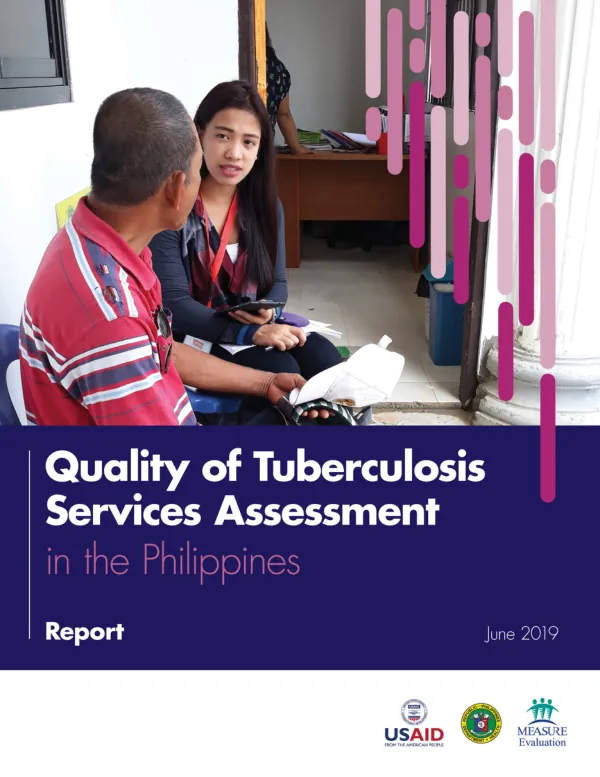
Philippines Quality of Tuberculosis Services Assessment
The Philippines Quality of Tuberculosis Services Assessment was conducted to assess the quality of tuberculosis (TB) services in the Philippines.
2019 · 70 pages
Sign in to readA free account is required to download.
Abstract
The assessment aimed to identify the strengths and weaknesses of the TB program, with a focus on structural and process indicators. The study was conducted in 2019 and involved a comprehensive review of existing literature, as well as data collection from health facilities, service providers, and patients. The assessment used a mixed-methods approach, combining both quantitative and qualitative data collection and analysis methods. The study population included health facilities, service providers, and patients with TB, who were selected through a stratified sampling procedure. Data were collected using a range of tools, including surveys, interviews, and observations. The assessment identified several structural indicators that affect the quality of TB services in the Philippines. These included the availability of TB services, community linkages, and infrastructure. The study found that TB services were available in most health facilities, but the quality of these services varied significantly. Community linkages were also found to be weak, with many patients reporting difficulty in accessing TB services due to lack of awareness and transportation issues. The assessment also identified several process indicators that affect the quality of TB services. These included TB case management, patient knowledge about TB, and barriers to TB care. The study found that TB case management was often inadequate, with many patients reporting difficulty in accessing treatment due to lack of information and support. Patients' knowledge about TB was also found to be limited, with many reporting a lack of understanding about the disease and its treatment. The assessment identified several key findings and recommendations for improving the quality of TB services in the Philippines. These included the need for improved TB case management, increased community awareness and engagement, and enhanced infrastructure to support TB services. The study also recommended the development of a comprehensive TB program that addresses the needs of patients and service providers. The assessment was conducted by a team of researchers from MEASURE Evaluation, in collaboration with the Philippines National Tuberculosis Control Program and other stakeholders. The study was funded by the United States Agency for International Development (USAID) and was conducted in accordance with international ethical standards. The assessment found that the quality of TB services in the Philippines is variable, with significant variations in the availability and quality of services across different regions and health facilities. The study identified several key challenges that affect the quality of TB services, including inadequate TB case management, limited community awareness and engagement, and inadequate infrastructure to support TB services. The assessment recommended several strategies for improving the quality of TB services in the Philippines. These included the development of a comprehensive TB program that addresses the needs of patients and service providers, the implementation of improved TB case management practices, and the enhancement of community awareness and engagement. The study also recommended the development of a robust monitoring and evaluation system to monitor the quality of TB services and track progress towards improving the quality of care. The assessment was conducted in accordance with international standards for quality of care, including the World Health Organization's (WHO) guidelines for TB care. The study was also conducted in accordance with the principles of human rights and dignity, with a focus on ensuring that the rights of patients with TB are respected and protected.