USAID
Improve Your Health with Nutritious Foods
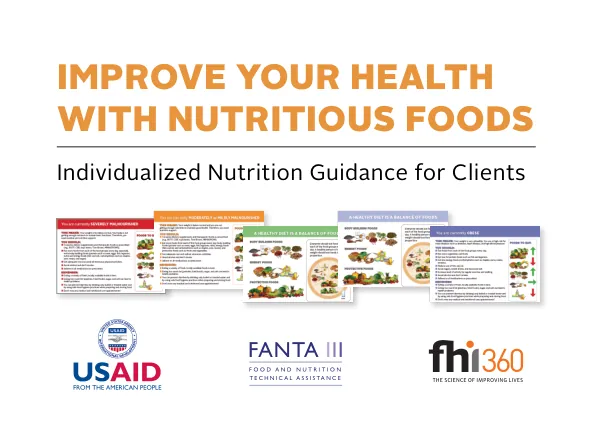
Nutritional guidance for clients is provided through a set of cards that complement the "Improve Your Health with Nutritious Foods" poster.
2017 · 12 pages
Sign in to readA free account is required to download.
Abstract
Health care providers select the appropriate card to counsel clients on improving their diet to meet specific nutritional needs. The cards are designed to be printed and laminated for reuse. The cards address various nutritional statuses, including severe malnutrition, moderate or mild malnutrition, normal weight, and overweight. For individuals who are severely malnourished, the cards recommend consuming dietary supplements and therapeutic foods as prescribed, eating more foods from each food group, and adhering to medications as prescribed. They also advise against strenuous physical activities and recommend drinking only boiled or treated water. Individuals who are moderately or mildly malnourished are advised to consume dietary supplements and therapeutic foods as prescribed, eat more foods from each food group, and get adequate rest. They are also encouraged to avoid alcohol and smoking and adhere to medications as prescribed. For individuals with normal weight, the cards recommend continuing good habits such as eating a variety of healthy foods, maintaining an active life with regular exercise and adequate rest, and adhering to medications as prescribed. They also advise against excessive consumption of fats, oils, and sugar. Individuals who are overweight are advised to eat foods from each food group every day, eat more vegetables and fruits, and eat low-fat protein foods such as fish and legumes. They are also encouraged to reduce their consumption of energy foods, fats, and oils, and avoid sugars, sweet drinks, and excessive salt. The cards emphasize the importance of eating a variety of fresh, locally available foods and practicing safe food hygiene to prevent diarrhea. They also stress the need to adhere to medical and nutritional care appointments and avoid unhealthy habits such as smoking and excessive alcohol consumption. The cards provide a diet proportion wheel that illustrates the recommended proportion of foods from each food group for a healthy person of normal weight. The food groups include fruits and vegetables, grains, legumes and beans, dairy, fish, and chicken, and oils and butter. The cards also categorize foods into body-building foods, energy foods, and protective foods, highlighting the importance of consuming a balanced diet. Overall, the cards aim to provide individualized guidance to clients on improving their diet and nutritional status, promoting healthy eating habits, and preventing nutritional deficiencies and related health problems.