USAID DEC
Improving Earth observation derived characterization of woody vegetation for global drylands using ICESat-2 data: moving beyond canopy heights to biomass modelling
Sign inNEW MEXICO STATE UNIVERSITY
Improving Earth observation derived characterization of woody vegetation for global drylands using ICESat-2 data: moving beyond canopy heights to biomass modelling
The NASA Carbon Cycle and Ecosystems Joint Workshop was held at the University of Maryland, College Park, MD, from May 8-12, 2023.
2023 · 1 pages
Sign in to readA free account is required to download.
Abstract
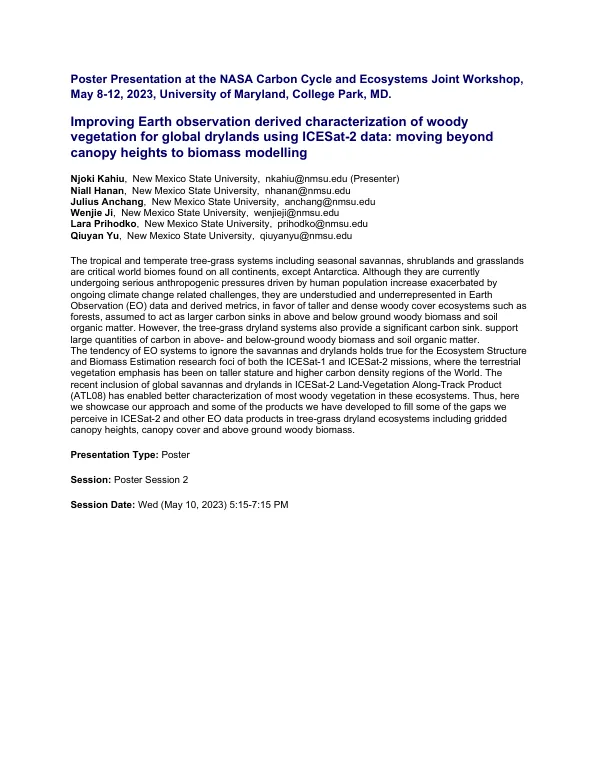
A poster presentation titled "Improving Earth observation derived characterization of woody vegetation for global drylands using ICESat-2 data: moving beyond canopy heights to biomass modelling" was presented by researchers from New Mexico State University. The presentation focused on the critical world biomes of tropical and temperate tree-grass systems, including seasonal savannas, shrublands, and grasslands, which are found on all continents except Antarctica. These tree-grass dryland systems are understudied and underrepresented in Earth Observation (EO) data and derived metrics, despite providing a significant carbon sink. The systems support large quantities of carbon in above- and below-ground woody biomass and soil organic matter. However, EO systems have traditionally emphasized taller stature and higher carbon density regions of the world, such as forests. The recent inclusion of global savannas and drylands in the ICESat-2 Land-Vegetation Along-Track Product (ATL08) has enabled better characterization of most woody vegetation in these ecosystems. The researchers showcased their approach and developed products to fill gaps in ICESat-2 and other EO data products in tree-grass dryland ecosystems. These products include gridded canopy heights, canopy cover, and above-ground woody biomass. The presentation highlighted the potential of ICESat-2 data to improve the characterization of woody vegetation in global drylands, moving beyond canopy heights to biomass modelling. This research has implications for understanding the carbon cycle and ecosystems in these critical world biomes. The tree-grass dryland systems are undergoing serious anthropogenic pressures driven by human population increase and climate change-related challenges. These pressures have significant impacts on the ecosystems, including changes in vegetation structure and function. The researchers' work aims to improve our understanding of these systems and provide valuable insights for managing and conserving these critical ecosystems. The presentation demonstrated the potential of ICESat-2 data to support research and management efforts in these areas. The presentation was part of the Poster Session 2, which took place on Wednesday, May 10, 2023, from 5:15-7:15 PM. The researchers' work contributes to the ongoing efforts to better understand and manage the complex interactions between human activities and the environment in these critical world biomes.
Related documents