THE WORLD FOOD PROGRAMME
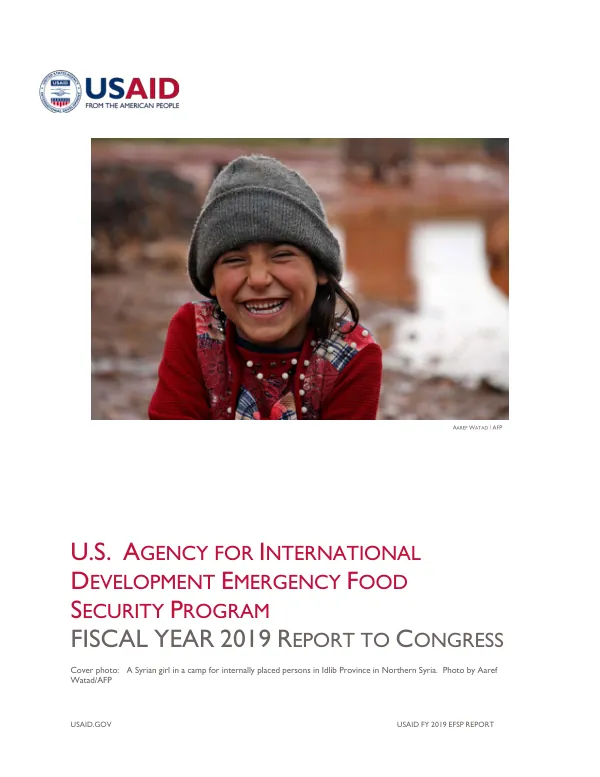
USAID FY 2019 IFAR Report
Acute hunger levels remained high globally in Fiscal Year (FY) 2019, driven by conflict and insecurity.
2019 · 35 pages
Sign in to readA free account is required to download.
Abstract
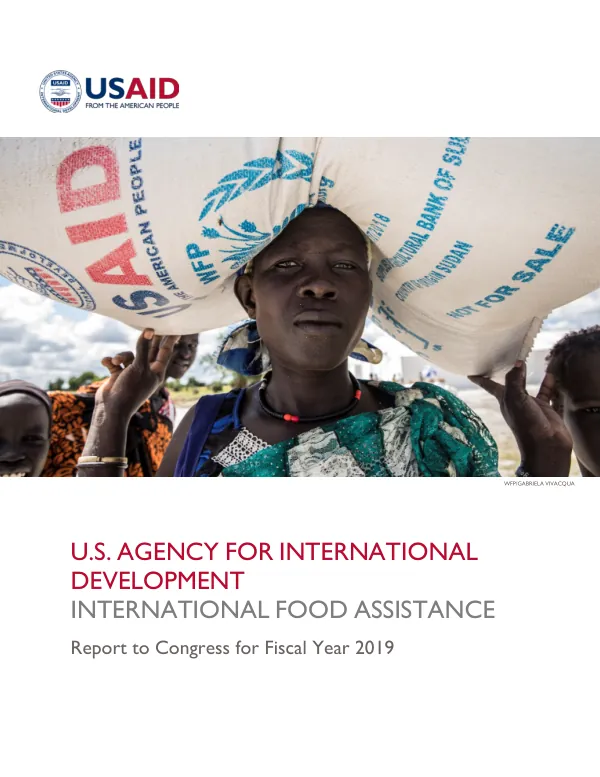
The Famine Early Warning Systems Network (FEWS NET), funded by the U.S. Agency for International Development (USAID), estimated that 85 million people across 46 countries needed emergency food assistance in Calendar Year 2019, nearly double the level of need from 2015. Two main factors contributed to the elevated levels of global food-insecurity: the persistence of multiple, large-scale conflicts and the recurrence of climatic shocks or extreme weather patterns. The Office of Food for Peace (FFP) within the Bureau for Democracy, Conflict, and Humanitarian Assistance (DCHA) at USAID provided food assistance to save lives, reduce suffering, and support recovery for millions of people in both acute and chronic emergencies. In FY 2019, USAID provided nearly $1.8 billion in assistance under Title II of the Food for Peace Act, which funded the procurement of more than 1.6 million metric tons of food that served a total of nearly 37 million beneficiaries in 36 countries. More than 83 percent of USAID's assistance under Title II went to emergency responses, and roughly 16 percent to non-emergency programming. The 2018 Farm Bill included key technical changes to the Food for Peace Act that increased the efficiency and improved the oversight and management of food assistance under Title II during FY 2019. The elimination of the required minimum for monetization enabled more funding to go toward programs funded under Title II, allowing USAID to reach more beneficiaries with food assistance. Selling U.S. commodities for cash to use for non-emergency programming is inefficient, resulting in an average financial loss of 25 cents on the dollar for USAID. USAID also updated and reissued several Food for Peace Information Bulletins to ensure staff and implementing partners understand the programmatic impacts of the reforms clearly. The bulletins addressed changes to monetization, programmatic oversight, and internal transportation, storage, and handling (ITSH) authorities. The Farm Bill expanded the ITSH authority to align better with improvements made by the World Food Programme (WFP) in its categories, allowing DCHA/FFP to continue to cover the implementation costs associated with providing U.S. agricultural commodities in emergency programs. In FY 2019, USAID continued to improve aspects of its food assistance, including packaging, the quality and safety of the food it purchases and distributes, and the management of its supply-chain. USAID piloted a more-resilient, puncture-resistant hybrid (nylon and paper) packaging for fortified flours, which protects them against breakage and pest infestations to preserve the integrity of the food. USAID also collaborated with the WFP to improve the shelf life of high-energy biscuits (HEB), increasing it from a few months to two years.