BREAKTHROUGH ACTION
Increasing care seeking for children with fever among women in Kebbi State
The Breakthrough RESEARCH project conducted a behavioral surveillance survey for health among women who had a pregnancy or birth in the previous two years in Kebbi State.
2021 · 2 pages
Sign in to readA free account is required to download.
Abstract
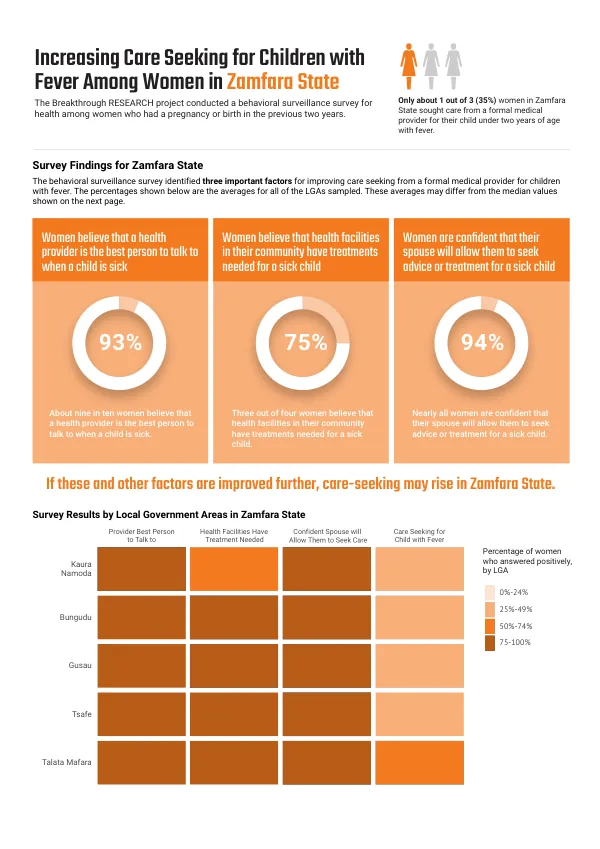
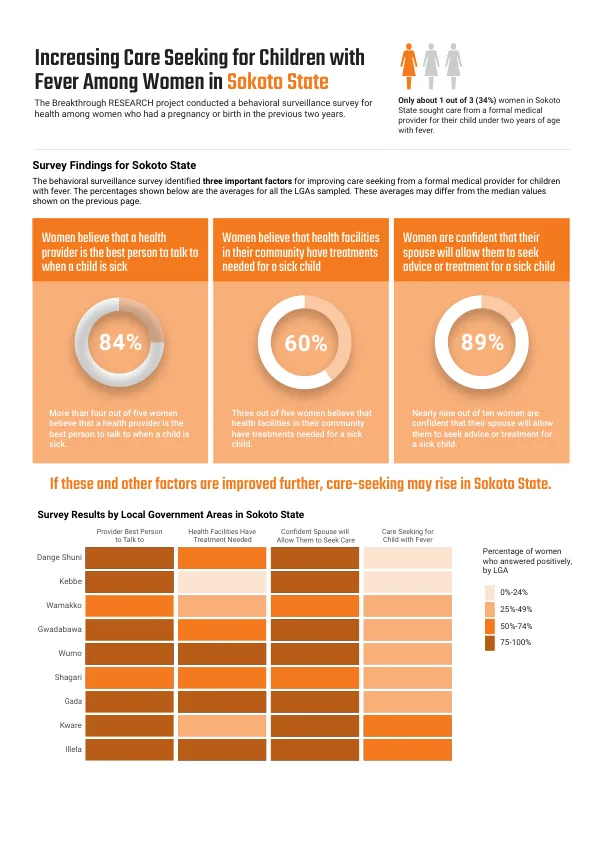
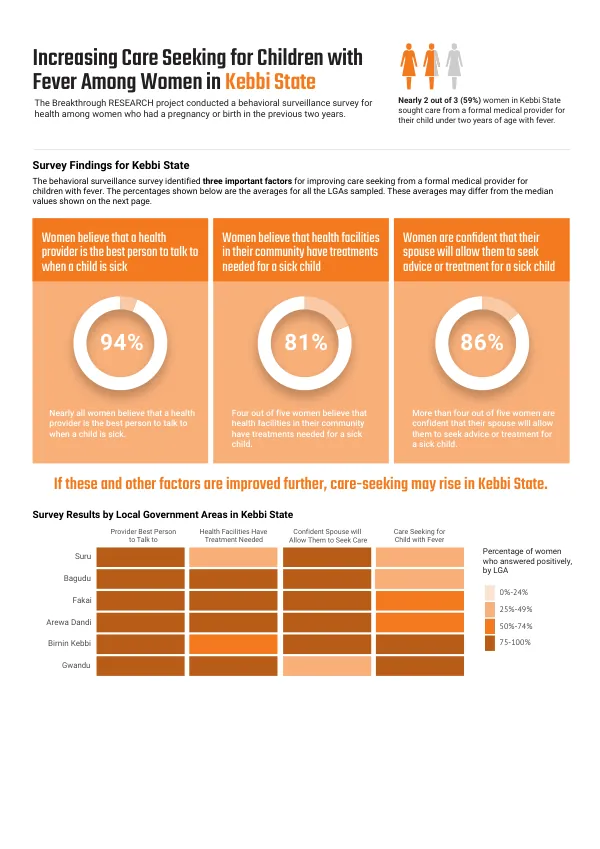
The survey aimed to identify factors that influence care seeking from a formal medical provider for children with fever. The results showed that nearly 2 out of 3 (59%) women in Kebbi State sought care from a formal medical provider for their child under two years of age with fever. The survey identified three important factors for improving care seeking from a formal medical provider for children with fever. Firstly, women believe that a health provider is the best person to talk to when a child is sick, with 94% of women agreeing with this statement. Secondly, women are confident that their spouse will allow them to seek advice or treatment for a sick child, with 81% of women agreeing with this statement. Lastly, women believe that health facilities in their community have treatments needed for a sick child, with 86% of women agreeing with this statement. The survey results also showed that there are variations in the levels of care seeking for child fever across different local government areas (LGAs) in Kebbi State. LGAs shaded in green have higher levels of care seeking, while LGAs shaded in red have lower levels of care seeking. The median values for each LGA are shown in the survey results, with half of the LGAs below the median value (red) and half above the median value (green). The findings of the survey suggest that improving care seeking for child fever in Kebbi State requires addressing the barriers that inhibit women from seeking formal medical care when their child has a fever. These barriers may include lack of access to health facilities, lack of confidence in the quality of health services, and lack of support from spouses. On the other hand, the survey also identified facilitators that increase women's ability to seek formal medical care for their child's fever, such as strong leadership, community engagement, and better resourced and managed health facilities. To improve care seeking for child fever in Kebbi State, it is essential to understand the factors that influence care seeking and to develop targeted interventions to address the barriers and facilitators identified in the survey. This may involve strengthening health facilities, improving the quality of health services, and increasing community engagement and support for women to seek formal medical care when their child has a fever.