USAID DEC
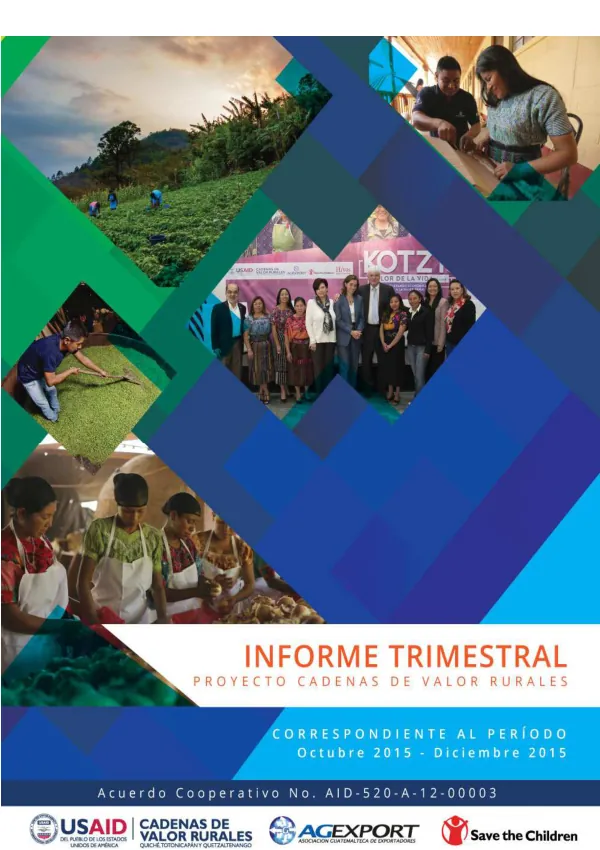
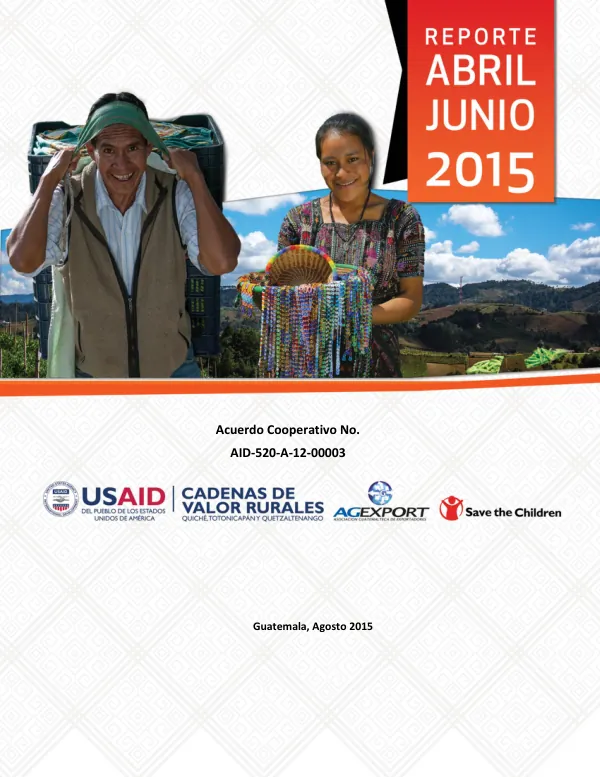
Informe trimestral correspondiente a abril a junio 2015: Proyecto Cadenas de Valor Rurales
Sign inSAVE THE CHILDREN FUND
Informe trimestral correspondiente a abril a junio 2015: Proyecto Cadenas de Valor Rurales
The agricultural development initiative in Guatemala, led by the Asociación Guatemalteca de Exportadores (AGEXPORT), began in 2012 with funding from the United States Agency for International Development (USAID).
2015 · 79 pages
Sign in to readA free account is required to download.
Abstract
The project, known as the Cadenas de Valor Rurales (RVCP), aimed to expand the participation of rural families in selected value chains to increase their incomes. The project focused on three main sectors: horticulture, coffee, and handicrafts. The geographic area of intervention included 12 municipalities in the departments of Quiché, Totonicapán, and Quetzaltenango. The project's objective was to improve the competitiveness of the value chains, expand participation in rural value chains, increase agricultural productivity, and expand markets and commercialization through private sector innovation. The project's implementation was led by a consortium of organizations, including AGEXPORT, Save the Children, Instituto de Nivelación y Capacitación (INCAP), and Vital Voices Guatemala. The project's budget was $23 million, and it was implemented over a period of five years, from May 2012 to May 2017. The project's progress was monitored and evaluated through a series of indicators, including the number of households and businesses participating in the value chains, the volume of sales, and the number of jobs created. The project also implemented a number of activities to promote sustainability, equity, and cultural identity. In the period from April to June 2015, the project made significant progress in achieving its objectives. The number of households and businesses participating in the value chains increased, and the volume of sales also increased. The project also created a number of jobs and implemented a number of activities to promote sustainability, equity, and cultural identity. The project's results for the period from April to June 2015 are presented in the following tables and charts: * Cuadro No. 2 shows the number of households and businesses participating in the value chains, as well as the number of jobs created. * Cuadro No. 4 shows the volume of sales for the component 1. * Cuadro No. 5 shows the number of participants in the SCAA fair. * Cuadro No. 8 shows the number of training sessions provided to members of the boards of directors. * Cuadro No. 9 shows the number of jobs created by the value chains. * Cuadro No. 10 shows the volume of sales generated by the value chains. * Cuadro No. 11 shows the analysis of the yields of beans. * Cuadro No. 12 shows the number of households trained in food management and storage techniques. * Cuadro No. 13 shows the number of households trained in prioritizing family expenses. * Cuadro No. 14 shows the number of households trained in improving food habits. * Cuadro No. 15 shows the number of households trained in using health services. * Cuadro No. 16 shows the number of people trained in infant nutrition and health. * Cuadro No. 17 shows the number of promoters trained and reinforced in topics related to food security and nutrition. * Cuadro No. 18 shows the number of families that received counseling in the home and participated in educational sessions on risk management (Encadenamientos phase I). * Cuadro No. 19 shows the number of families that participated in educational sessions on risk management related to handicrafts. * Cuadro No. 20 shows the number of final diagnoses of rural value chains of vegetables and coffee. * Cuadro No. 21 shows the number of diagnoses in progress of rural value chains of vegetables and coffee. * Cuadro No. 22 shows the number of diagnoses in progress of rural value chains of handicrafts. * Cuadro No. 23 shows the number of families that received educational sessions and home visits on "feeding the sick child" in the value chains of vegetables and coffee. * Cuadro No. 24 shows the number of families participating in sessions on feeding the child in the value chains of vegetables and coffee. * Cuadro No. 25 shows the number of handicraft value chains. * Cuadro No. 26 shows the sales of component 6.