DAI
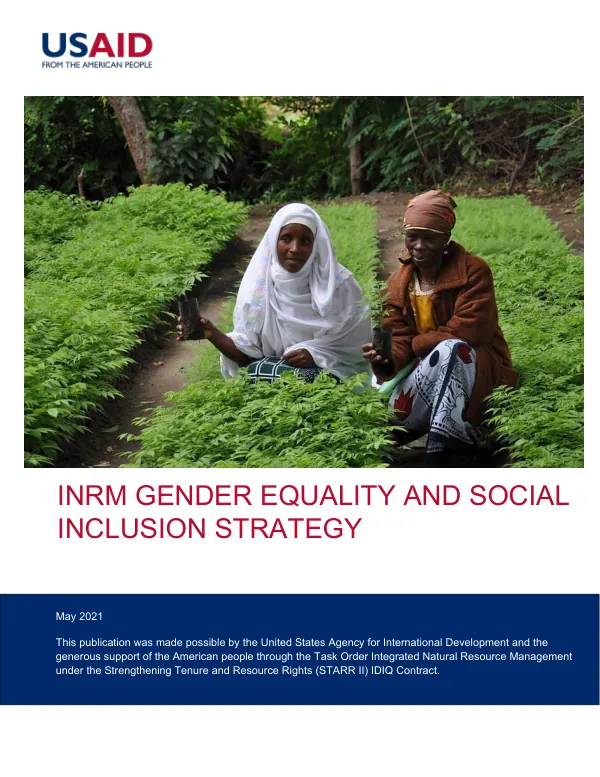
INRM GENDER EQUALITY AND SOCIAL INCLUSION STRATEGY
The Integrated Natural Resource Management (INRM) Gender Equality and Social Inclusion (GESI) Strategy aims to ensure that each INRM activity is inclusive in its design, implementation, monitoring, and evaluation.
2021 · 19 pages
Sign in to readA free account is required to download.
Abstract
The goal is to intentionally consider the well-being and quality of life of all individuals, regardless of their social, cultural, or economic background. This includes women and girls, as well as other vulnerable populations, who are often disadvantaged in their access to and management of resources. The INRM GESI Strategy is based on the United States Government's policies and strategies for gender equality, women's empowerment, and social inclusion. These policies recognize the importance of integrating women and girls into development approaches to ensure strategic objectives and increase the self-reliance of populations. The Strategy also acknowledges the need to address the historical exclusion of disadvantaged populations from environmental conservation efforts, which often perpetuate inequality and create unintended consequences for vulnerable groups. To achieve its goal, the INRM GESI Strategy outlines a multisectoral approach to integrated programming, recognizing synergies and adopting best practices to build broader constituencies for integrated programming. The Strategy defines the goals and objectives for integrating inclusive approaches into INRM's standard practices, including the analysis of each activity using relevant USG policies and strategies for gender equality, women's empowerment, and social inclusion. The Strategy also describes the buy-in activity that will identify program opportunities or interventions to increase women's economic empowerment within the INRM scope. This includes the analysis of each activity to identify entry points where power imbalances often occur, such as access to and control of resources, decision-making, roles and responsibilities, time management, cultural beliefs, and social and gender norms. The INRM GESI Strategy is particularly pertinent because organizations and initiatives that have advocated for the environment have had a history of excluding disadvantaged populations. Women, men, and marginalized groups benefit differently from environmental conservation efforts, and implementing an activity that aims to conserve natural resources, improve environmental outcomes, and support sustainability poses a risk of disproportionately advantaging certain privileged groups. To meet USAID policies and mandates, achieve development outcomes for various people, and maximize program effectiveness, measures must be taken to assess, analyze, and intervene to correct these imbalances and facilitate the meaningful participation of multiple stakeholders. Gender integration and social inclusion approaches help to identify and rectify imbalances at various entry points, ensuring that all individuals have equal access to and control of resources, decision-making, and other opportunities. The INRM GESI Strategy is a critical component of the INRM task order, which aims to support integrated analysis and a multisectoral approach to USAID's core environmental programming. By integrating inclusive approaches into INRM's standard practices, the Strategy ensures that each activity is designed to meet the needs of women and girls, as well as other vulnerable populations, and that all individuals have equal access to and control of resources, decision-making, and other opportunities. The Strategy's approach is based on evidence-based interventions throughout the USAID Program Cycle, which includes the analysis of each activity to identify entry points where power imbalances often occur. This analysis helps to identify and rectify imbalances, facilitating the meaningful participation of multiple stakeholders and ensuring that all individuals have equal access to and control of resources, decision-making, and other opportunities. The INRM GESI Strategy is a critical step towards achieving the USAID's goal of integrating women and girls into its development approaches to ensure strategic objectives and increase the self-reliance of populations. By integrating inclusive approaches into INRM's standard practices, the Strategy ensures that each activity is designed to meet the needs of women and girls, as well as other vulnerable populations, and that all individuals have equal access to and control of resources, decision-making, and other opportunities.