USAID DEC
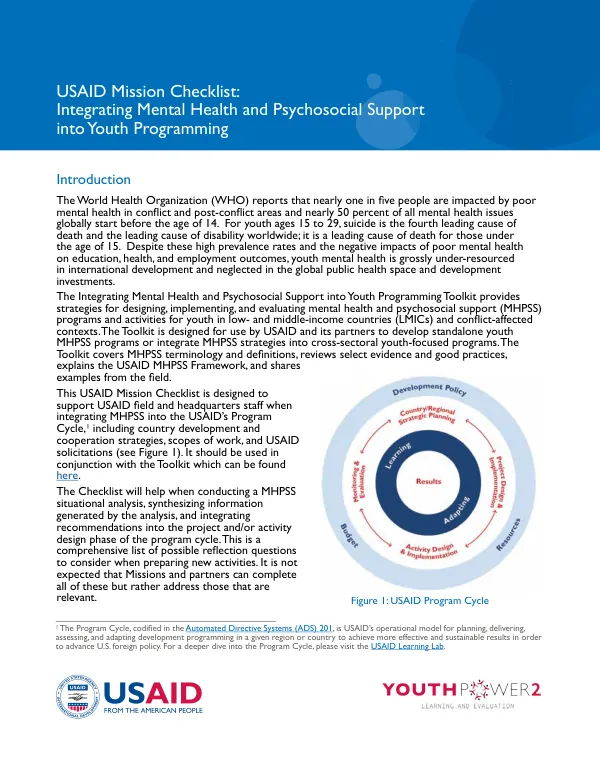
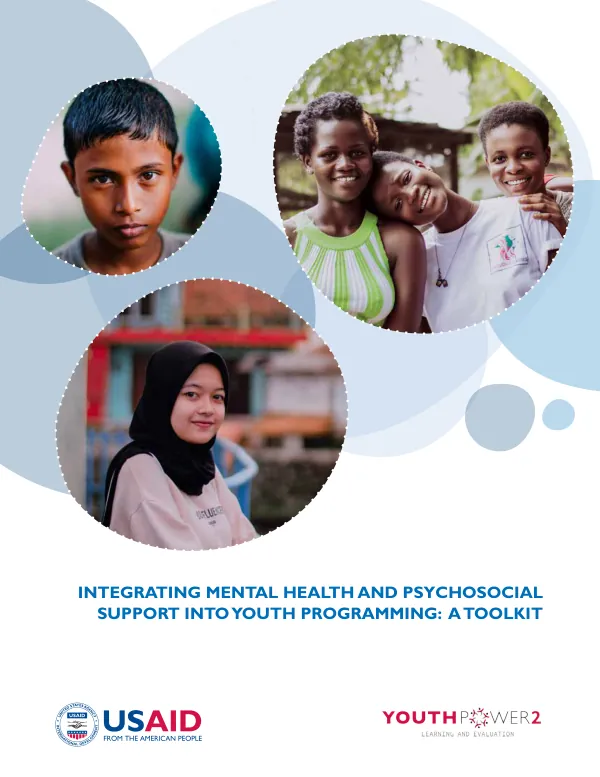
Integrating Mental Health and Psychosocial Support into Youth Programming: A Toolkit
Sign inMAKING CENTS INTERNATIONAL
Integrating Mental Health and Psychosocial Support into Youth Programming: A Toolkit
Mental health and psychosocial support (MHPSS) is a critical component of youth programming, particularly in low- and middle-income countries (LMICs) and conflict-affected contexts.
2021 · 61 pages
Sign in to readA free account is required to download.
Abstract
The World Health Organization (WHO) reports that nearly one in five people are impacted by poor mental health in conflict and post-conflict areas, and nearly 50 percent of all mental health issues globally start before the age of 14. For youth ages 15 to 29, suicide is the fourth leading cause of death, and it is a leading cause of death for those under the age of 15. The USAID Positive Youth Development (PYD) framework emphasizes the importance of empowering youth to reach their full potential by building skills, assets, and competencies, fostering healthy relationships, strengthening the environment, and transforming systems. However, youth mental health is grossly under-resourced in international development and neglected in the global public health space and development investments. The Integrating Mental Health and Psychosocial Support into Youth Programming: A Toolkit provides strategies and tools for designing, implementing, and evaluating MHPSS programs and activities for youth. The Toolkit is a resource for standalone youth MHPSS programs and MHPSS activities that are integrated into cross-sectoral youth-focused programs. It includes guidance based on good practice for MHPSS, with recommendations for adapting program designs to community needs and the local context. The Toolkit is intended for USAID field and headquarters staff, as well as national and international partners involved in designing, managing, and evaluating MHPSS programming and strategies for youth. It includes resources used in both development and humanitarian contexts, and it helps users select the right tool(s) given their implementing context and project time frame, as well as the needs of the target population. The Toolkit provides a solid foundation for designing MHPSS programs and activities for youth, and it includes four sections that provide guidance on conducting MHPSS assessments, designing standalone and integrated MHPSS programs, understanding foundational concepts for MHPSS, and applying examples of illustrative interventions and selecting appropriate expected outcomes and indicators for youth MHPSS programming. The Toolkit emphasizes the importance of identifying the mental health and psychosocial needs of youth, understanding the population's MHPSS needs, and identifying appropriate evidence-based approaches. It also highlights the need to assess how mental health needs vary for different groups of youth based on their identities, identify marginalized communities to ensure they can access MHPSS services, and determine how to provide various levels of care. The Toolkit provides examples of integrated MHPSS programming in various sectors, including gender and GBV, violence prevention, peace, and security, education, youth employment, and health. Each sector pull-out includes detailed examples of program activities and indicators, and it provides guidance on how to effectively design standalone and integrated MHPSS programs. Overall, the Integrating Mental Health and Psychosocial Support into Youth Programming: A Toolkit is a valuable resource for anyone involved in designing, managing, and evaluating MHPSS programming and strategies for youth. It provides a comprehensive framework for understanding the importance of MHPSS in youth programming, and it offers practical guidance and tools for implementing effective MHPSS programs and activities.