INTERNATIONAL MEDICAL CORPS
International Medical Corps Guinea‐Quarter 2Project Report
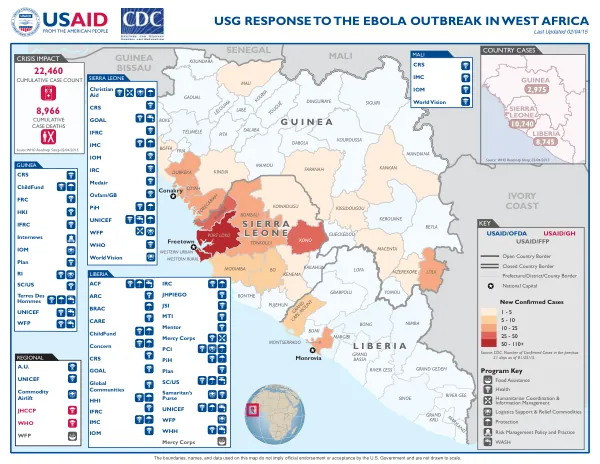
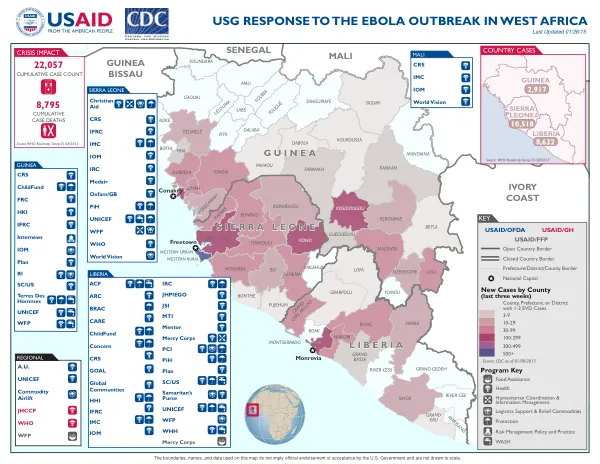
The Ebola Virus Disease (EVD) epidemic in Guinea has resulted in 3,760 cases and almost 2,506 fatalities as of July 1, 2015.
2015 · 14 pages
Sign in to readA free account is required to download.
Abstract
International Medical Corps is implementing a project to strengthen EVD rapid response capabilities of Guinea's health system, funded by the United States Agency for International Development's (USAID) Office of U.S. Foreign Disaster Assistance (OFDA). The project has three components: establishment of screening and referral units (SRUs), operation of Rapid Response Teams (RRTs), and community engagement and mental health and psychosocial support (MHPSS) activities. Six SRUs were fully operational by the end of the second quarter, located in Boké, Conakry, Coyah, Dubréka, and Kindia. These units triage all individuals, including patients, their companions, and hospital staff, prior to entering a supported hospital or ward. SRUs isolate and refer any potential EVD cases, supporting the general effort to control the outbreak and building confidence in the safety of accessing public health facilities. International Medical Corps personnel, both nationals and expats, operate the SRUs, along with staff from the supported hospital. Trainers provide infection prevention and control (IPC) and water, sanitation, and hygiene (WASH) trainings to both sets of staff using the national curriculum approved by the Ministry of Health and Public Hygiene (MOH). To date, 265 full-time staff of SRUs have received IPC and WASH trainings. Between April and June 2015, 20,868 persons, including 13,064 females and 7,804 males, were screened at supported SRUs. The establishment of SRUs reflects a general shifting away from using Ebola Treatment Centers (ETCs) as a primary triage and health access point. International Medical Corps launched two RRTs during the reporting period. The RRTs consist of specialized personnel trained to identify, isolate, refer, and transport suspected cases, as well as perform specimen extraction, contact tracing, and safe burial. Upon activation, an RRT will quickly deploy to a suspected hotspot, assess gaps in the response, and carry out necessary activities to facilitate an effective response. The RRT Coordinator in Liberia visited Guinea to assist with initial training and setup of the Guinea RRTs. The RRT was first deployed to Kamsar, Boké, on May 15, and later to Tanéné, Dubréka, on June 7, to assist with a 21-day active case finding and screening campaign. Community engagement and MHPSS activities aim to contribute to increased uptake of services in hospitals/health facilities through multiple interventions, including interactive information dissemination, awareness raising, and information on EVD. Outreach activities were implemented in Boké, Conakry, Coyah, Kindia, and Dubréka, involving 25 members of the community outreach team. The team utilized a participatory approach, involving women's, youth, religious, and civic groups, among others, in their efforts. Outreach staff conducted group discussions, door-to-door sensitization, meetings, and workshops at the community level to increase residents' understanding of both EVD and response efforts. Activities under this component gained momentum since mid-April 2015 with the recruitment of a community engagement coordinator. The community engagement coordinator conducted capacity building trainings and workshops for staff and community leaders involved in program activities. International Medical Corps' community outreach sessions reached a total of 21,432 people, including 9,746 females and 11,686 males, during the reporting period. The community engagement coordinator conducted the following capacity building trainings and workshops: basic IPC training for 19 local community members, training on community mobilization principles and participatory approaches for 19 staff, message design workshops for 25 community leaders, awareness message validation workshop at national level, and resistance mitigation workshop for 115 participants, including community leaders, women's groups, and youth in Kamsar, Boké.
Related documents