DAI GLOBAL, LLC
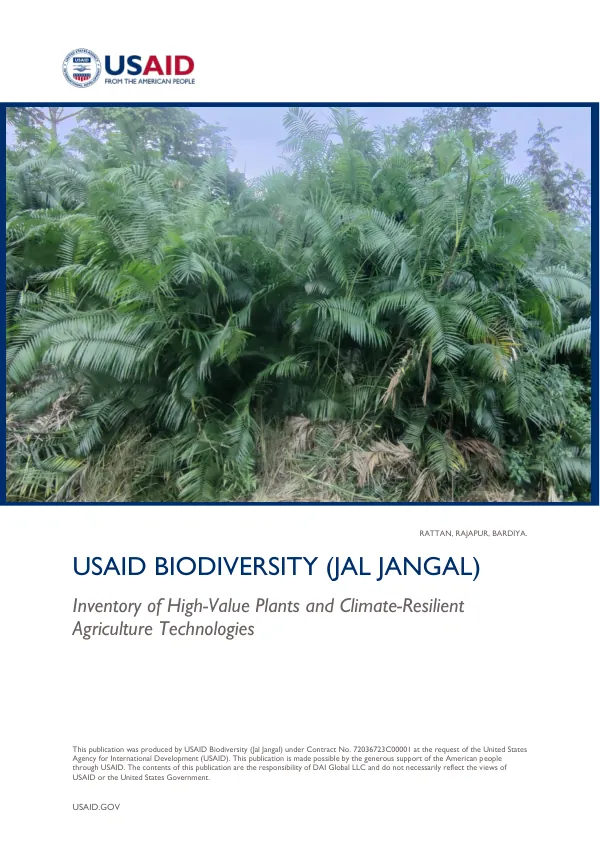
Inventory of High-Value Plants and Climate-Resilient Agriculture Technologies
The USAID Biodiversity (Jal Jangal) project aims to promote environmentally sustainable production practices for communities living near protected areas in Nepal.
2023 · 25 pages
Sign in to readA free account is required to download.
Abstract
The project seeks to enhance farming practices, reduce pressure on forest biodiversity, and mitigate wildlife-human conflicts. The initiative focuses on traditional practices and modern techniques in agroforestry, Non-Timber Forest Products (NTFPs), and sustainable alternatives to farming practices using excessive chemical fertilizers and pesticides. The project's strategic plan involves the promotion of high-value plant species for climate-resilient agriculture and NTFPs. ANSAB experts ranked the plant species based on criteria such as immediate economic benefits, water requirements, soil nutrient requirements, disease and pest resistance, and wildlife damage resistance. The prioritized high-value plant species were categorized by geographical region: Terai, Hills, and Mountains of Nepal. In the Terai region, the prioritized high-value plant species include aromatic plants, fruits, flowers, NTFPs, spices, and vegetables. These species include papaya, guava, lentil, and vegetable kurilo. In the Hills region, the prioritized species include aromatic plants, fruits, flowers, NTFPs, spices, and vegetables. These species include sweet orange, guava, ginger, and vegetable kurilo. In the Mountains region, the prioritized species include aromatic plants, fruits, flowers, NTFPs, spices, and vegetables. These species include apple, kiwi, ginger, and bitter gourd. ANSAB categorized a list of Climate-Resilient Agriculture (CRA) technologies into five solutions: climate-resilient water solution, application of diseases and pest management measures, climate-resilient soil and nutrient management, upgraded process and safety nets, and forest conservation and management. The prioritized technologies include climate-resilient water solution, application of diseases and pest management measures, climate-resilient soil and nutrient management, and forest conservation and management. The climate-resilient water solution includes water storage facilities, water productivity practices, and water conservation practices. The application of diseases and pest management measures includes botanic pesticides, bio-pesticides, mechanical control measures, and integrated pest management. The climate-resilient soil and nutrient management includes farmyard manure, inter-cropping, cover-crop, and bio-fertilizers. The upgraded process and safety nets include IT-based agro-advisory, crop insurance, organic farming, and organic farming practices. The forest conservation and management includes enrichment plantation, protection from threats, and comprehensive descriptions of each technology. The report was developed through a multi-stage process, involving a comprehensive review of high-value plant species and climate-resilient agriculture practices promoted in various activities in Nepal and around. The ANSAB team identified the list of plant species based on criteria such as resistance to drought and wildlife, as well as their potential for higher value. The team also provided inputs on CRA technologies suitable to the sites.
Related documents