USAID DEC
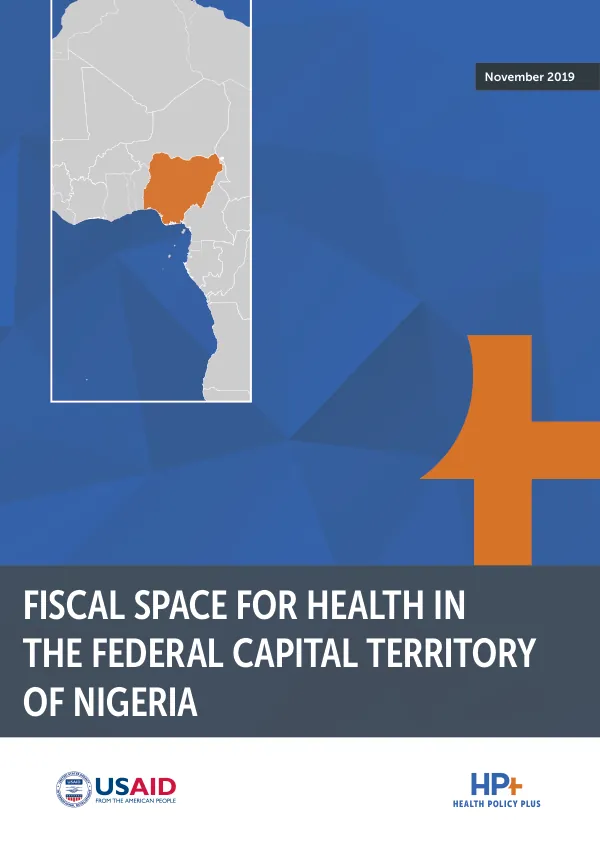
Investing in Basic Healthcare to Save Lives: The Urgency of Accelerating Implementation of Nigeria’s Basic Health Care Provision Fund
Sign inAVENIR HEALTH
Investing in Basic Healthcare to Save Lives: The Urgency of Accelerating Implementation of Nigeria’s Basic Health Care Provision Fund
Nigeria's Basic Health Care Provision Fund (BHCPF) has the potential to unlock access to high-quality basic healthcare services across the country, particularly for the most vulnerable populations.
2019 · 2 pages
Sign in to readA free account is required to download.
Abstract
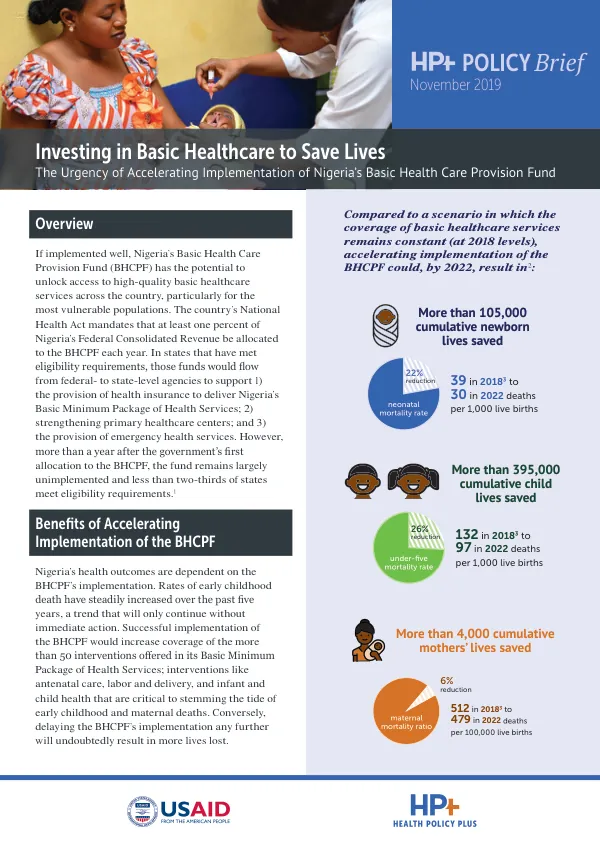
The National Health Act mandates that at least one percent of Nigeria's Federal Consolidated Revenue be allocated to the BHCPF each year. In states that have met eligibility requirements, those funds would flow from federal- to state-level agencies to support the provision of health insurance, strengthening primary healthcare centers, and the provision of emergency health services. However, more than a year after the government's first allocation to the BHCPF, the fund remains largely unimplemented and less than two-thirds of states meet eligibility requirements. Nigeria's health outcomes are dependent on the BHCPF's implementation. Rates of early childhood death have steadily increased over the past five years, a trend that will only continue without immediate action. Successful implementation of the BHCPF would increase coverage of the more than 50 interventions offered in its Basic Minimum Package of Health Services, including antenatal care, labor and delivery, and infant and child health. Accelerating implementation of the BHCPF could result in significant health benefits. By 2022, under-five mortality rate could be reduced by 26%, from 132 deaths per 1,000 live births in 2018 to 97 deaths per 1,000 live births. This would translate to more than 395,000 cumulative child lives saved. Neonatal mortality rate could also be reduced by 22%, from 39 deaths per 1,000 live births in 2018 to 30 deaths per 1,000 live births, resulting in more than 105,000 cumulative newborn lives saved. Additionally, more than 4,000 cumulative mothers' lives could be saved, with maternal mortality ratio reduced by 6%, from 512 deaths per 100,000 live births in 2018 to 479 deaths per 100,000 live births. To achieve these benefits, key actions need to be taken to fully operationalize the BHCPF at federal, state, and local levels. Cementing the BHCPF as a statutory transfer, increasing the share of Federal Consolidated Revenue allocated to the BHCPF, releasing the BHCPF allocation on-time and in-full, and bolstering state readiness to implement the BHCPF are essential. This includes providing counterpart funding, establishing and operationalizing key agencies, empaneling and accrediting healthcare facilities, and implementing effective and transparent accountability mechanisms to track the flow and use of BHCPF resources.
Related documents