MANAGEMENT SCIENCES FOR HEALTH
Iraq’s Expanded Program on Immunization Decreases Vaccine Preventable Diseases
The Expanded Program on Immunization in Iraq aims to increase vaccination coverage and immunization management.
2014 · 2 pages
Sign in to readA free account is required to download.
Abstract
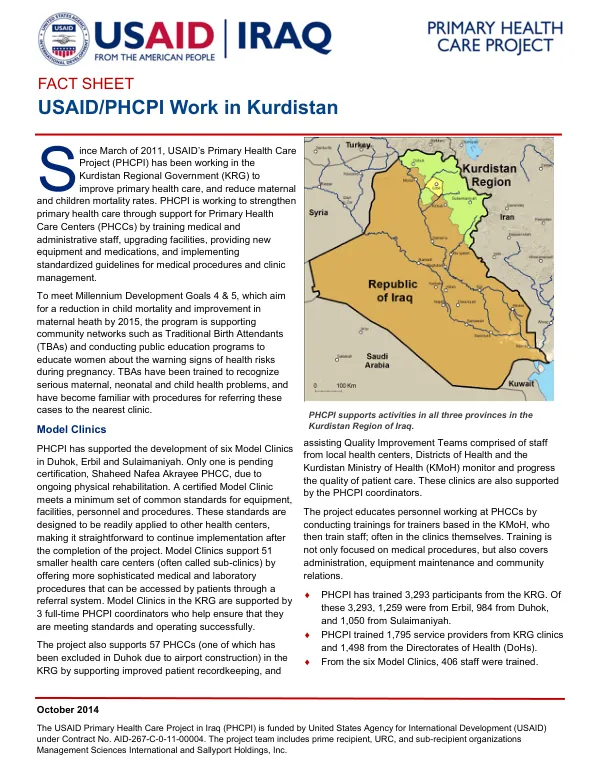
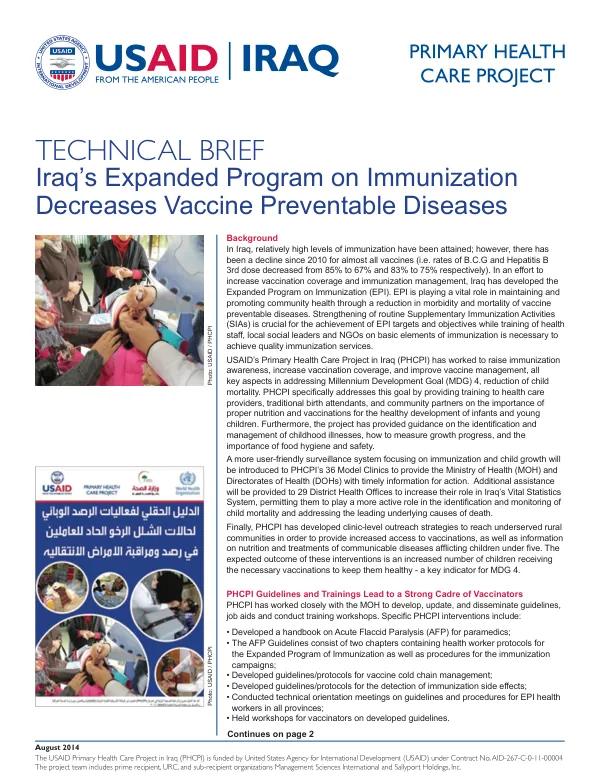
In 2010, a decline in immunization rates was observed for almost all vaccines, with B.C.G and Hepatitis B 3rd dose rates decreasing from 85% to 67% and 83% to 75% respectively. The program is playing a vital role in maintaining and promoting community health through a reduction in morbidity and mortality of vaccine preventable diseases. The USAID Primary Health Care Project in Iraq (PHCPI) has worked to raise immunization awareness, increase vaccination coverage, and improve vaccine management. PHCPI has provided training to health care providers, traditional birth attendants, and community partners on the importance of proper nutrition and vaccinations for the healthy development of infants and young children. The project has also provided guidance on the identification and management of childhood illnesses, how to measure growth progress, and the importance of food hygiene and safety. A more user-friendly surveillance system focusing on immunization and child growth will be introduced to PHCPI's 36 Model Clinics to provide the Ministry of Health (MOH) and Directorates of Health (DOHs) with timely information for action. Additional assistance will be provided to 29 District Health Offices to increase their role in Iraq's Vital Statistics System, permitting them to play a more active role in the identification and monitoring of child mortality and addressing the leading underlying causes of death. PHCPI has also developed clinic-level outreach strategies to reach underserved rural communities in order to provide increased access to vaccinations, as well as information on nutrition and treatments of communicable diseases afflicting children under five. PHCPI has worked closely with the MOH to develop, update, and disseminate guidelines, job aids, and conduct training workshops. Specific PHCPI interventions include the development of a handbook on Acute Flaccid Paralysis (AFP) for paramedics, guidelines and protocols for vaccine cold chain management, and guidelines and protocols for the detection of immunization side effects. PHCPI activities have led to over 630 vaccinators being trained on EPI, AFP, vaccination side-effects, vaccination guidelines, cold chain management for vaccines, vaccination ages, and the schedule of vaccination. The development of guidelines, trainings, and workshops has led to improved immunization and cold chain management as well as an increased number of children under five receiving full immunization. The interventions have provided significant impact for vaccine management at both primary health care centers (PHCCs) and during immunization campaigns conducted throughout Iraq. Vaccinators and health care providers are now prepared for and excited about these activities that will lead to expanded immunization coverage countrywide for both newborns and children under five, resulting in a reduction in child mortality and attainment of MDG 4. The project has also led to improved immunization and cold chain management, with health providers becoming more familiar with vaccine boosters, mixed vaccines, and the age at which to administer each vaccine.
Related documents