RTI INTERNATIONAL
Islamic Schooling in Nigeria
Islamic schooling in Nigeria is a significant aspect of the country's education system.
2016 · 13 pages
Sign in to readA free account is required to download.
Abstract
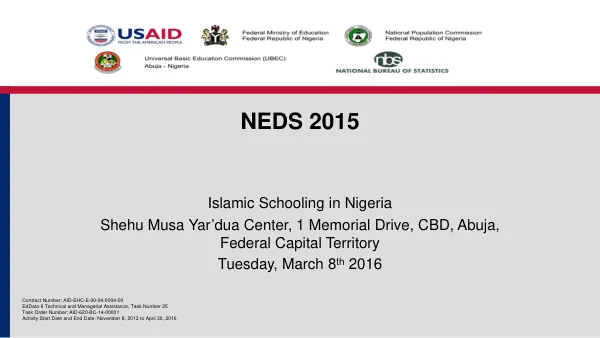
The majority of children from Muslim households attend Islamic schools, with 91% of children in the North West zone and 85% in the North East zone enrolled in such institutions. In contrast, only 17% of children in the North Central zone attend Islamic schools. The distribution of children within Islamic schools varies by type. Islamiyya schools have the highest enrollment, with 52% of children attending these institutions. Qur'anic schools have a significantly lower enrollment, with only 41% of children attending these schools. Tsangaya schools have the lowest enrollment, with 7% of children attending these institutions. The majority of children in Islamic schools attend in the afternoon, with 60% of Qur'anic school children and 67% of Tsangaya school children attending in the evening. In contrast, only 14% of Islamiyya school children attend in the morning. The proportion of children attending Islamic schools who also attend formal schools varies by type of school. Islamiyya schools have the highest proportion of children attending formal schools, with 74% of children attending both types of schools. Islamic schools in Nigeria also offer literacy programs, with 62% of Islamiyya schools, 55% of Qur'anic schools, and 28% of Tsangaya schools offering such programs. The literacy rates among children attending these schools vary by age and type of school. Children aged 6-11 have higher literacy rates than those aged 12-14, with 28% of Islamiyya school children, 26% of Qur'anic school children, and 10% of Tsangaya school children able to read and write. The data suggests that Islamic schools in Nigeria play a significant role in the education of Muslim children. However, the quality and effectiveness of these schools vary by type and location. Further research is needed to understand the factors influencing the quality of Islamic schools and to identify areas for improvement.