CHEMONICS
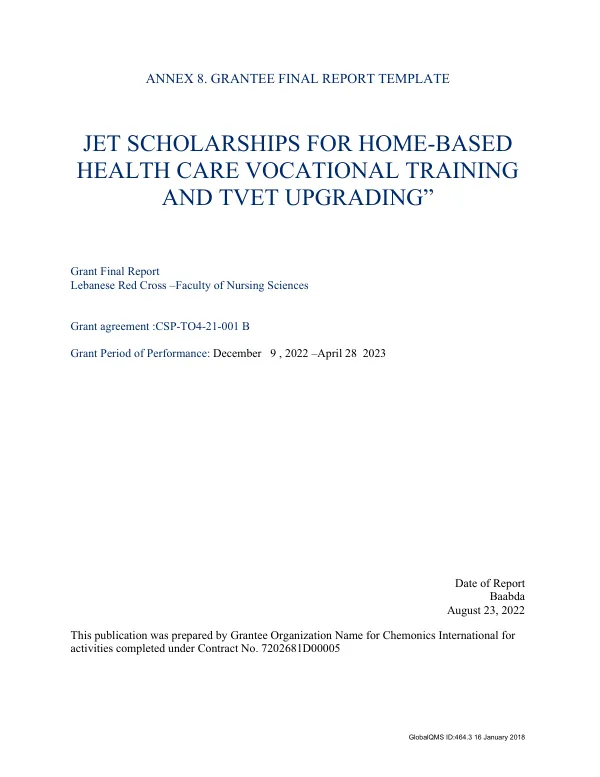
JET SCHOLARSHIPS FOR HOME-BASED HEALTH CARE VOCATIONAL TRAINING AND TVET UPGRADING
The vocational training program for Home-Based Health Care was implemented by the Lebanese Red Cross - Faculty of Nursing Sciences, in collaboration with USAID and Chemonics.
2018 · 14 pages
Sign in to readA free account is required to download.
Abstract
The program aimed to provide nursing students with the necessary skills and knowledge to deliver high-quality care in home-based settings. The training was conducted over a period of five months, consisting of three months of theoretical courses and two months of internship training at the Lebanese Red Cross Primary Health Care centers. The program focused on developing the students' soft skills, community services, and basic nursing skills. The objectives of the clinical training at the Primary Health Care centers were to practice soft skills, community services, and basic nursing skills before transitioning to hospital settings. The students were expected to identify the specialties of the department, type of care provided to the community, and patients, and to apply the nursing basic process in the community for selected families and groups. The program also aimed to equip students with the necessary skills to communicate effectively with patients, assess ongoing health care needs, monitor, and report any problems. Additionally, the students were expected to implement a health-teaching plan appropriate to the learner, learn how a multidisciplinary team works in patient care, and identify the specialties of the floor and type of care provided. The program consisted of 21 modules, covering various aspects of home-based health care, including role and responsibilities, anatomy and physiology, safety and infection control, and vital signs and vital signs monitoring. The students were also trained in basic life support and emergency medical services. The program was successful in achieving its objectives, with students demonstrating a high level of engagement and interest in the training. The students were proud to have received the vocational training with the Lebanese Red Cross and USAID, and they expressed their gratitude for the opportunity to learn and grow. The program also had a positive impact on the students' future career prospects, with many expressing their intention to work in home-based health care settings. The program's success was attributed to the collaboration between the Lebanese Red Cross, USAID, and Chemonics, which ensured the program's sustainability and effectiveness. The program's achievements were recognized through various means, including the issuance of certificates to students upon completion of the training. The students also expressed their appreciation for the opportunity to receive vocational training with the Lebanese Red Cross and USAID, and they recommended the program to others. The program's success was also marked by the students' ability to apply the skills and knowledge they acquired during the training. The students were able to assist the primary health care team in various tasks, including vaccination and medication distribution. The students' ability to work effectively in teams and communicate with patients and families was also demonstrated through their participation in the program.