CHEMONICS
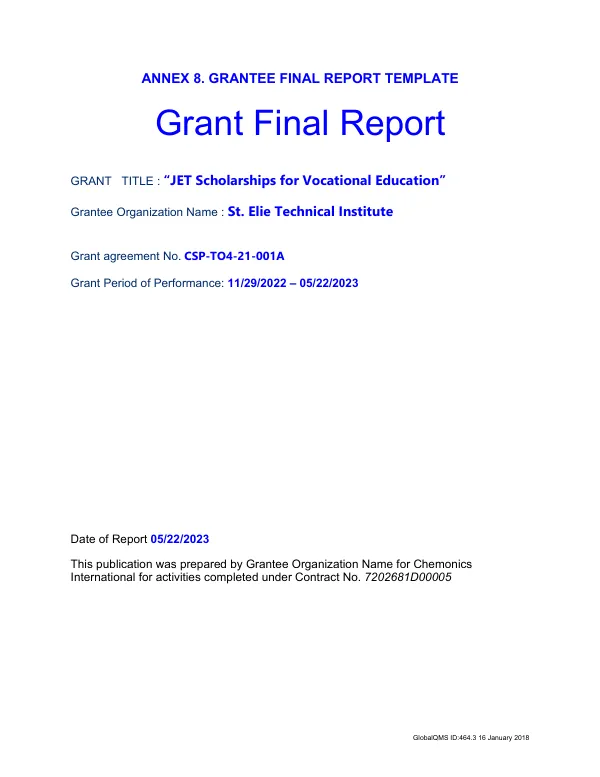
Grant Final Report: JET Scholarships for Vocational Education
The "JET Scholarships for Vocational Education" grant was implemented by St.
2018 · 6 pages
Sign in to readA free account is required to download.
Abstract
Elie Technical Institute in Lebanon from November 29, 2022, to May 22, 2023. The grant aimed to provide vocational education and training to students, with a focus on preparing them for the workforce. A total of 42 students were accepted into the program's third cohort, with the majority successfully placed in internships and seeking employment opportunities. The students demonstrated a strong eagerness to learn and acquire new skills, with many expressing a desire to apply for jobs locally, regionally, and internationally. To prepare them for job interviews, mentors conducted mock interviews, which helped boost the students' confidence in making choices that align with their criteria. The program's mentors and teachers played a crucial role in guiding the students, and through daily interactions and recommendations, a positive transformation was observed in their personal habits and ability to interact with people outside of the organization. The students' ultimate success in the program was evident as they were motivated to continue self-improvement beyond their time at the institute, with the goal of finding better opportunities, achieving financial independence, and supporting their families. However, the ongoing crisis in Lebanon posed significant challenges to the program, including bank strikes, road closures, and acts of violence, as well as the aftermath of the earthquake on February 6, 2023. These challenges led to a decrease in motivation and an increase in anxiety and stress among the students. Despite these challenges, the program's staff took steps to address the issues and regain the students' trust. Team-building activities and regular check-ins with the students helped to better understand their daily struggles and address the issues more effectively. The program's flexibility and adaptability in response to the crisis were crucial in maintaining the students' engagement and motivation. The program's primary challenge was the critical situation in the region, which had a significant impact on the students' motivation and well-being. Maintaining the students' engagement and motivation was also challenging, as some were unresponsive due to anxiety and stress. However, by engaging in team-building activities and regularly checking in with the students, the program's staff was able to address the issues more effectively and regain the students' trust. The program's success was evident in the students' ability to apply for jobs locally, regionally, and internationally, and their motivation to continue self-improvement beyond their time at the institute. The program's flexibility and adaptability in response to the crisis were crucial in maintaining the students' engagement and motivation, and the program's staff played a crucial role in guiding the students and addressing the issues that arose.
Related documents