USAID DEC
Job Aid: Conducting an Infant and Young Child Feeding Support Group Meeting in Nigeria
Sign inHELLEN KELLER INTERNATIONAL
Job Aid: Conducting an Infant and Young Child Feeding Support Group Meeting in Nigeria
Conducting an Infant and Young Child Feeding Support Group Meeting in Nigeria is a crucial task aimed at promoting optimal feeding practices among infants and young children.
2016 · 2 pages
Sign in to readA free account is required to download.
Abstract
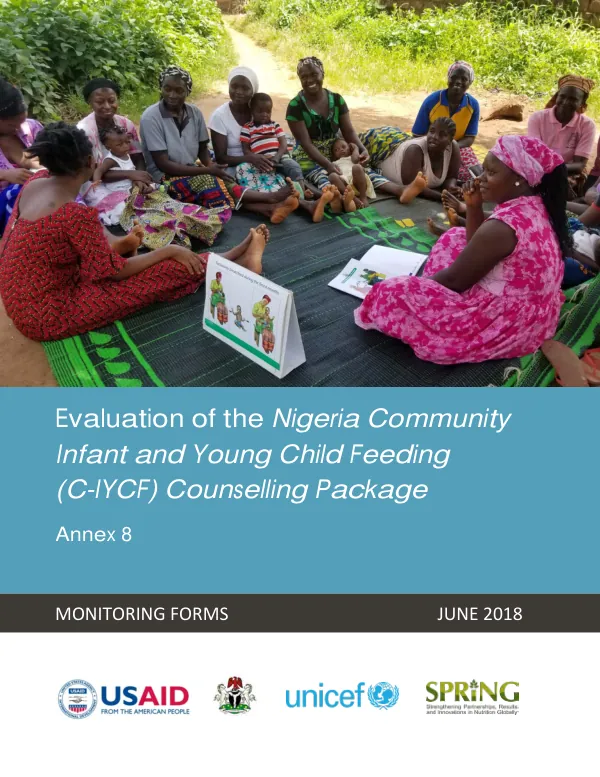
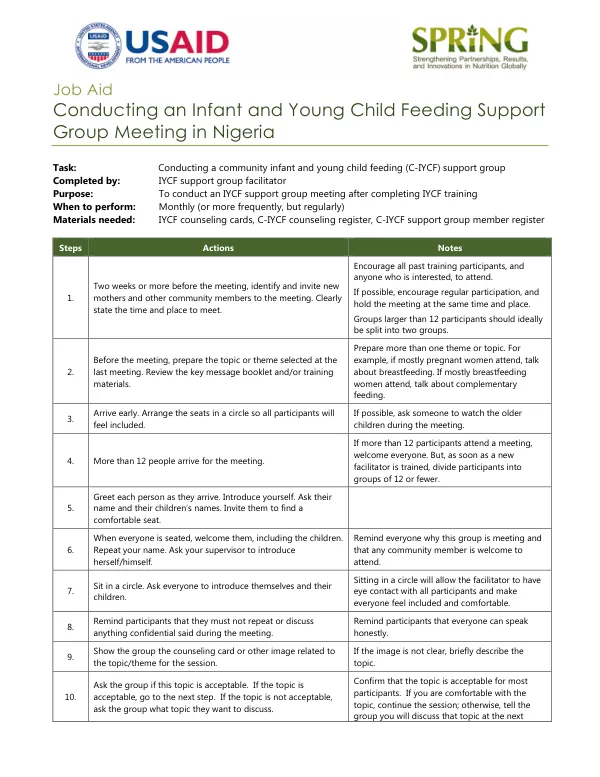
The meeting is conducted by an IYCF support group facilitator, typically on a monthly basis, or more frequently if necessary. The purpose of the meeting is to provide a platform for community members to discuss and learn about infant and young child feeding practices. Preparation for the meeting involves identifying and inviting new mothers and other community members to attend. The facilitator should clearly state the time and place to meet and encourage regular participation. If possible, the meeting should be held at the same time and place to foster a sense of routine and community. Groups larger than 12 participants should ideally be split into two groups to ensure effective facilitation and participation. Before the meeting, the facilitator should prepare the topic or theme selected at the last meeting, reviewing key message booklets and training materials. It is essential to have multiple themes or topics prepared to cater to the diverse needs and interests of the participants. For example, if mostly pregnant women attend, the facilitator can discuss breastfeeding, while if mostly breastfeeding women attend, the facilitator can discuss complementary feeding. During the meeting, the facilitator should greet each participant, introduce themselves, and ask for the participants' names and their children's names. The facilitator should then welcome everyone, including the children, and remind them of the purpose of the meeting. The facilitator should sit in a circle with the participants, allowing for eye contact and inclusive participation. The facilitator should then show the group the counseling card or other image related to the topic/theme for the session, briefly describing the topic if the image is not clear. The facilitator should ask the group if the topic is acceptable, confirming that it is acceptable for most participants before proceeding. If the topic is not acceptable, the facilitator should ask the group what topic they want to discuss. To encourage a discussion about the topic, the facilitator should ask questions such as "Does anyone know someone who does this?" or "What do you think 'so and so' would say if you decided to do 'such and such'?" The facilitator should use listening and learning skills, such as looking at each participant while they talk, repeating what they said, and asking one participant to respond. The facilitator should also share their experience to encourage others to talk, but be brief. During the session, the facilitator should tell participants where they can receive additional support, give advice only when asked, summarize ideas, and keep the group focused on the theme. The facilitator should note any outstanding questions or issues and seek clarifications from their supervisor or an expert. At the end of the meeting, the facilitator should thank everyone for attending and actively participating, asking them to practice some of the behaviors they learned about before the next meeting. The facilitator should also ask participants to suggest a topic for the next meeting, set a date, time, and venue for the next meeting, and remind anyone who has not signed the register to sign. The facilitator should then ask anyone who wants individual counseling to remain behind, planning when to meet them later if necessary. Finally, the facilitator should complete the documentation for the completed session, including the C-IYCF one-on-one counseling register and the C-IYCF support group member register. The task is complete when the meeting has ended, participants asking for one-on-one counseling have been counseled or made an appointment for counseling, and the documentation for the session is complete and submitted to the support group supervisor at the nearest health facility.