PEPFAR
Job Aid: Framework of Needs
The multisectoral response for children and adolescents who have experienced sexual violence involves a comprehensive package of services.
2016 · 2 pages
Sign in to readA free account is required to download.
Abstract
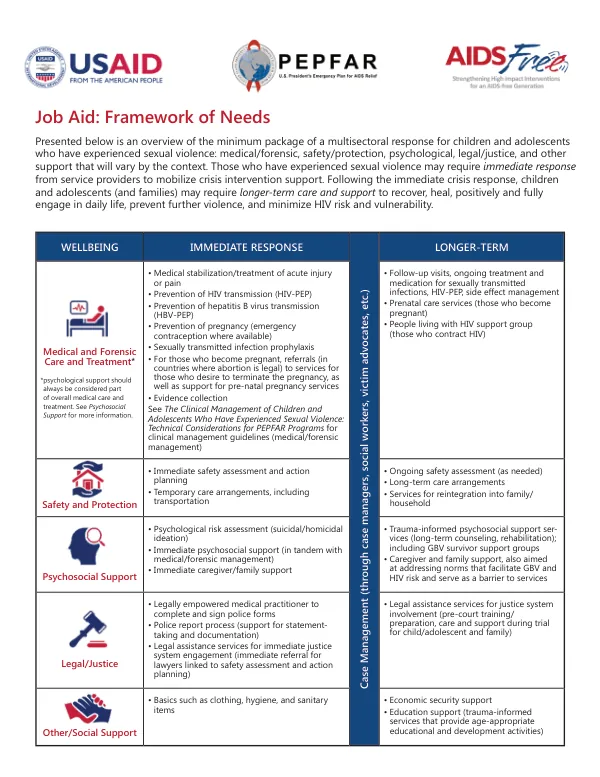
This package includes medical/forensic, safety/protection, psychological, legal/justice, and other support tailored to the context. Immediate crisis intervention support is essential to mobilize service providers and address the needs of those affected. The immediate response to sexual violence involves case management through case managers, social workers, and victim advocates. This process includes assessing the child's or adolescent's safety and developing an action plan to ensure their protection. Following the immediate crisis response, children and adolescents may require longer-term care and support to recover and heal. Medical and forensic care is a critical component of the response. This includes medical stabilization and treatment of acute injuries or pain, prevention of HIV transmission through post-exposure prophylaxis (PEP), and prevention of hepatitis B virus transmission. Additionally, medical care may involve the prevention of pregnancy through emergency contraception, sexually transmitted infection prophylaxis, and evidence collection. Follow-up visits and ongoing treatment are also essential for those who contract HIV or other sexually transmitted infections. Safety and protection services are also vital to ensure the child's or adolescent's safety and well-being. This includes immediate safety assessments and action planning, temporary care arrangements, and ongoing safety assessments. Long-term care arrangements and services for reintegration into family or household are also necessary. Psychological support is an integral part of overall medical care and treatment, and may involve psychological risk assessments, immediate psychosocial support, and trauma-informed psychosocial support services. The legal and justice response involves legally empowered medical practitioners to complete and sign police forms, police report processes, and legal assistance services for immediate and long-term justice system engagement. Other social support services include basics such as clothing, hygiene, and sanitary items, economic security support, and education support that is trauma-informed and provides age-appropriate educational and development activities. The multisectoral response to sexual violence requires a coordinated effort from various stakeholders, including healthcare providers, social workers, law enforcement officials, and community leaders. This response aims to provide comprehensive support to children and adolescents who have experienced sexual violence, addressing their physical, emotional, and psychological needs.