COASTAL RESOURCES CENTER
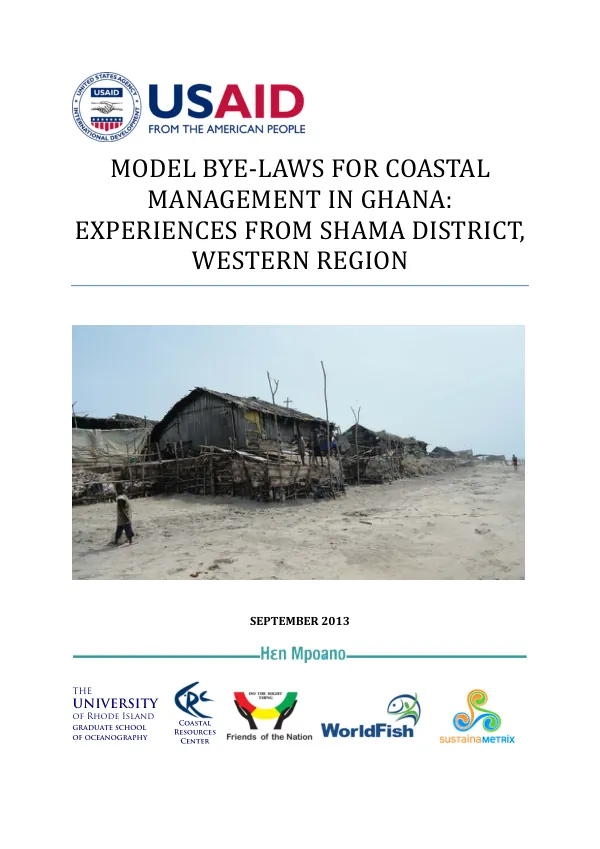
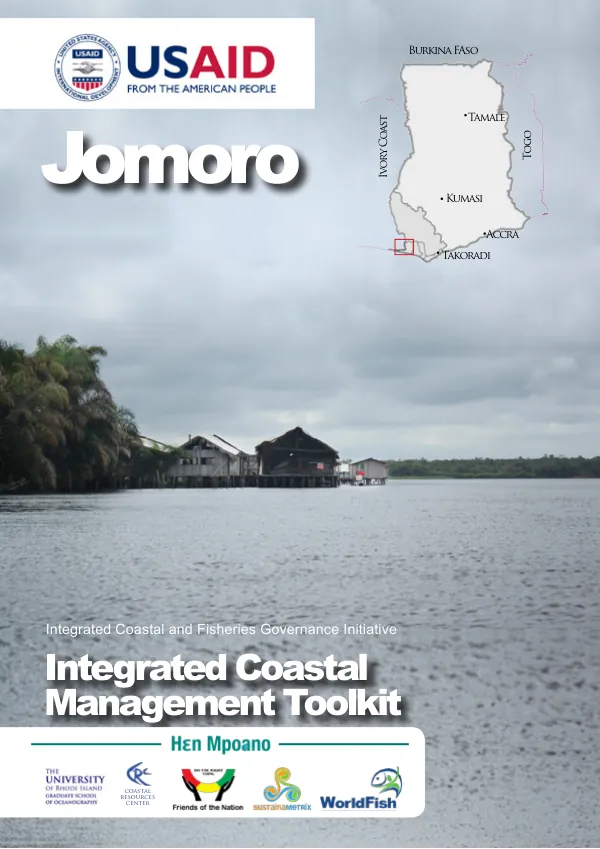
Jomoro District Integrated Coastal Management Toolkit
The Integrated Coastal and Fisheries Governance Initiative, locally known as Hen Mpoano, was a four-year initiative implemented in the Western Region of Ghana.
2013 · 32 pages
Sign in to readA free account is required to download.
Abstract
The initiative aimed to build knowledge and capacity among district planners and managers to conserve and sustainably develop the region's rich coastal resources. The initiative was led by the Coastal Resources Center of the Graduate School of Oceanography at the University of Rhode Island, in partnership with Friends of the Nation, Worldfish, and Sustainametrix. The initiative focused on building Integrated Coastal Management (ICM) into district planning processes and decision-making procedures. This involved identifying major coastal zone challenges and developing tools to address them. The initiative also aimed to promote sustainable development and conservation of the coastal resources, while welcoming the benefits of modern technologies. The Jomoro District Integrated Coastal Management Toolkit was developed as a result of the initiative. The toolkit is a comprehensive guide for district-level planning and management of coastal and marine resources. It provides a framework for identifying and addressing coastal zone challenges, as well as promoting sustainable development and conservation of the coastal resources. The toolkit defines key terms and concepts related to coastal management, including community-resourced management areas, development, ecosystem, eco-tourism, adaptive capacity, artisanal fishing fleet, barrier spit or beach, built areas highly exposed to flood damage, carbon sequestration, catchment area, climate change, and definitions of various coastal-related terms. The toolkit also highlights the importance of environmental assessment, erosion, estuary, flood, flood proofing or protection, and other coastal-related concepts. It emphasizes the need for sustainable development and conservation of the coastal resources, while promoting the benefits of modern technologies. The initiative and the toolkit were made possible by the generous support of the American people through the United States Agency for International Development (USAID)/Ghana. The contents of the toolkit are the responsibility of the authors and do not necessarily reflect the views of the United States Government. The Jomoro District Integrated Coastal Management Toolkit is a valuable resource for district-level planning and management of coastal and marine resources in Ghana. It provides a comprehensive framework for identifying and addressing coastal zone challenges, promoting sustainable development and conservation of the coastal resources, and welcoming the benefits of modern technologies. The toolkit is a testament to the success of the Hen Mpoano initiative, which has built knowledge and capacity among district planners and managers to conserve and sustainably develop the region's rich coastal resources. The initiative has also promoted sustainable development and conservation of the coastal resources, while welcoming the benefits of modern technologies. The Jomoro District Integrated Coastal Management Toolkit is a valuable resource for anyone living, working, or investing in the coast of Ghana. It provides a comprehensive guide for district-level planning and management of coastal and marine resources, and promotes sustainable development and conservation of the coastal resources. The toolkit is a result of the collaboration between the Coastal Resources Center of the Graduate School of Oceanography at the University of Rhode Island, Friends of the Nation, Worldfish, and Sustainametrix, with the support of the United States Agency for International Development (USAID)/Ghana. The contents of the toolkit are the responsibility of the authors and do not necessarily reflect the views of the United States Government.