COASTAL RESOURCES CENTER
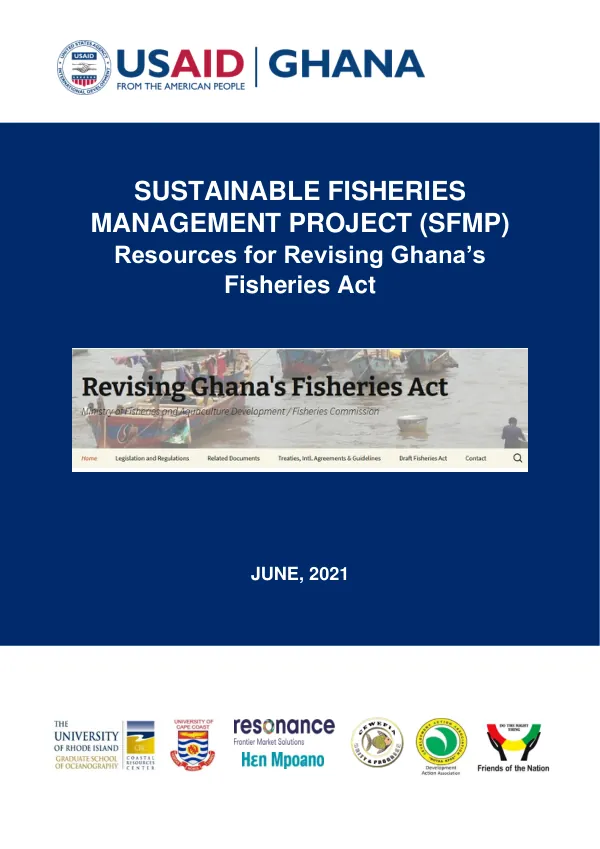
Revising Ghana's Fisheries Act
The Ghana Sustainable Fisheries Management Project (SFMP) is a collaborative effort between the Government of Ghana, the Coastal Resources Center (CRC) at the University of Rhode Island, and other local and international partners.
2021 · 195 pages
Sign in to readA free account is required to download.
Abstract
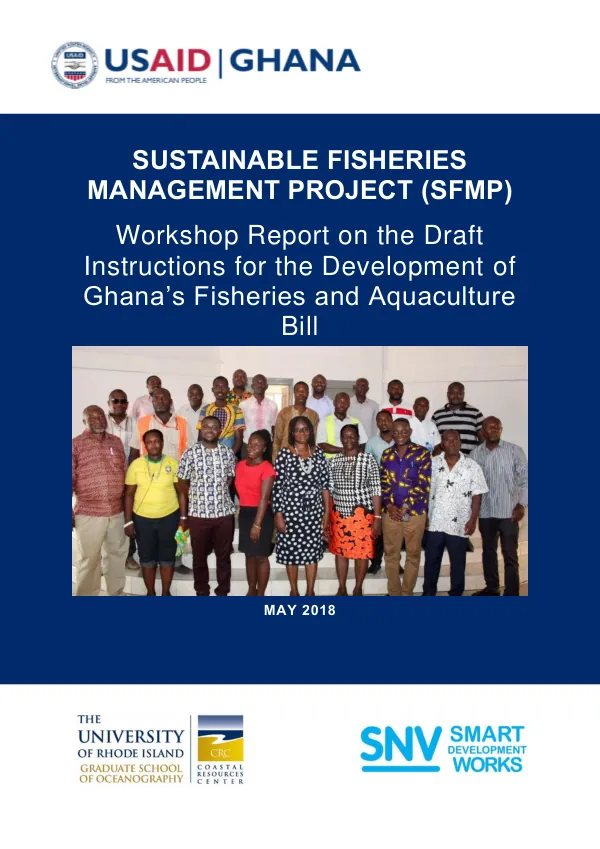
The project aims to support the revision of Ghana's Fisheries Act, which was enacted in 2002 and has undergone several amendments. The current Fisheries Act is being replaced by a new bill, which will address various issues related to fisheries management in Ghana. The new legislation will provide a framework for sustainable fisheries management, including provisions for the conservation and management of fish stocks, the regulation of fishing activities, and the promotion of responsible fishing practices. The SFMP has been working closely with the Ministry of Fisheries and Aquaculture Development and the Fisheries Commission to draft the new Fisheries Act. The project has also engaged with various stakeholders, including civil society organizations, fishing communities, and the private sector, to ensure that the new legislation reflects the needs and concerns of all stakeholders. The new Fisheries Act will address several key issues, including the need for more effective management of fish stocks, the regulation of fishing gear and practices, and the promotion of sustainable fishing practices. The legislation will also provide for the establishment of a fisheries management system that is based on scientific research and data-driven decision-making. The SFMP has also been working to strengthen the capacity of the Fisheries Commission and other stakeholders to implement the new Fisheries Act. This includes providing training and technical assistance to fisheries officials, as well as supporting the development of a fisheries management system that is based on best practices. The project has also been working to engage with local communities and fishing communities to raise awareness about the importance of sustainable fisheries management and to promote the adoption of responsible fishing practices. This includes the development of community-based fisheries management plans and the establishment of community-based monitoring and enforcement systems. The SFMP has also been working to support the development of a national marine fisheries management plan, which will provide a framework for the management of Ghana's marine fisheries resources. The plan will address various issues related to fisheries management, including the conservation and management of fish stocks, the regulation of fishing activities, and the promotion of sustainable fishing practices. The project has also been working to strengthen the capacity of the Ministry of Fisheries and Aquaculture Development and the Fisheries Commission to implement the new Fisheries Act and to manage Ghana's fisheries resources effectively. This includes providing technical assistance and training to fisheries officials, as well as supporting the development of a fisheries management system that is based on best practices. The SFMP has also been working to engage with international partners and organizations to support the revision of Ghana's Fisheries Act and to promote the adoption of sustainable fisheries management practices in Ghana. This includes working with the Food and Agriculture Organization (FAO) of the United Nations and other international organizations to support the development of a national marine fisheries management plan and to promote the adoption of best practices in fisheries management. Overall, the Ghana Sustainable Fisheries Management Project is a critical initiative that aims to support the revision of Ghana's Fisheries Act and to promote the adoption of sustainable fisheries management practices in Ghana. The project has been working closely with various stakeholders to ensure that the new legislation reflects the needs and concerns of all stakeholders and that it provides a framework for the effective management of Ghana's fisheries resources.