COASTAL RESOURCES CENTER
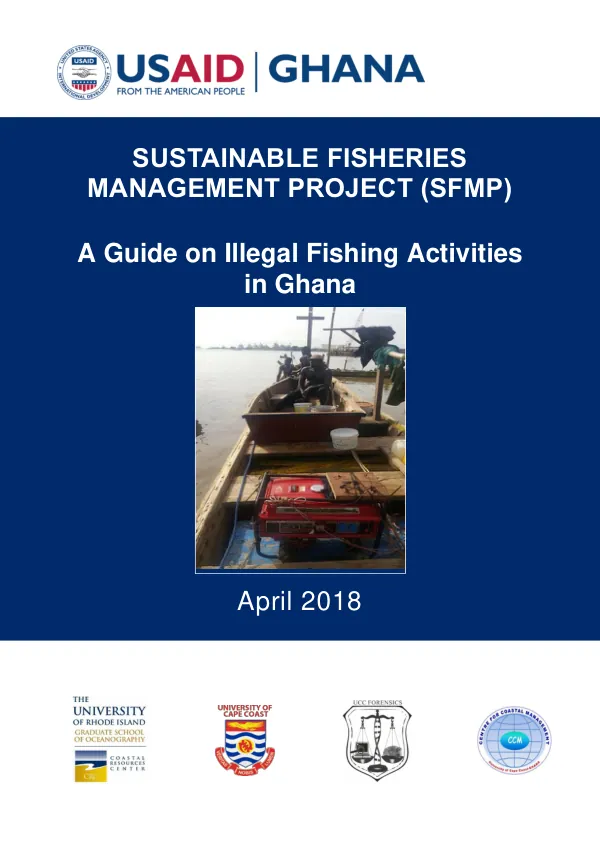
A Guide on Illegal Fishing Activities in Ghana
The Ghanaian fishing industry is a significant contributor to the country's economy, with the artisanal canoe sector being the largest employer of fishers.
2018 · 64 pages
Sign in to readA free account is required to download.
Abstract
However, the industry is plagued by illegal fishing practices, which undermine the sustainability of fish stocks and threaten food security. Illegal fishing methods in Ghana include the use of chemicals such as DDT and carbide, as well as explosives like dynamite. Additionally, fishermen often use a mixture of powdered detergent and gasoline to kill fish, and some engage in pair trawling, a practice that involves two or more vessels working together to catch fish. The Ghana Navy and the Ministry of Fisheries and Aquaculture Development have partnered to combat illegal fishing, with the implementation of vessel monitoring systems (VMS) to track the real-time position of fishing vessels. Commercial fishing boats have been registered and categorized to ensure sustainable fishing in Ghana's Exclusive Economic Zone (EEZ). However, the lack of capacity to enforce fisheries laws remains a significant challenge, with institutions such as the Ghana Navy and the Marine Police Division struggling to effectively combat illegal fishing. Artisanal fishers are particularly vulnerable to the use of illegal fishing methods, with many using nets of the wrong mesh size, dynamite, poisons, and light for fishing. Fishermen associations are being sensitized on the effects of these practices on their livelihoods, but more needs to be done to address the pervasive nature of illegal fishing among artisanal fishers. This guide is intended to serve the professional and practical needs of stakeholders in Ghana committed to addressing illegal fishing. It is a product of scientific and traditional knowledge, written in a non-technical language for the benefit of users. The guide aims to provide a comprehensive understanding of the causes and consequences of illegal fishing in Ghana, as well as practical solutions to address the issue. The guide is divided into several sections, including an executive summary, introduction, and a detailed examination of the fishing industry in Ghana. It also explores the various methods used by fishermen to engage in illegal fishing, and the efforts being made by institutions to combat the practice. The guide concludes with recommendations for addressing the root causes of illegal fishing and promoting sustainable fishing practices in Ghana. The Ghanaian government is taking steps to strengthen fisheries legislation and introduce new control measures to reduce illegal fishing practices. The Ministry of Fisheries and Aquaculture Development has implemented a vessel monitoring system to track the real-time position of fishing vessels, and commercial fishing boats have been registered and categorized to ensure sustainable fishing in Ghana's EEZ. However, more needs to be done to address the pervasive nature of illegal fishing among artisanal fishers. The guide is a valuable resource for stakeholders in Ghana committed to addressing illegal fishing, including fishers, processors, fisheries management committees, and fisheries officers. It provides a comprehensive understanding of the causes and consequences of illegal fishing in Ghana, as well as practical solutions to address the issue. By promoting sustainable fishing practices and addressing the root causes of illegal fishing, the guide aims to contribute to the long-term sustainability of Ghana's fish stocks and promote food security for the country's population. The use of chemicals and explosives in fishing is a significant concern in Ghana, with many fishermen using these methods to catch fish. The use of a mixture of powdered detergent and gasoline to kill fish is also a common practice, and pair trawling is a widespread problem in the country's fishing industry. The guide provides a detailed examination of these practices and the efforts being made to address them. The Ghana Navy and the Marine Police Division are working together to combat illegal fishing, with the implementation of vessel monitoring systems and the registration and categorization of commercial fishing boats. However, more needs to be done to address the pervasive nature of illegal fishing among artisanal fishers. The guide provides recommendations for addressing the root causes of illegal fishing and promoting sustainable fishing practices in Ghana.
Related documents