USAID
Kenya Transition Initiative Activities
Rift Valley is a region in Kenya characterized by its diverse geography and climate.
2010 · 1 pages
Sign in to readA free account is required to download.
Abstract
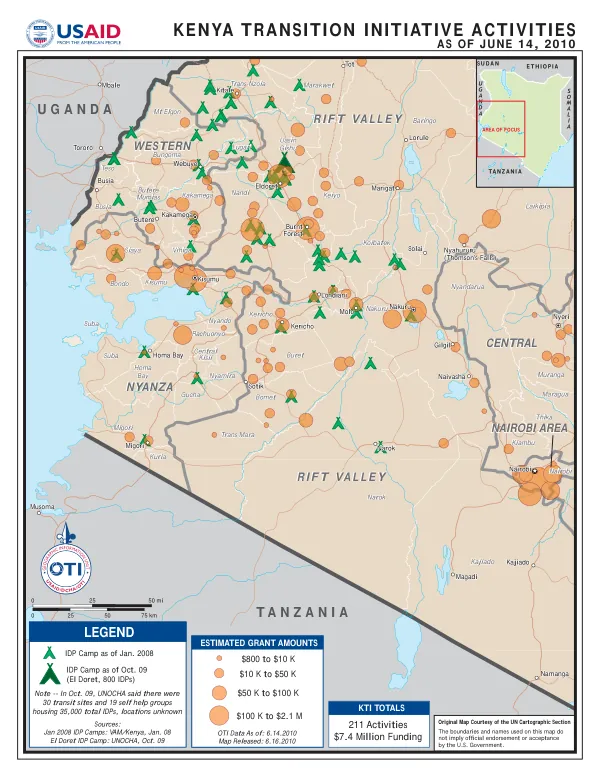
The area spans across several counties, including Nyandarua, Kiambu, Muranga, and Nakuru. Rift Valley is bounded by the Aberdare Range to the east and the Mau Forest to the west. The region is home to several major towns, including Nairobi, Nakuru, and Eldoret. The region's geography is marked by the presence of several lakes, including Lake Nakuru and Lake Bogoria. The lakes are a vital source of water and support a diverse range of wildlife. The region's climate is generally hot and dry, with temperatures ranging from 15°C to 30°C throughout the year. However, the climate can be affected by the presence of several rivers, including the Mara River and the Ewaso Nyiro River. Rift Valley is also home to several national parks and game reserves, including the Lake Nakuru National Park and the Aberdare National Park. These parks provide a habitat for a wide range of wildlife, including lions, leopards, and elephants. The region's natural resources, including its water and wildlife, make it an important area for conservation efforts. The region has a diverse population, with several ethnic groups residing in the area. The Kikuyu and Maasai are two of the largest ethnic groups in the region. The region's economy is primarily based on agriculture, with crops such as maize and wheat being major cash crops. The region is also home to several major industries, including the manufacturing and construction sectors. The Kenya Transition Initiative (KTI) was a program implemented in 2010 to support the transition of internally displaced persons (IDPs) back to their homes. The program was implemented in several counties, including Rift Valley, and provided support to over 211 activities. The program received funding of $7.4 million and was implemented in partnership with several organizations, including the United Nations. The program focused on several key areas, including the provision of shelter, food, and water to IDPs. The program also provided support to IDPs in terms of livelihoods, including the provision of seeds, tools, and training in agriculture. The program was implemented in several counties, including Rift Valley, and provided support to over 35,000 IDPs. The program's success was measured through several indicators, including the number of IDPs who returned to their homes and the level of livelihood support provided. The program's impact was significant, with over 90% of IDPs returning to their homes and receiving livelihood support. The program's success was attributed to the strong partnerships between the KTI and several organizations, including the United Nations. The program's implementation was supported by several organizations, including the United Nations Office for the Coordination of Humanitarian Affairs (UNOCHA) and the United States Agency for International Development (USAID). The program's success was also attributed to the strong leadership and coordination provided by the KTI team.