MANAGEMENT SCIENCES FOR HEALTH
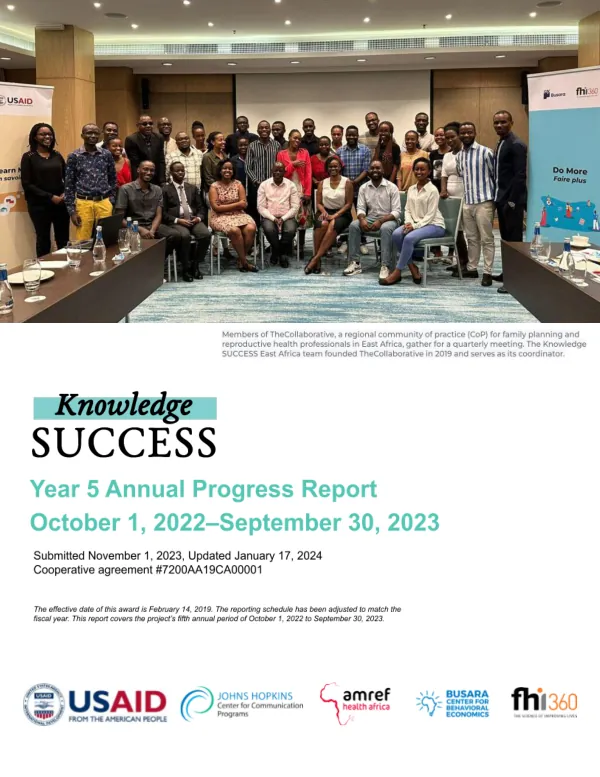
Knowledge SUCCESS Year 5 Annual Progress Report
The FP/RH initiative began with the goal of improving family planning and reproductive health outcomes globally.
2024 · 89 pages
Sign in to readA free account is required to download.
Abstract
The initiative focused on three intermediate results: making high-quality FP/RH knowledge and information available and accessible, brokering and supporting knowledge exchange and collaboration, and strengthening sustainable capacity for knowledge sharing, collaboration, learning, and adaptation. To achieve the first intermediate result, the initiative supported the development and dissemination of various knowledge management tools and resources. Activity 1.1 involved enhancing FP Insight, a resource discovery and curation tool for FP/RH professionals to improve programs. This tool aimed to provide users with access to relevant and credible information to inform their decision-making processes. The initiative also hosted a virtual Pitch competition to find and fund knowledge champions in FP/RH, building on the success of the first two seasons of The Pitch. This competition aimed to identify and support innovative ideas and solutions in the field of FP/RH. The initiative also managed and disseminated the KM Training Package for Global Health Programs, a comprehensive set of training materials to develop FP/RH professionals' skills and capacity in knowledge management. This package aimed to equip professionals with the necessary skills to effectively manage and utilize knowledge in their programs. Additionally, the initiative engaged priority audiences and generated demand for knowledge management through relevant, timely, and credible digital platforms and communications. This involved creating and disseminating content that was tailored to the needs and interests of specific audiences. To achieve the second intermediate result, the initiative brokered and supported knowledge exchange and collaboration to facilitate knowledge use. Activity 2.1 involved supporting peer-to-peer learning and exchange among FP2030 focal points. This activity aimed to facilitate the sharing of best practices and lessons learned among focal points, with the goal of improving FP/RH outcomes. The initiative also supported peer-to-peer learning and exchange within the IBP Network (IBP), which aimed to facilitate the sharing of knowledge and expertise among IBP members. The initiative expanded the dissemination and use of evidence-based information among the FP/RH community by working with global health projects and other partnerships. This involved collaborating with various stakeholders to identify and disseminate high-quality evidence-based information that could inform FP/RH programs. Additionally, the initiative provided knowledge management support to other USAID-funded PRH partners and communities of practice. This involved providing technical assistance and capacity-building support to help partners effectively manage and utilize knowledge in their programs. To achieve the third intermediate result, the initiative strengthened sustainable capacity for knowledge sharing, collaboration, learning, and adaptation. The Africa Regional Landscape Analyses Update (ARLA) aimed to provide a comprehensive understanding of the FP/RH landscape in Africa, with the goal of informing program design and implementation. The initiative also supported the development of knowledge management solutions for COVID-19 vaccine emergency response, which aimed to facilitate the sharing of knowledge and expertise among stakeholders responding to the pandemic. The initiative also supported the dissemination of the Family Planning: A Global Handbook for Providers and wall chart in English, French, and Spanish. This handbook aimed to provide healthcare providers with the necessary information and guidance to deliver high-quality FP/RH services. Additionally, the initiative updated High Impact Practice briefs, website content, and related content development. This involved reviewing and revising existing content to ensure that it remained relevant and accurate, and developing new content to address emerging issues and priorities in the field of FP/RH.
Related documents