CARITAS INTERNATIONAL
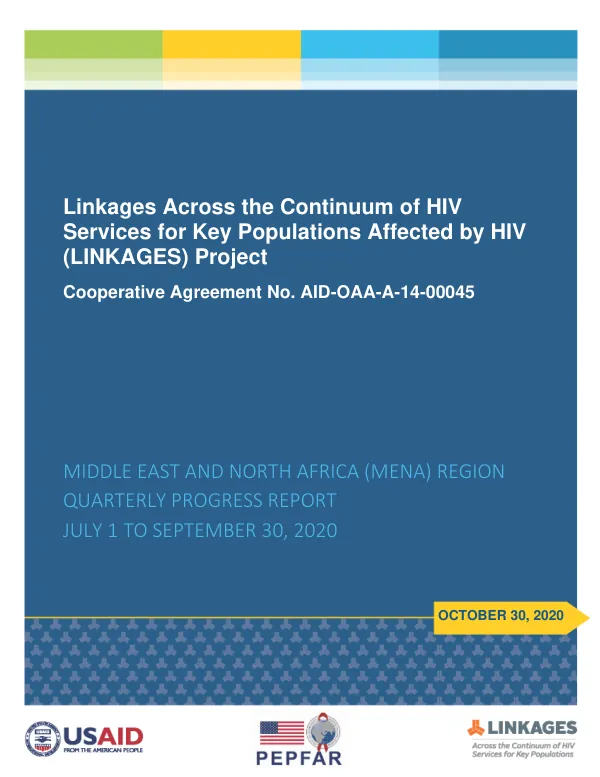
LINKAGES Quarterly Report (July 1 – September 30, 2020) - MENA
The LINKAGES project in the Middle East and North Africa (MENA) region aims to improve the health and well-being of key populations affected by HIV.
2020 · 6 pages
Sign in to readA free account is required to download.
Abstract
The project focuses on addressing the rights of key populations, including lesbian, gay, bisexual, transgender, and intersex people, other men who have sex with men, and sex workers, who are disproportionately affected by HIV in the region. The epidemic in the MENA region is concentrated, with key populations accounting for more than 95% of new infections in 2017. Globally, key populations and their sexual partners accounted for 47% of new infections. The ability of all MENA residents, including key population members, to exercise their right to health is vital to an effective epidemic response. However, this right is not universally enjoyed, and key population members and people living with HIV face widespread stigma, discrimination, and persecution. To address these issues, the LINKAGES project received funding support from the USAID Middle East Regional Bureau and the USAID Bureau for Democracy, Conflict and Humanitarian Assistance. The project implemented several activities, including conducting a regional 'Right to Health' landscape analysis, developing a MENA Safety and Security Toolkit, and providing small grants to local and regional civil society organizations (CSOs) to support their implementation of safety and security plans. During the fourth quarter of fiscal year 2020, LINKAGES staff, in partnership with subawardee Arab Foundation for Freedoms and Equality (AFE), finalized the English, French, and Arabic toolkit content. FHI 360 provided small grants to five CSOs: Damj, MENA Rosa, SIDC, Marsa, and AIDS Algerie. The remaining 11 organizations that will receive small grants have submitted their paperwork, which is expected to receive approval early in Q1 FY21. The small grant process involved providing technical assistance to CSO applicants, including budget building, requesting DUNS numbers, and other organizational strengthening. Each CSO and FHI 360 staff worked together via phone calls and Zoom meetings to develop strong scopes of work that were supported by reasonable and allowable budgets. The review process included supporting each CSO to better align planned activities to their own security plans and to the technical assistance that could be provided by AFE or FHI 360. Activities supported by small grants include purchasing physical security devices, conducting staff trainings on topics such as first-aid and conflict resolution, hiring consultants to improve digital security mechanisms, and supporting CSOs to convene local stakeholders to advocate for the safer implementation of HIV programs nationally. Furthermore, 12 CSOs will be receiving tailored technical assistance from FHI 360 and AFE, including trainings, support in writing standard operating procedures on security, and support to develop programs to protect staff mental health. In addition, LINKAGES worked with AIDSFree to support the development of synergistic MENA-focused deliverables, including an annex that describes the safe implementation of KP programs in humanitarian settings and adaptable security standard operating procedures designed for use by CSOs in the MENA region. The annex on humanitarian settings was written by LINKAGES staff, in collaboration with colleagues at UNAIDS in MENA, after the consultant hired was unable to complete an appropriate final product. The standard operating procedures (SOPs) covered sexual harassment, the protection of whistleblowers, and security broadly. LINKAGES staff supported the AIDSFree consultant with technical guidance on all three deliverables.