CARITAS INTERNATIONAL
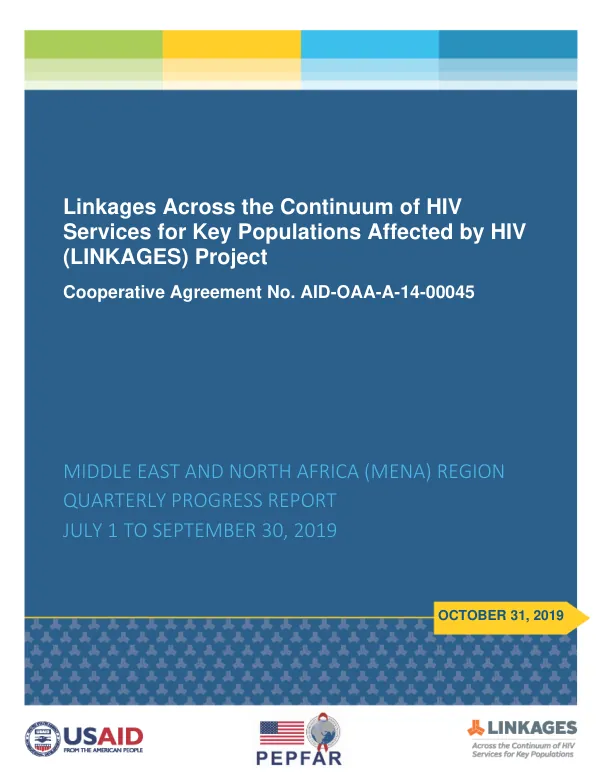
LINKAGES Quarterly Report (July 1 to September 30, 2019) - MENA
The LINKAGES project in the Middle East and North Africa (MENA) region aims to improve the health and well-being of key populations affected by HIV.
2019 · 5 pages
Sign in to readA free account is required to download.
Abstract
The project focuses on addressing the security challenges faced by civil society organizations (CSOs) in the region, particularly those working with lesbian, gay, bisexual, transgender, and intersex (LGBTI) individuals, other men who have sex with men (MSM), and sex workers (SWs). The epidemic in the MENA region is concentrated, with key populations accounting for more than 95% of new infections in 2017. Globally, key populations and their sexual partners accounted for 47% of new infections. The ability of all MENA residents, including key population members, to exercise their right to health is vital to an effective epidemic response. However, this right is not universally enjoyed, and key population members and people living with HIV (PLHIV) face widespread stigma and discrimination. To address these issues, the LINKAGES project received funding support from the USAID Middle East Regional Bureau and the USAID Bureau for Democracy, Conflict and Humanitarian Assistance. The project aims to conduct a regional right to health landscape analysis, develop a MENA Safety and Security Toolkit, conduct a regional CSO safety and security workshop, provide small grants to local and regional CSOs, and document best practices and lessons learned. During the final quarter of fiscal year 2019, plans for activities in the MENA region solidified, and key contacts were made in each of the countries in which the project is operating: Lebanon, Tunisia, Egypt, Algeria, and Morocco. Scoping visits to each country resulted in interviews with representatives from 10 organizations/networks in Lebanon, 9 organizations/networks in Tunisia, 8 organizations/networks in Morocco, 7 organizations in Algeria, and 8 organizations in Egypt. The interviews identified various security issues faced by CSOs in the region, including slander of institutions by media, difficulty recording data on beneficiaries, stigma from health care workers, and police harassment. Corresponding security strategies were also proposed, such as operating transparently, training to interact with media, and working with police to sensitize them on the aims of the program. The project worked closely with the Arab Foundation for Equality (AFEMENA) to finalize a scope of work and budget for their subaward, which will be issued in FY20 Q1. AFEMENA was identified as a key partner with unique expertise in addressing security challenges faced by CSOs in the region. The project's quarterly financial summary shows an obligation of $741,000, with expenditures of $65,440 this quarter, totaling $73,867, and a remaining obligation of $667,133. The priority activities in the next three months (October to December 2019) include issuing a subaward to AFEMENA, finalizing a report on all the interviews conducted, and revising the global safety and security toolkit. The project's focus on addressing security challenges faced by CSOs in the MENA region is critical to improving the health and well-being of key populations affected by HIV. By working with local and regional partners, the project aims to develop effective strategies to address these challenges and promote the right to health for all MENA residents.
Related documents