FINTRAC
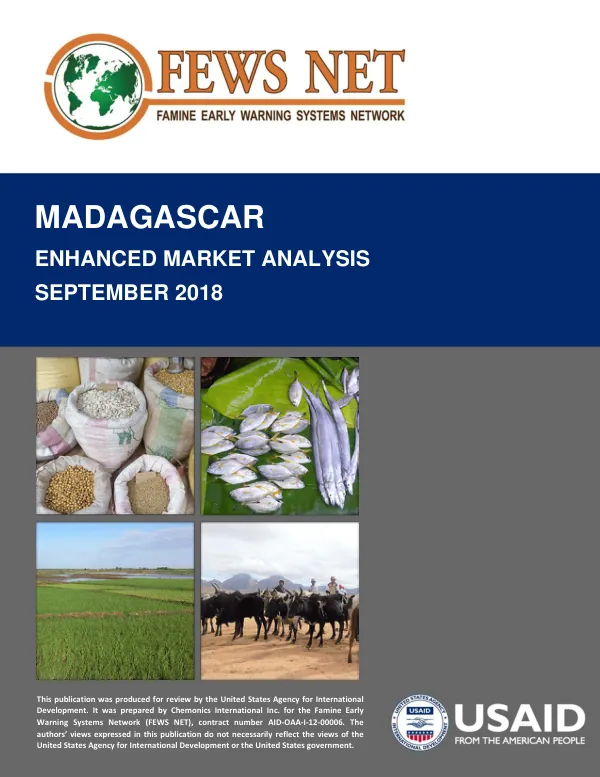
MADAGASCAR USAID-BEST ANALYSIS
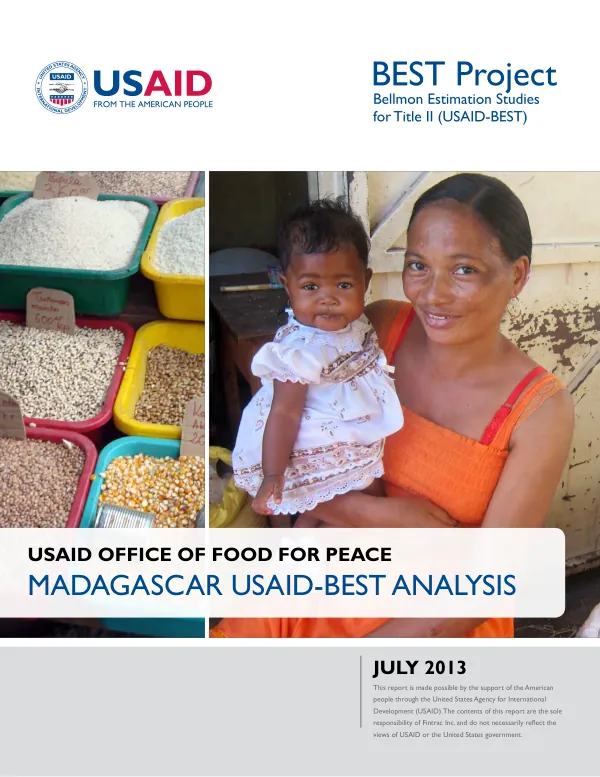
The agricultural market in Madagascar is characterized by significant food deficits, particularly in staple crops such as rice, maize, and beans.
2013 · 84 pages
Sign in to readA free account is required to download.
Abstract
National food deficits are driven by a combination of factors, including low agricultural productivity, inadequate infrastructure, and limited access to markets. Local food deficits are more pronounced in rural areas, where households rely heavily on subsistence farming and have limited access to cash income. Market sites in Madagascar exhibit shared characteristics, including a high concentration of small-scale traders and a limited presence of large-scale commercial buyers. Commodity markets are dominated by rice, maize, and beans, with rice being the main staple crop consumed by the majority of the population. The implications of these market dynamics for USAID's Title II program and complementary market-based programming are significant, with a need to address the root causes of food deficits and improve access to markets for small-scale farmers. The USAID Title II program is a key component of the US government's food assistance efforts in Madagascar. The program provides emergency food assistance to vulnerable populations, including refugees, internally displaced persons, and those affected by conflict or natural disasters. Title II monetized food aid is a critical component of the program, allowing beneficiaries to purchase food items at local markets and supporting the local economy. Additional USAID/Madagascar programs, including those implemented by the USDA, WFP, and national government, also play a crucial role in addressing food insecurity in the country. These programs focus on a range of activities, including agricultural development, food assistance, and nutrition support. The LRP and Cash Program Inventory provides a comprehensive overview of these programs, highlighting their geographic focus, target populations, and activity types. Geographic targeting is a critical component of program design, with a need to focus on areas with high levels of food insecurity and limited access to markets. Seasonal targeting is also essential, with programs designed to respond to changing food needs throughout the year. Household and individual targeting are also critical, with programs tailored to meet the specific needs of vulnerable populations. Activity type and commodity selection are also key considerations, with programs designed to support agricultural development, improve access to markets, and enhance food security. A monetization feasibility analysis is a critical component of program design, with a need to assess the potential for monetizing food aid and supporting local economic development. This analysis involves evaluating the costs and benefits of different monetization options, including local food procurement through donor purchases, cash, or vouchers. Additional considerations for program design include the need to address the root causes of food deficits, improve access to markets for small-scale farmers, and enhance the resilience of vulnerable populations.