AVENIR HEALTH
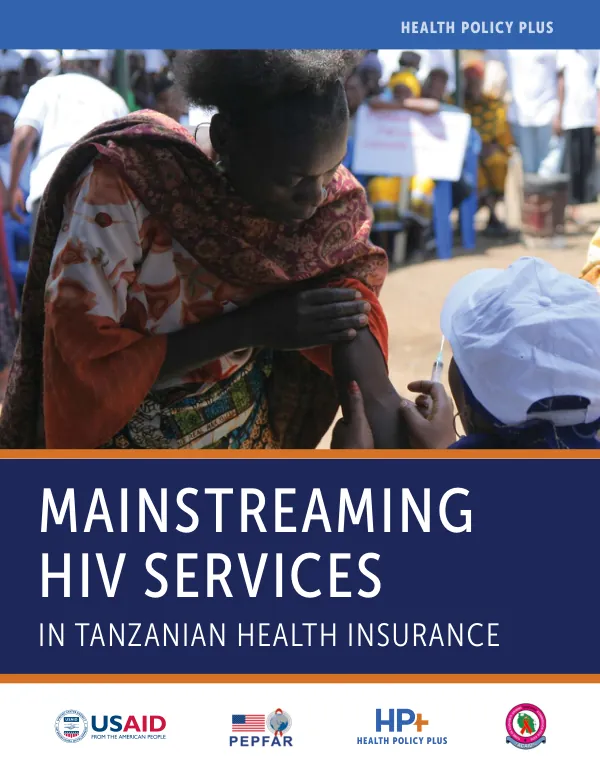
Mainstreaming HIV Services in Tanzanian Health Insurance
The Tanzanian health insurance system has been expanding to include HIV services, with the goal of mainstreaming these services into existing health insurance programs.
2018 · 36 pages
Sign in to readA free account is required to download.
Abstract
The National Health Insurance Fund (NHIF) and the Insurance Company of Tanzania (iCHF) are the primary health insurance schemes in the country. The analysis focuses on the integration of HIV services into these schemes, with a particular emphasis on the costs and benefits of this integration. The study uses a realistic scenario to estimate the enrollment of people living with HIV in the insurance schemes. This scenario assumes that 50% of people living with HIV will enroll in the insurance schemes, with an average annual premium of $10. The analysis also considers different HIV service packages, including antiretroviral therapy (ART), opportunistic infection treatment, and HIV testing and counseling. The study estimates that the incremental expenditure for providers across different HIV packages will be significant, with an average increase of 25% in the first year. The estimated additional HIV expenditure by scheme and package for basic costs is also substantial, ranging from $1.5 million to $3.5 million per year. The study also conducts sensitivity analyses to examine the impact of different epidemiological scenarios and variations in insurance coverage and epidemic by region. The analysis suggests that the integration of HIV services into the health insurance schemes will have a positive impact on the financial sustainability of the schemes. The estimated claims ratios by basic HIV package and scheme indicate that the schemes will be able to absorb the additional costs of HIV services without experiencing significant financial strain. The study also estimates that the HIV expenditure as a percentage of forecasted contribution income of the combined schemes by HIV package will be relatively low, ranging from 2% to 5%. The study recommends that the Tanzanian government and health insurance schemes take steps to integrate HIV services into existing health insurance programs. This can be achieved through a combination of policy reforms, provider payment mechanisms, and community outreach and education programs. The study also suggests that the government and health insurance schemes should conduct regular monitoring and evaluation of the integration of HIV services to ensure that the benefits of this integration are realized. The study's findings have implications for the Tanzanian government and health insurance schemes as they seek to expand access to HIV services and improve the financial sustainability of the health insurance system. The study's recommendations provide a roadmap for policymakers and health insurance administrators to follow as they work to integrate HIV services into existing health insurance programs. The analysis also highlights the importance of considering the costs and benefits of integrating HIV services into health insurance programs. The study's estimates of incremental expenditure and additional HIV expenditure provide valuable insights into the financial implications of this integration. The study's sensitivity analyses also demonstrate the importance of considering different epidemiological scenarios and variations in insurance coverage and epidemic by region. The study's findings and recommendations have implications for other countries in the region that are seeking to expand access to HIV services and improve the financial sustainability of their health insurance systems. The study's analysis provides a useful model for policymakers and health insurance administrators to follow as they seek to integrate HIV services into existing health insurance programs. The study's use of a realistic scenario and sensitivity analyses provides a robust and reliable estimate of the costs and benefits of integrating HIV services into health insurance programs. The study's findings and recommendations provide a valuable contribution to the ongoing debate about the role of health insurance in expanding access to HIV services and improving the financial sustainability of health insurance systems. The study's analysis also highlights the importance of considering the social and economic implications of integrating HIV services into health insurance programs. The study's estimates of the impact on household income and poverty reduction provide valuable insights into the potential benefits of this integration. The study's sensitivity analyses also demonstrate the importance of considering different epidemiological scenarios and variations in insurance coverage and epidemic by region.