USAID DEC
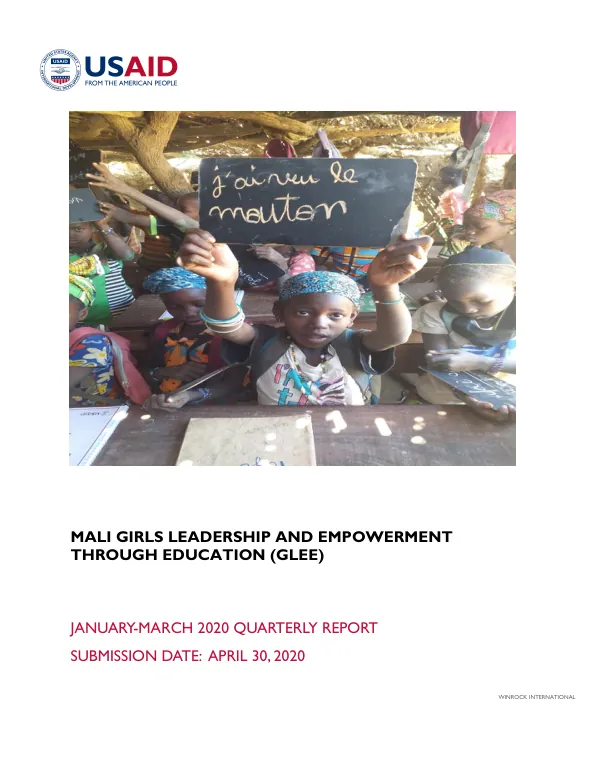
Mali Girls Leadership and Empowerment through Education (GLEE) Quarterly Report January 1, 2020-March 31, 2020
Sign inGOVERNMENT OF MALAWI
Mali Girls Leadership and Empowerment through Education (GLEE) Quarterly Report January 1, 2020-March 31, 2020
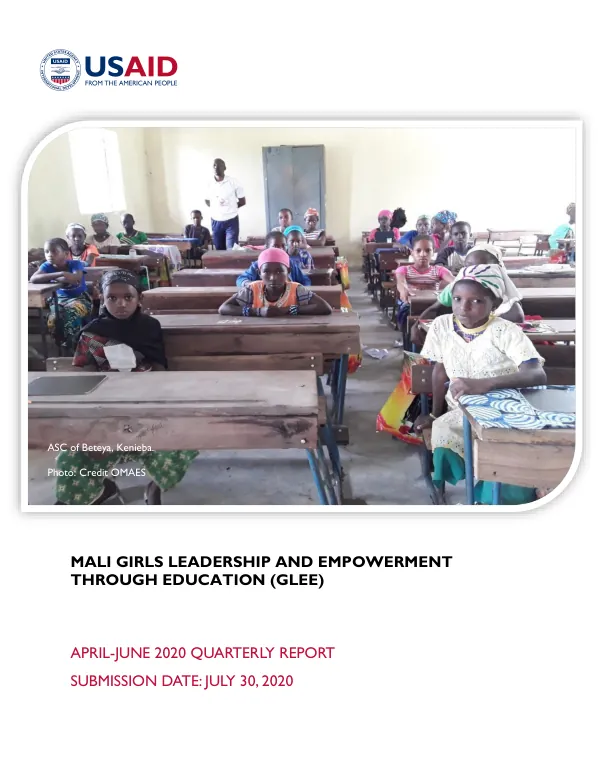
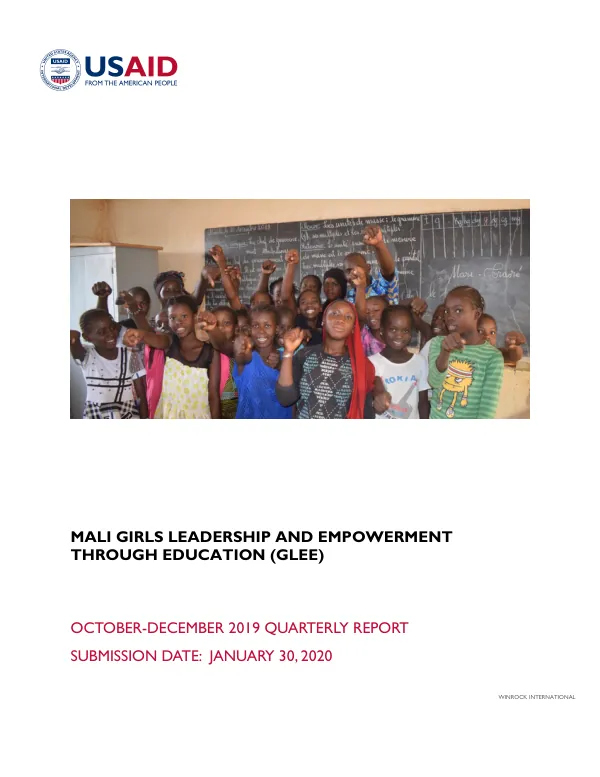
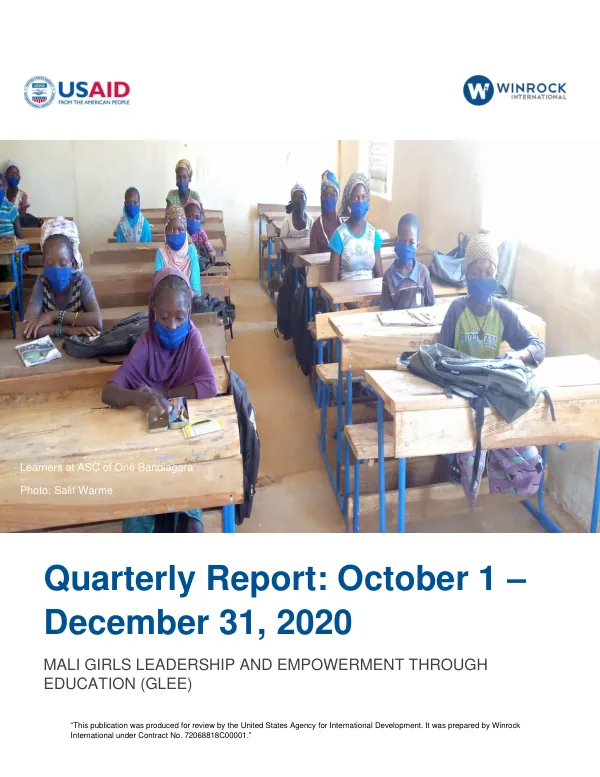
The Girls Leadership and Empowerment through Education (GLEE) program in Mali aims to increase access to quality education for adolescent girls, improve their safety in schools and communities, and promote positive health behaviors.
2020 · 70 pages
Sign in to readA free account is required to download.
Abstract
The program is implemented by Winrock International and funded by the United States Agency for International Development (USAID). The GLEE program focuses on three main objectives: decreasing key barriers to quality education for adolescent girls, improving the safety of adolescent girls in schools and communities, and increasing knowledge and adoption of positive health behaviors among adolescent girls. To achieve these objectives, the program implements various activities, including learning support opportunities for girls, teaching that is more responsive and relevant for adolescent girls, and community and family support for girls' education. In the January-March 2020 reporting period, the GLEE program made significant progress in achieving its objectives. The program signed memoranda of understanding with the Ministry of Education, the Ministry of Public Health, and the Ministry for the Advancement of Women, Children, and the Family. The program also established effective reporting and referral mechanisms for school-related gender-based violence and implemented strategies to safeguard adolescent girls in schools and communities. The program also made progress in increasing knowledge and adoption of positive health behaviors among adolescent girls. The program implemented activities to promote menstrual hygiene management, reproductive health, and family planning. The program also established partnerships with local organizations to provide health services to adolescent girls. In addition to these achievements, the GLEE program also faced some challenges and difficulties during the reporting period. The program encountered technical, managerial, and financial challenges, including difficulties in accessing remote communities and managing the program's budget. However, the program proposed solutions to address these challenges, including increasing the program's budget and hiring additional staff. The GLEE program also prioritized cross-cutting solutions, including gender, youth, science, technology, innovation, and research (STIR), environmental compliance, and climate risk management. The program also engaged in private sector partnerships and sustainability initiatives to ensure the program's long-term impact. Overall, the GLEE program in Mali made significant progress in achieving its objectives during the January-March 2020 reporting period. The program's activities and achievements demonstrate its commitment to improving the lives of adolescent girls in Mali and promoting their access to quality education, safety, and health. The program's management and implementation were also effective during the reporting period. The program's staff and partners worked together to achieve the program's objectives, and the program's monitoring and evaluation systems were effective in tracking progress and identifying areas for improvement. The GLEE program also prioritized collaboration and partnerships with local organizations, including the Ministry of Education, the Ministry of Public Health, and local non-governmental organizations. The program's partnerships with these organizations helped to increase the program's impact and reach, and ensured that the program's activities were aligned with the needs and priorities of the local community. In the next reporting period, the GLEE program plans to continue its activities and achieve its objectives. The program will focus on increasing learning support opportunities for girls, improving teaching practices, and promoting positive health behaviors among adolescent girls. The program will also continue to prioritize cross-cutting solutions, including gender, youth, STIR, environmental compliance, and climate risk management. Overall, the GLEE program in Mali is making significant progress in achieving its objectives and improving the lives of adolescent girls in the country. The program's activities and achievements demonstrate its commitment to promoting girls' education, safety, and health, and ensuring that adolescent girls in Mali have the opportunities they need to succeed.
Related documents