USAID DEC
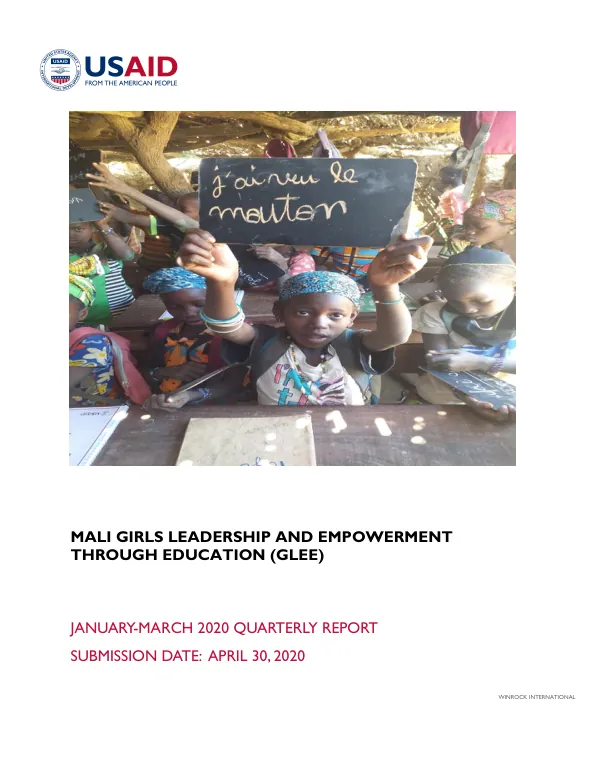
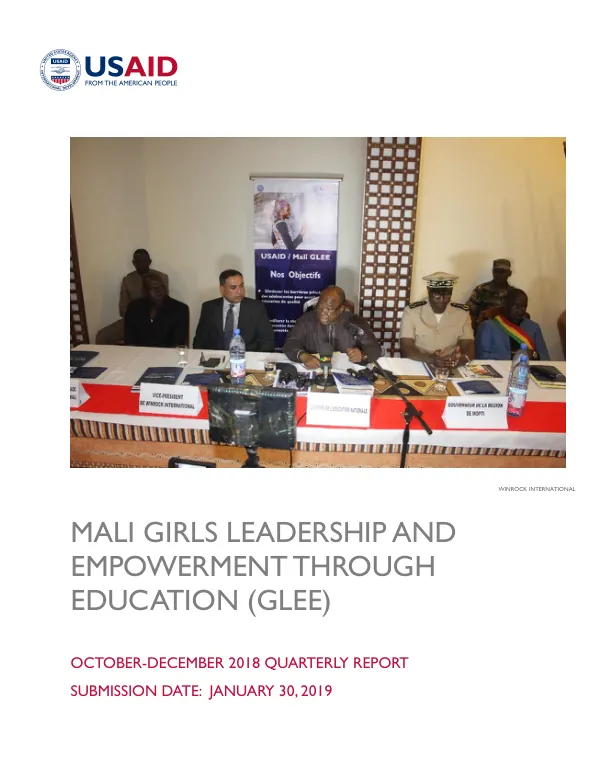
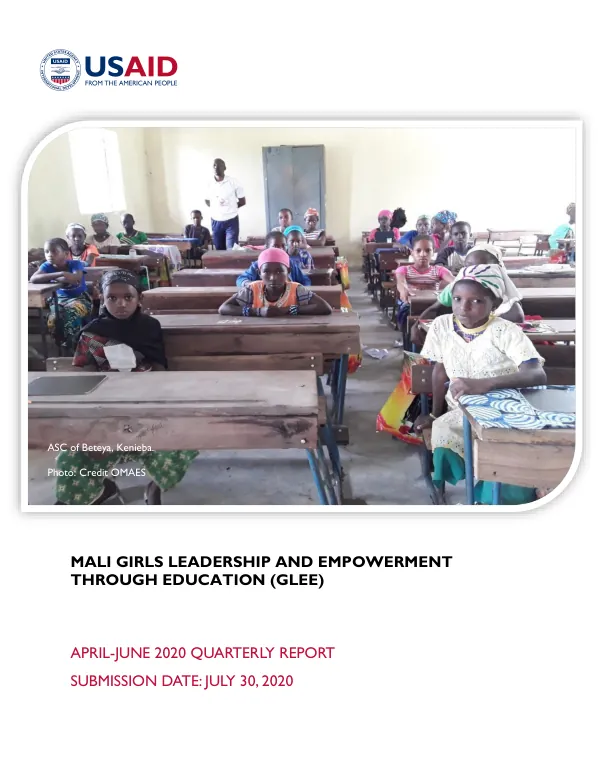
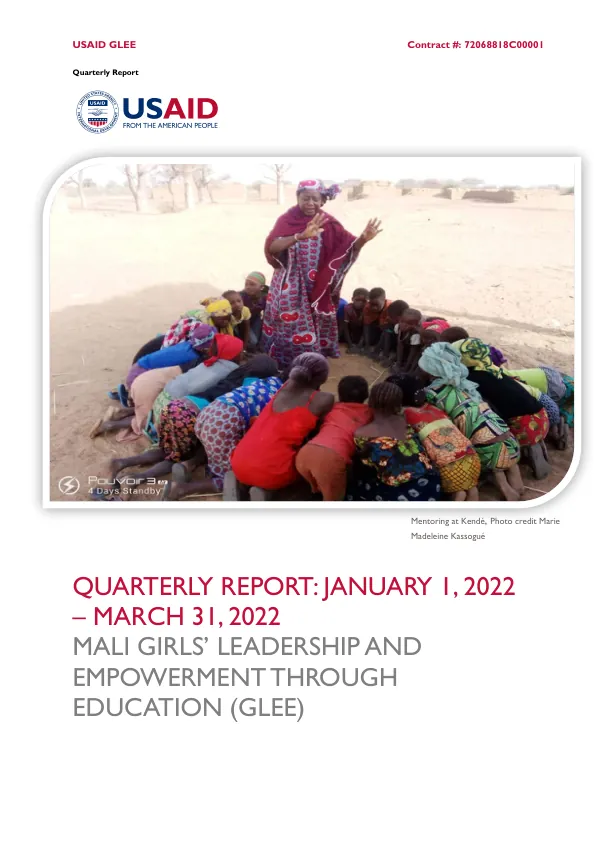
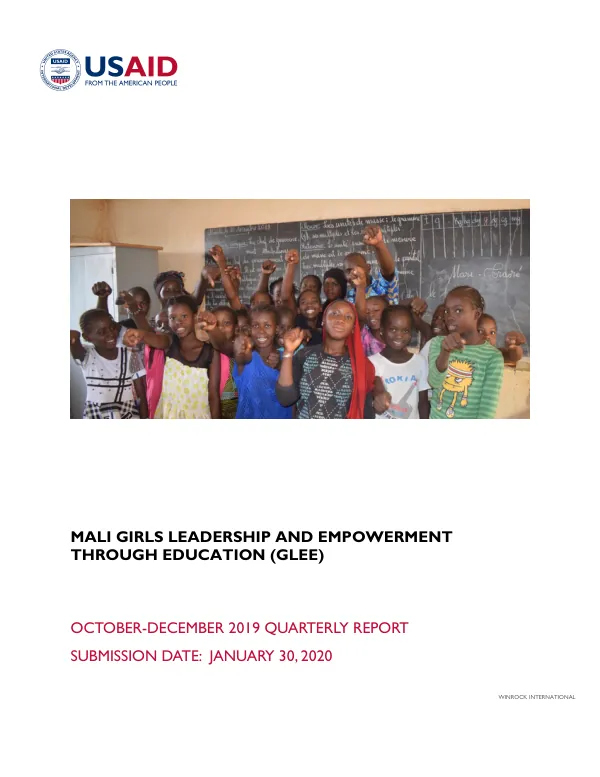
Mali Girls Leadership and Empowerment through Education (GLEE) Quarterly Report October 1, 2019-December 31, 2019
Sign inMINISTRY OF EDUCATION
Mali Girls Leadership and Empowerment through Education (GLEE) Quarterly Report October 1, 2019-December 31, 2019
The Girls Leadership and Empowerment through Education (GLEE) program in Mali aims to improve the educational outcomes and overall well-being of adolescent girls.
2020 · 86 pages
Sign in to readA free account is required to download.
Abstract
The program is implemented by Winrock International and is funded by the United States Agency for International Development (USAID). The program focuses on three main objectives: decreasing key barriers to quality education for adolescent girls, improving the safety of adolescent girls in schools and their communities, and increasing knowledge and adoption of positive health behaviors among adolescent girls. To achieve these objectives, the program has established partnerships with various stakeholders, including the Ministry of Education, the Ministry of Health, and local communities. The program has also developed a range of activities, including training for teachers and community leaders, the establishment of girls' clubs, and the provision of health and hygiene services. The program has also worked to address specific challenges faced by adolescent girls, including early marriage, female genital cutting, and limited access to education. One of the key strategies employed by the program is the establishment of girls' clubs, which provide a safe space for adolescent girls to discuss their concerns and develop leadership skills. The program has also worked to improve the safety of adolescent girls in schools and their communities by establishing reporting and referral mechanisms for school-related gender-based violence. Additionally, the program has provided training for teachers and community leaders on how to address the specific needs of adolescent girls. The program has also focused on increasing knowledge and adoption of positive health behaviors among adolescent girls. This has included the provision of health and hygiene services, as well as training for girls on how to make informed decisions about their health. The program has also worked to address specific health challenges faced by adolescent girls, including menstrual hygiene management and reproductive health. In terms of results, the program has reported a number of successes. For example, the program has reported an increase in the number of girls attending school, as well as an increase in the number of girls participating in girls' clubs. The program has also reported an improvement in the safety of adolescent girls in schools and their communities, as well as an increase in knowledge and adoption of positive health behaviors among adolescent girls. The program has also faced a number of challenges, including limited resources and capacity constraints. However, the program has worked to address these challenges through the establishment of partnerships with other organizations and the development of a range of strategies to improve program effectiveness. Overall, the GLEE program in Mali has made significant progress in improving the educational outcomes and overall well-being of adolescent girls. The program's focus on addressing specific challenges faced by adolescent girls, including early marriage, female genital cutting, and limited access to education, has been particularly effective. The program's establishment of girls' clubs and provision of health and hygiene services have also been key to its success.
Related documents