USAID DEC
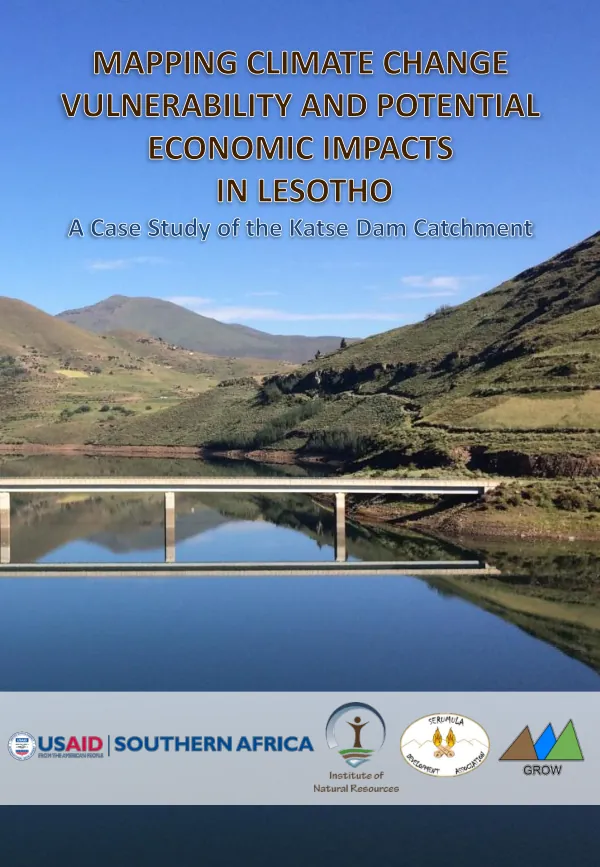
Mapping Climate Change Vulnerability and Potential Economic Impacts in Lesotho: A Case Study of the Katse Dam Catchment
Sign inUSAID DEC
Mapping Climate Change Vulnerability and Potential Economic Impacts in Lesotho: A Case Study of the Katse Dam Catchment
The Lesotho Highlands Water Project is a bilateral treaty between Lesotho and South Africa, established in 1986, which governs the design, construction, operation, and maintenance of the project.
2015 · 44 pages
Sign in to readA free account is required to download.
Abstract
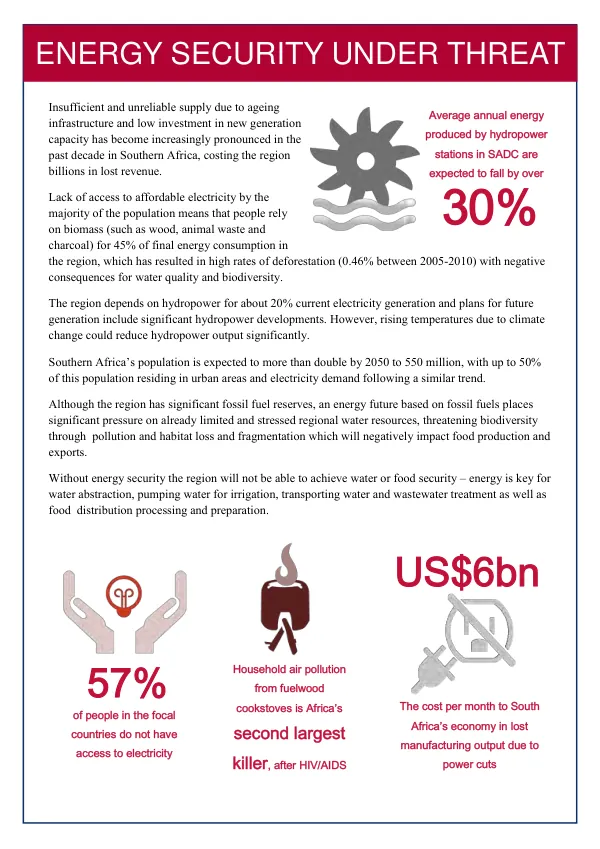
The primary objectives of the treaty are to provide revenue to Lesotho by transferring water from the catchment of the Senqu/Orange River, to generate hydro-electric power for Lesotho, to promote the general development of the remote and underdeveloped mountain regions of Lesotho, and to provide the opportunity to undertake ancillary developments such as the provision of water for irrigation and potable water supply. The project is one of the biggest water transfer schemes in the world, designed to divert about 40% of the water of the Senqu River into the Vaal River Basin in South Africa. The Orange-Senqu River Basin, with its origin in the Lesotho Highlands, has a drainage area of about 1 000 000 km2, with 46% of the mean annual runoff generated in Lesotho. The project's water supply is critical to the broader Lesotho economy, and its management is essential for economic growth. A pilot study was conducted to investigate the dependence of various economic activities on the ecological infrastructure of the Lesotho Highlands, and to explore possible threats to business associated with changes in ecosystems, particularly in the context of climate change. The study used a relative risk mapping process to identify climate change-related hazards in the Katse Dam Catchment, applying downscaled climate change projections to spatially determine vulnerabilities relevant to key sectors in the catchment. The study focused on five economic sectors: the export of water, generation of hydroelectric power through the Lesotho Highlands Water Project, the wool and mohair industry, emerging aquaculture production, and the tourism industry. The results of the vulnerability mapping process were applied to assess the potential economic implications of climate-driven changes for these sectors. The study's approach, methods, and results are discussed in this report. The maintenance of downstream economic production and the transfer of water to South Africa are examples of the many benefits from, and values of, ecological infrastructure in the Lesotho Highlands. However, the relationship between the economic sector in Lesotho and the functions and integrity of its ecological infrastructure has not been well studied. The study aimed to investigate this relationship and to explore possible threats to business associated with changes in ecosystems, particularly in the context of climate change. Ecological infrastructure is the network of natural lands, working landscapes, and other open spaces that enable ecosystems to function and deliver valuable services to people, such as fresh water, climate regulation, soil formation, and disaster risk reduction. It is the ecological equivalent of built infrastructure, and strategic investment in ecological infrastructure can enhance existing built infrastructure. Ecological infrastructure can contribute to water security and enhance climate change resilience through a number of services, including flood attenuation, streamflow regulation, sediment trapping, erosion control, and toxicant removal. The study's findings highlight the importance of considering the ecological infrastructure of the Lesotho Highlands in planning for adaptation and infrastructure development. Integrating values for ecological infrastructure into cost-benefit analysis and planning can optimize infrastructure development, particularly between countries in transboundary river basins, such as the Orange-Senqu River Basin. This creates the opportunity to identify mixed portfolios of built and ecological infrastructure that would best meet multiple development objectives, such as hydropower generation, agricultural water supply, fisheries productivity, biodiversity conservation, and climate resilience.
Related documents