TRAFFIC INTERNATIONAL
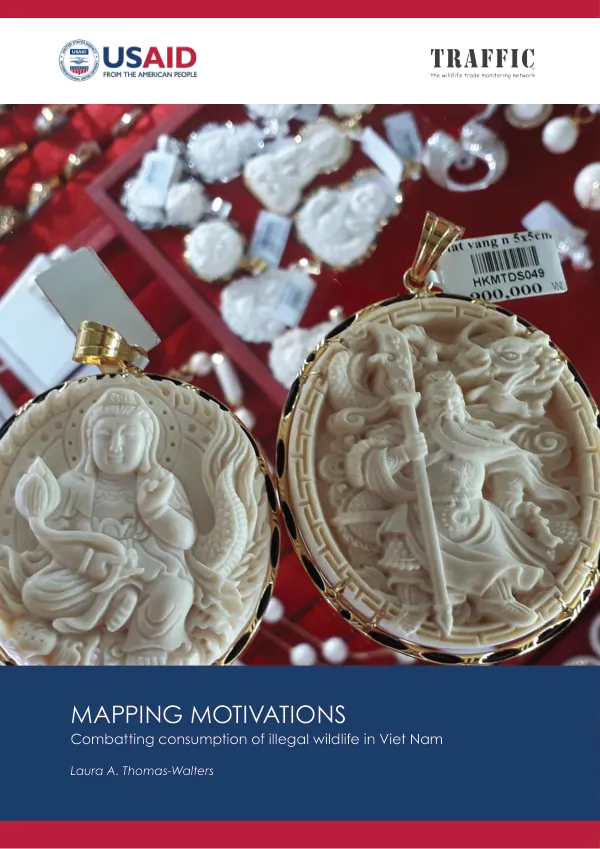
Mapping Motivations: Combatting Consumption of Illegal Wildlife in Viet Nam
The research on motivations of consumers of endangered wildlife in Viet Nam, with a focus on rhinos, elephants, and pangolins, aimed to guide the development and implementation of demand reduction and behaviour change initiatives.
2018 · 12 pages
Sign in to readA free account is required to download.
Abstract
The study synthesized findings from previous consumer and market studies to lay the foundation for new Social Behaviour Change Communication (SBCC) initiatives. The research focused on understanding the perspectives and motivations of consumers, rather than merely the function of the behaviours themselves. The study identified several motivational clusters, including emotional, reputational, recreational, social, functional, medicinal, financial, and spiritual. The emotional and functional clusters were found to be the most consistent data relating to the consumption of rhino, elephant, and pangolin products. The emotional cluster included behaviours driven by hedonistic desires, such as personal adornment and leisure activities, while the functional cluster included behaviours driven by everyday needs, such as food and health. The research also identified specific motivations behind the consumption of rhino, elephant, and pangolin products. For example, wealthy men over 30, such as business elites and state officials, were found to use rhino horn to treat cancer, while lactating mothers used pangolin scales to promote lactation. The study also found that the consumption of pangolin meat was driven by a desire to experience something wild and rare. The findings of the study have implications for the development of effective behaviour change initiatives. The research suggests that a motivational cluster approach could be more effective and efficient in changing the desire and behaviour associated with wildlife consumption. This approach would involve understanding the motivations behind the behaviour, rather than merely the function of the behaviour itself. The study's findings also highlight the need to consider cultural perspectives and to engage with consumers in a way that is relevant to their values and beliefs. The research used a wide variety of data sources, including peer-reviewed articles, published reports, books, and unpublished data from local conservation-focused non-government organizations (NGOs). The study's methodology involved synthesizing the findings from previous studies and using a theoretical framework to understand the motivations behind the consumption of rhino, elephant, and pangolin products. The study's findings have been represented in motivational cluster diagrams, which provide insights into the specific motivations behind the consumption of rhino, elephant, and pangolin products. The diagrams show the relationships between species, products, consumers, and specific motivations, and provide a visual representation of the complex motivations behind wildlife consumption. Overall, the research provides a comprehensive understanding of the motivations behind the consumption of rhino, elephant, and pangolin products in Viet Nam. The study's findings have implications for the development of effective behaviour change initiatives and highlight the need to consider cultural perspectives and to engage with consumers in a way that is relevant to their values and beliefs.
Related documents